Algeria
 Egypt
 Libya
 Morocco
 Sudan
 Tunisia
 Benin
 Burkina Faso
 Cabo Verde
 Côte d'Ivoire
 Ghana
 Guinea
 Guinea-Bissau
 Liberia
 Mali
 Mauritania
 Niger
 Nigeria
 Senegal
 Sierra Leone
 The Gambia
 Togo
 Cameroon
 Central African Republic
 Chad
 Equatorial Guinea
 Gabon
 Republic of the Congo
 São Tomé and Príncipe
 Burundi
 Comoros
 Djibouti
 Eritrea
 Ethiopia
 Kenya
 Madagascar
 Malawi
 Mauritius
 Mozambique
 Rwanda
 Seychelles
 Somalia
 South Sudan
 Tanzania
 Uganda
 Angola
 Botswana
 Eswatini
 Lesotho
 Namibia
 South Africa
 Zambia
 Zimbabwe
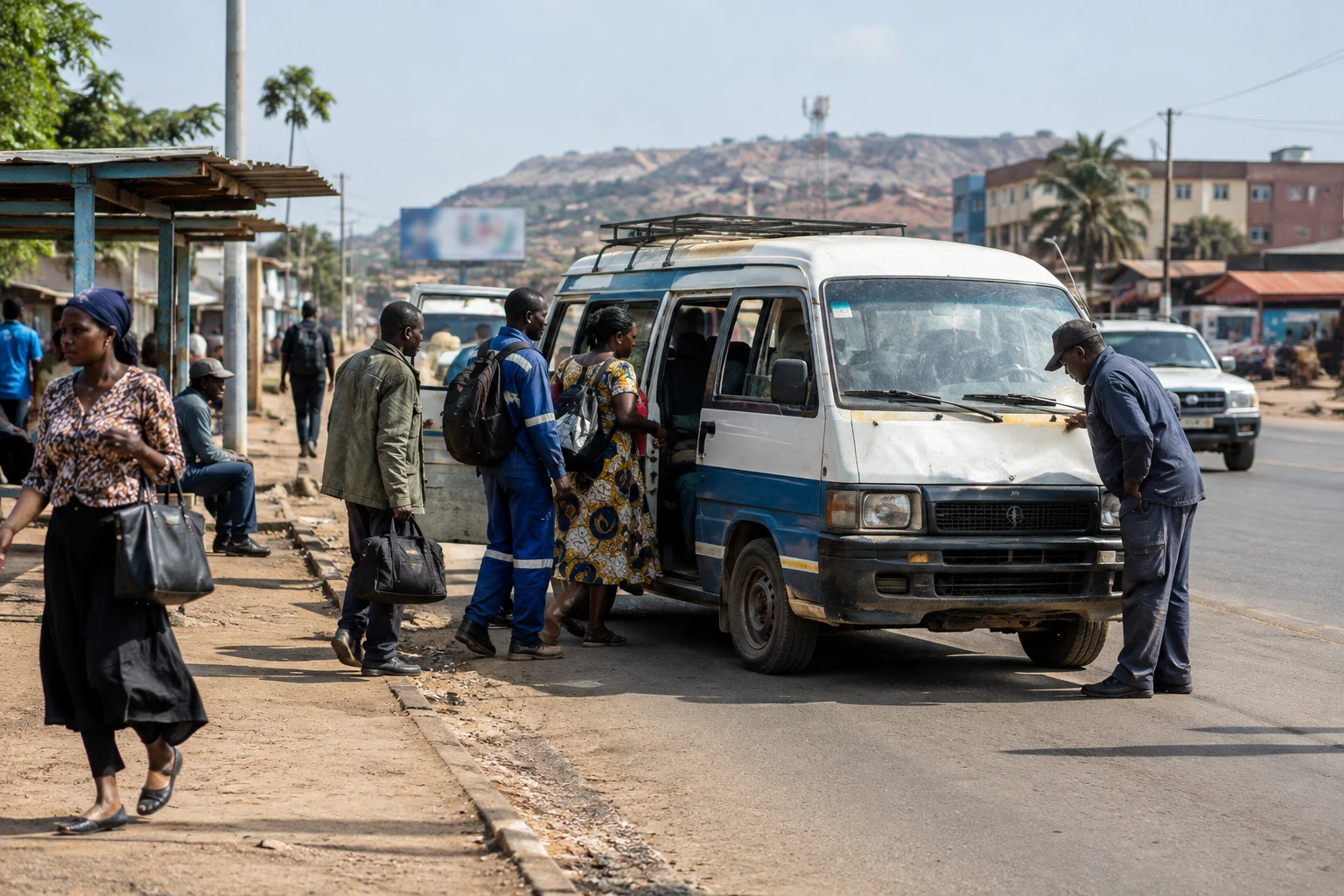
For artisanal miners in the Democratic Republic of the Congo, formalisation is not just a matter of legislation. It also depends on access to developed sites, equipment and markets able to pay for their work under safer conditions. In Kinshasa, the government is now seeking financial and technical partners to advance this transformation.
Legal zones, but still to be developed
The project covers 64 artisanal mining zones (ZEA), areas officially set aside for artisanal mining. They are planned in the provinces of Lualaba and Haut-Katanga, in the country’s south-east, where major copper and cobalt deposits are concentrated.
The Service for Assistance and Supervision of Artisanal and Small-Scale Mining (SAEMAPE), the public body responsible for supporting these miners, announced the 64 zones in May 2026. On 14 July, it launched stripping and development work at ZEA 786 in Kasulo, Lualaba. This pilot site is intended, in particular, to prepare the ground for better-organised activity. However, the available public information does not provide a full account of the development of all 64 zones or the number of cooperatives already established. Radio Okapi reported the announcement of the 64 zones, while SAEMAPE documented the start of work in Kasulo.
At African Mining Week, held in Cape Town, South Africa, from 14 to 16 October, Marc Watum, special adviser to the Congolese Ministry of Mines, presented the initiative to investors. On 15 October, he called for funding and technical partnerships to develop and modernise the sites. The interlocutors cited included US institutions, among them the Millennium Challenge Corporation and the International Development Finance Corporation, as well as the pan-African institution Africa50. No figure for the funding required for implementation was disclosed. The forum’s official schedule confirms that it was held in Cape Town on those dates.
Formalising without excluding cooperatives
Artisanal and small-scale mining, often referred to by the acronym ASM, supports the livelihoods of many Congolese households. Estimates cited in the available information suggest that around two million people are involved in DR Congo. This figure should be treated as an estimate, not as a recent count verified by an independent census.
The sector remains difficult to regulate. Mining can take place outside designated zones, while artisanal miners and industrial companies may compete for the same areas. Sites designated by the state could clarify access rights and make it easier to track minerals. But a legal zone alone is not enough: there must also be passable roads, equipment, clear rules and effective oversight.
The challenge, then, is to make formalisation useful to cooperatives rather than reduce it to an administrative obligation. In July, SAEMAPE director-general Jean-Paul Kapongo Kadiobo had argued for funding mechanisation as a way to support the transition from artisanal mining to small-scale mining. This shift requires investment, but also a clear division of responsibilities among the authorities, cooperatives and private operators.
The effects will not be the same for everyone. Cooperatives able to comply with the new procedures could gain easier access to developed sites and formal trading channels. By contrast, miners working far from the selected zones or lacking the means to organise into groups risk being left out. Nearby communities, meanwhile, will have an interest in ensuring that development comes with rules on safety, water and local benefits.
A mining partnership under scrutiny
The search for funding comes amid international competition for critical minerals. On 4 December 2025, DR Congo and the United States signed a strategic partnership that includes cooperation on formalising artisanal mining. Kinshasa presents the agreement as a framework for cooperation, not as a transfer of mines. Its practical implementation and benefits for Congolese stakeholders remain issues to watch. The Congolese Ministry of Foreign Affairs has outlined its priorities.
Congolese organisations have also examined the agreement’s implications. The Le Congo n’est pas à vendre network and the African Coalition on Green Minerals have, among other things, highlighted the emphasis on local processing, training and skills transfer. These expectations are a reminder that the issue is not only about supplying foreign markets: it is also about the value added in DR Congo and the share that goes to workers and communities. The Congolese Press Agency reported their position.
Regionally, the mining provinces of south-eastern DR Congo are connected to southern African transport and trade routes. Better-traced minerals can strengthen buyers’ confidence, but traceability depends on credible checks and revenues that encourage cooperatives to remain in official channels. Without these, the rules risk shifting activity rather than formalising it.
The next step, therefore, will be less about announcing new partnerships than proving they have been put into practice: funding secured, work completed, cooperatives actually accommodated and accessible monitoring mechanisms in place. For miners in Lualaba and Haut-Katanga, the project’s success will first be measured by tangible changes at the sites. For DR Congo, it will also affect its ability to negotiate supply chains that combine mining appeal, public oversight and local benefits.