Algeria
 Egypt
 Libya
 Morocco
 Sudan
 Tunisia
 Benin
 Burkina Faso
 Cabo Verde
 Côte d'Ivoire
 Ghana
 Guinea
 Guinea-Bissau
 Liberia
 Mali
 Mauritania
 Niger
 Nigeria
 Senegal
 Sierra Leone
 The Gambia
 Togo
 Cameroon
 Central African Republic
 Chad
 Equatorial Guinea
 Gabon
 Republic of the Congo
 São Tomé and Príncipe
 Burundi
 Comoros
 Djibouti
 Eritrea
 Ethiopia
 Kenya
 Madagascar
 Malawi
 Mauritius
 Mozambique
 Rwanda
 Seychelles
 Somalia
 South Sudan
 Tanzania
 Uganda
 Angola
 Botswana
 Eswatini
 Lesotho
 Namibia
 South Africa
 Zambia
 Zimbabwe
In the east, diplomacy advances while weapons have not entirely left the ground
In eastern Democratic Republic of the Congo, every diplomatic advance is measured against one simple question: do commitments made far from the front really change the lives of civilians in Goma, Bukavu or Minembwe? The latest round of talks in Switzerland shows that Kinshasa and the AFC/M23 are still seeking a political framework, but also underlines that peace remains, for now, a fragile construction.
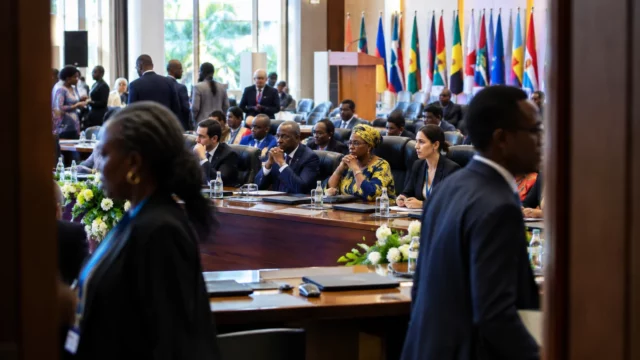
The DRC is part of an already dense mediation architecture. Since the Declaration of Principles signed in Doha on 19 July 2025, followed by the Doha Framework Agreement of 15 November 2025, exchanges between Kinshasa and the AFC/M23 have taken the form of a multi-layered process, with Qatar as facilitator, the United States providing support, the African Union and its Togolese mediator acting as African intermediaries, and Switzerland hosting the latest meetings. MONUSCO, meanwhile, is emphasising ceasefire monitoring and the protection of civilians.
What was agreed in Switzerland
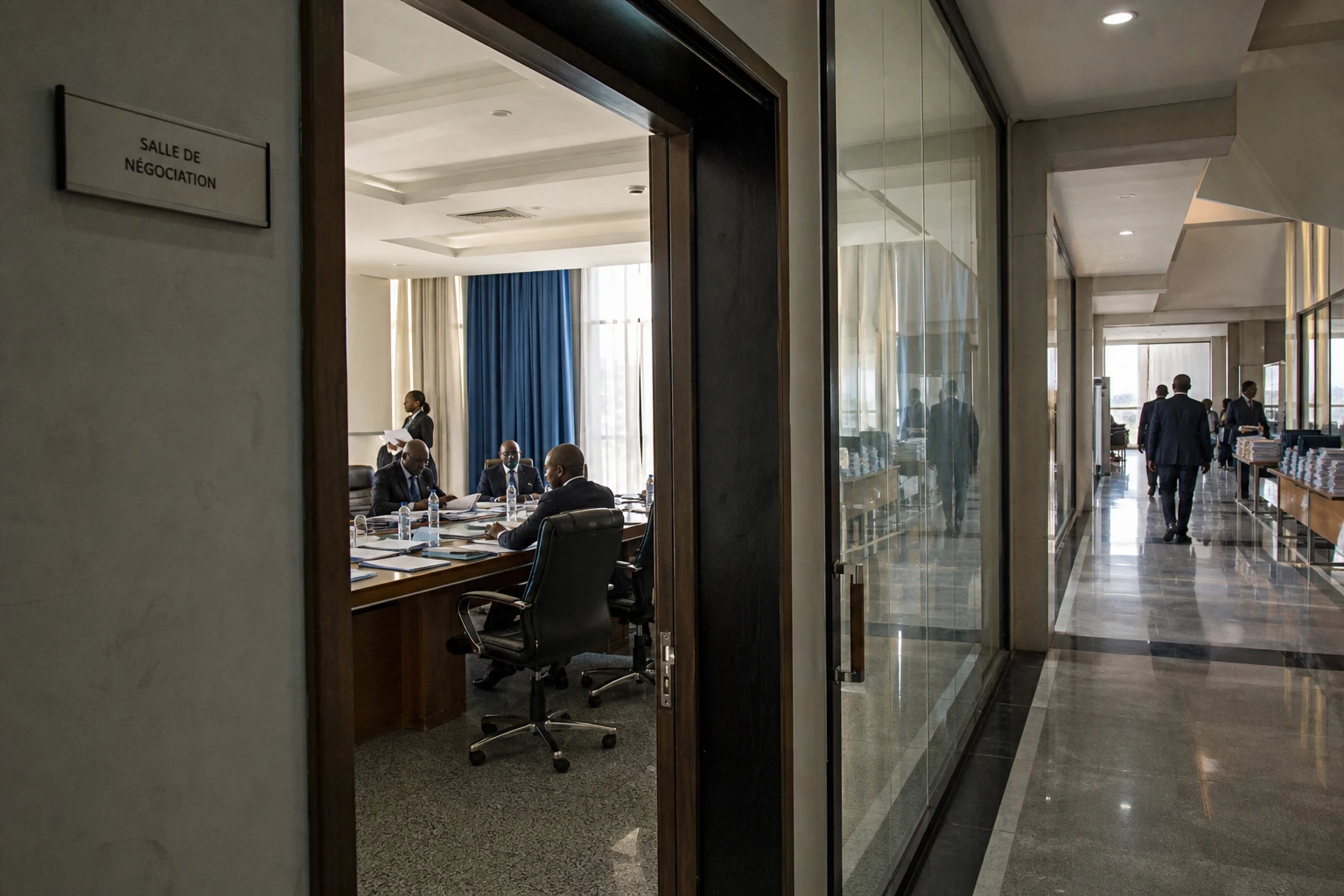
According to the communiqué issued after discussions from 17 to 21 August 2026, representatives of the Congolese government and the AFC/M23 adopted a roadmap to continue peace negotiations. The text provides for the establishment of a mechanism to track progress, address obstacles and support the implementation of commitments made under the Doha Framework Agreement. It also provides for a system to monitor ceasefire violations, with a secretariat already established and a first verification mission announced in Minembwe, in South Kivu, from Monday 24 August.
This step does not mean that the obstacles have disappeared. The parties remain at odds over several sensitive issues: sanctions targeting M23 officials, the question of detainees, the sequence of political reforms and, more broadly, how to turn an announced ceasefire into a lasting halt to the fighting. These issues have explained the slow pace of the process for months. They also show that the negotiations are not only military in nature. They concern justice, trust and the return of the state to areas that have been retaken or remain disputed.
A local conflict, but with regional drivers
The conflict in eastern DRC is not limited to a confrontation between Kinshasa and an armed group. It remains linked to persistent tensions between the DRC and neighbouring Rwanda. Kinshasa, Washington and several international partners describe the AFC/M23 as backed by Kigali, while Rwanda rejects the accusation and says it is acting for its security. Kigali, for its part, accuses the DRC of failing to neutralise the FDLR, a Rwandan armed group operating in the Great Lakes region.
This diplomatic phase is also part of a broader regional timeline. The peace agreement signed in Washington between the DRC and Rwanda on 27 June 2025, followed by the Doha Declaration of Principles, provided the basis for the current discussions. In its communications in 2025 and 2026, the African Union reaffirmed its commitment to the sovereignty and territorial integrity of the DRC, while calling for verifiable withdrawals of the AFC/M23 from occupied areas. In other words, the challenge is not only to silence the guns. It is to restore a clear chain of command, effective territorial control and credible verification of commitments.
What this means in practice for Congolese people
For civilians, the stakes remain immediate. In the provinces of North Kivu and South Kivu, fighting has caused mass displacement, loss of life and put the local economy under pressure. Roads are closed, markets empty out at times, and public services struggle to keep up. Progress or setbacks in a ceasefire mechanism are therefore first measured by families’ ability to travel, work, access healthcare and send children to school without fearing a resumption of fighting.
For Kinshasa, the issue is as much political as it is security-related. The government wants to prevent the military balance of power from becoming an institutional fait accompli. For the AFC/M23, the aim is the opposite: to secure guarantees about its political survival, detainees and its place in any potential settlement. Between these two positions, mediators are trying to establish a method: verification, sequencing and gradual commitments. This is precisely what the mechanisms announced in Switzerland reflect, and what MONUSCO and the African Union had already raised in their communications in February, April and August 2026.
The risk, however, is well known. In eastern Congo, many processes have advanced on paper before colliding with the reality on the ground. Agreements are made, front lines shift, and then accusations of violations begin again. The value of the roadmap agreed in Switzerland will therefore depend less on its wording than on its implementation: who verifies, where, with what resources, and under whose political oversight. Without that, the announcement of a mechanism could quickly become just another diplomatic milestone.
A phase to watch across the Great Lakes region
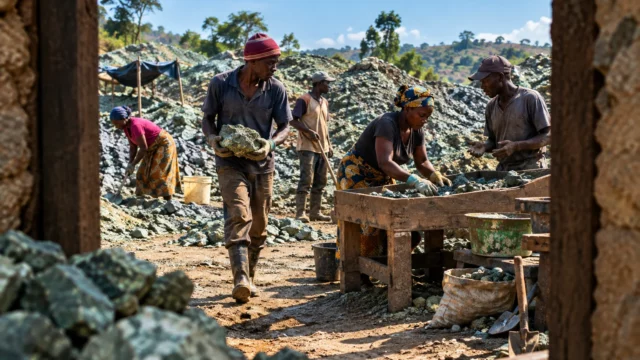
This new step matters beyond the DRC. It concerns the stability of the entire Great Lakes region, where borders, armed groups, population movements and mining networks are intertwined. Eastern Congo is home to strategic resources, including coltan, which is essential to several electronics industries. This gives the conflict regional and global economic significance, without obscuring its primary reality: a security crisis that first and foremost affects the Congolese people.
The coming days will be decisive. The mission announced in Minembwe is to test the credibility of the ceasefire and the parties’ ability to comply with a shared verification framework. The two sides will then have to answer the central question: do they merely want to manage the war, or truly bring it to an end? That is the measure by which the significance of the roadmap drawn up in Switzerland will be judged, in a case where diplomacy is now moving to the still-unstable rhythm of events on the ground.