Algeria
 Egypt
 Libya
 Morocco
 Sudan
 Tunisia
 Benin
 Burkina Faso
 Cabo Verde
 Ghana
 Guinea
 Guinea-Bissau
 Liberia
 Mali
 Mauritania
 Niger
 Nigeria
 Senegal
 Sierra Leone
 The Gambia
 Togo
 Cameroon
 Central African Republic
 Chad
 DR Congo
 Equatorial Guinea
 Gabon
 Republic of the Congo
 São Tomé and Príncipe
 Burundi
 Comoros
 Djibouti
 Eritrea
 Ethiopia
 Kenya
 Madagascar
 Malawi
 Mauritius
 Mozambique
 Rwanda
 Seychelles
 Somalia
 South Sudan
 Tanzania
 Uganda
 Angola
 Botswana
 Eswatini
 Lesotho
 Namibia
 South Africa
 Zambia
 Zimbabwe
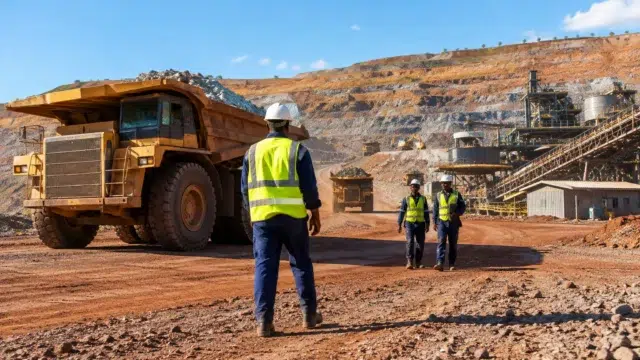
In Côte d’Ivoire’s gold-bearing regions, closing a site is no longer enough to disrupt clandestine networks. The authorities now want to target those who finance, organise and profit from illegal mining, going beyond the workers present at the sites.
A bill to trace responsibility up the chain
Meeting on Wednesday 23 September 2026, the Ivorian government adopted a bill amending several provisions of the Penal Code. The text must still go through the legislative process before it can potentially come into force.
The reform creates specific offences for those who commission and profit from illegal mining, receivers of stolen goods, financiers and owners of illegal gold-mining sites. It also provides for cumulative sentences. Where the offender is a public official, the penalty could reach 20 years in prison, according to the government’s presentation.
The measures are not limited to gold extraction. They also strengthen penalties for serious environmental damage, including clandestine mining and the unauthorised filling-in of the sea or inland waterways.
The government wants to distinguish the workers from those who provide machinery, organise supplies, protect sites or sell the ore. This approach reflects a desire to treat illegal gold mining as an economic chain, rather than a series of isolated offences.
The bill also contains other criminal provisions. It strengthens the protection of minors and women against rape and certain sexual offences. It also revises the definition of torture to include the responsibility of military commanders and superiors, in line with Côte d’Ivoire’s international commitments.
Persistent pressure in local communities
The announcement comes after several years of operations to dismantle illegal sites. According to figures released by the National Security Council, more than 8,500 illegal gold-mining sites have been destroyed since 2021. During the same period, 4,474 people were referred to the courts.
These figures do not mean that the phenomenon is in lasting decline. The Ivorian Press Agency has reported that the authorities still find a significant number of clandestine sites in several regions. Between January and July 2026, the gendarmerie reportedly carried out 953 operations, leading to the evacuation of 1,114 sites and the arrest of 1,531 people.
The problem extends beyond mining areas. In the north and east of the country, clandestine activity affects areas close to the borders with Burkina Faso, Ghana and Mali. This cross-border dimension facilitates the movement of people, equipment and minerals. It also makes commercial networks harder to control.
The Ivorian authorities also link illegal gold mining to security risks. In some fragile areas, sites can serve as meeting points for criminal networks. However, responsibility must be established on a case-by-case basis. The presence of clandestine activity alone is not enough to demonstrate a link with an armed group.
An economic and environmental cost that is hard to measure
Formalising the sector is the other part of Côte d’Ivoire’s strategy. In July 2025, Côte d’Ivoire entered into a partnership with the World Bank and the World Gold Council to improve safety, traceability and environmental standards in artisanal and small-scale mining.
The World Bank estimated at the time that around 40 tonnes of gold had been illegally taken out of the country in 2022, worth more than $2 billion at that year’s prices. Other estimates, based on more recent prices, put the annual loss at potentially more than $4 billion for volumes of between 30 and 40 tonnes. These figures are based on different calculation methods and should therefore be compared with caution.
The stakes go beyond tax revenue. Abandoned excavations weaken the soil and can affect farmland. The chemicals used to process ore also threaten waterways and local populations. In rural areas, this damage directly affects agriculture, livestock farming and access to water.
However, enforcement may have limited effects if it is not accompanied by an economic alternative. Artisanal mining supports many households. Workers are not all in the same situation: some are employed by organised operators, while others rely on occasional informal work.
Formalisation will therefore need to offer accessible permits, safer equipment, transparent purchasing channels and guarantees for local communities. Without these alternatives, closing a site risks simply shifting the problem to another area.
The role of local authorities and communities
The bill also provides for tougher penalties for certain behaviour or remarks directed at administrative officials, including kings and village chiefs. This provision reflects local realities: traditional authorities often play a role in access to land and mediation with operators.
Their involvement can help prevent illegal activity. It can also raise questions of responsibility where local arrangements allow clandestine sites to be established or remain in operation. The future criminal framework will therefore need to be applied on the basis of precise evidence, without automatically treating every neighbouring community as part of a mining network.
Transparent procedures will also be crucial. Local people expect information on sites that have been closed, seizures made, prosecutions brought and land restoration. They also want to know whether penalties apply only to workers or whether financiers and owners are actually being held to account.
A test for Ivorian mining policy
Côte d’Ivoire is seeking to increase its gold production while strengthening control over its resources. This ambition presents the state with a dual challenge: attracting industrial investment and organising an artisanal sector that remains important for rural employment.
At the West African level, the issue also concerns regional cooperation. Côte d’Ivoire is a member of ECOWAS, an organisation bringing together West African states and facilitating coordination on economic and security issues. Flows of gold, equipment and capital do not stop at national borders.
The next step will be Parliament’s examination of the bill, followed by its implementation on the ground if the text is adopted. Results will depend less on the severity of the penalties announced than on the ability to prosecute organisers, control commercial channels and provide legal options for artisanal miners.