
 Algeria
 Egypt
 Libya
 Morocco
 Sudan
 Tunisia
 Benin
 Burkina Faso
 Cabo Verde
 Ghana
 Guinea
 Guinea-Bissau
 Liberia
 Mali
 Mauritania
 Niger
 Nigeria
 Senegal
 Sierra Leone
 The Gambia
 Togo
 Cameroon
 Central African Republic
 Chad
 DR Congo
 Equatorial Guinea
 Gabon
 Republic of the Congo
 São Tomé and Príncipe
 Burundi
 Comoros
 Djibouti
 Eritrea
 Ethiopia
 Kenya
 Madagascar
 Malawi
 Mauritius
 Mozambique
 Rwanda
 Seychelles
 Somalia
 South Sudan
 Tanzania
 Uganda
 Angola
 Botswana
 Eswatini
 Lesotho
 Namibia
 South Africa
 Zambia
 Zimbabwe
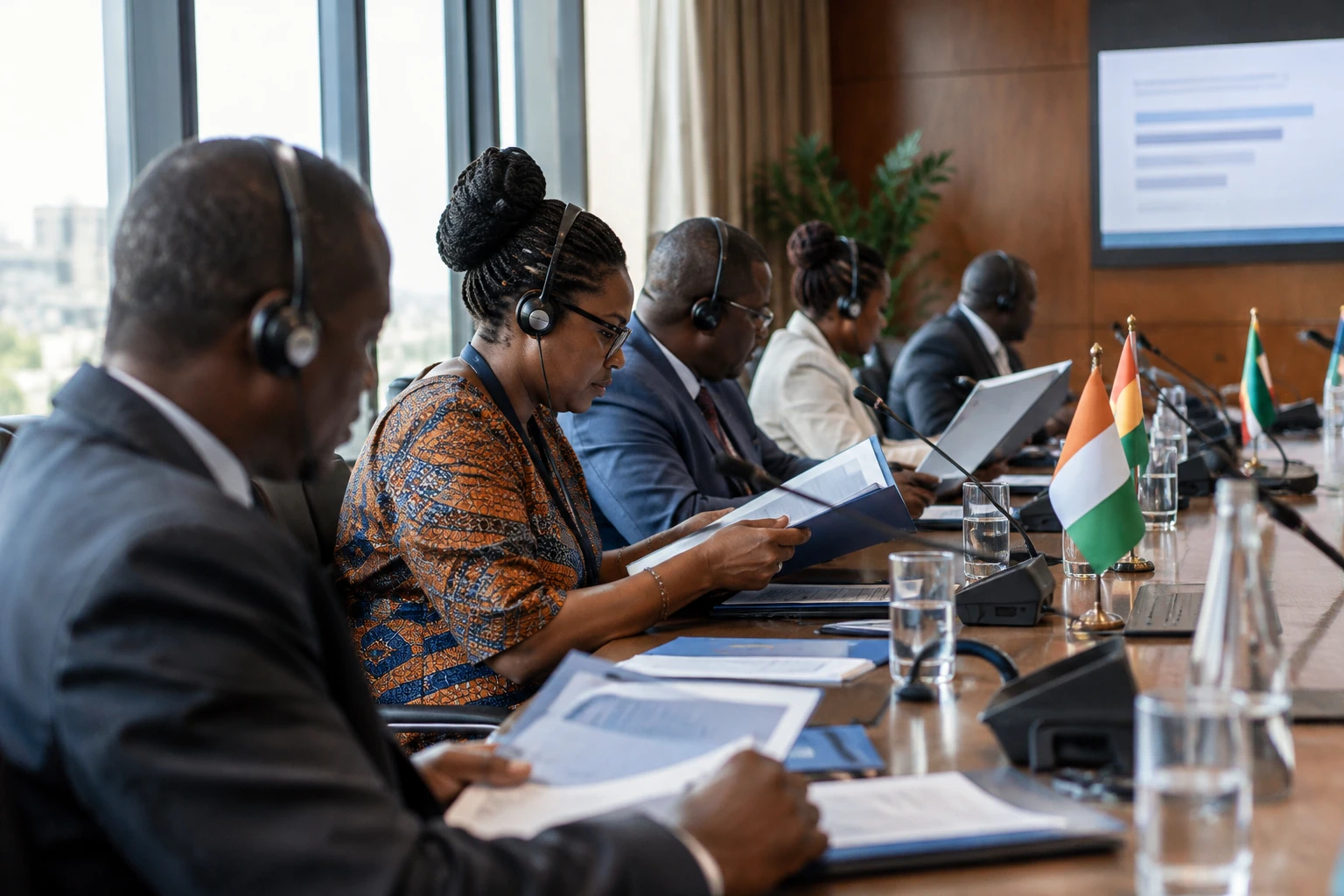
Sports betting and online games are taking on a growing role in Ivory Coast’s economy. Their expansion raises a practical question: how can rules be enforced and players protected as more and more wagers are placed through digital channels? The 2025 figures show the scale of the market, as well as the work needed to oversee it.
A rapidly expanding market
In Ivory Coast, the sector’s declared revenue reached 922.25 billion CFA francs at the end of 2025. Ibrahima Dosso, legal affairs director at the Gambling Regulatory Authority (ARJH), presented the figures on 10 November 2026 in Abidjan-Plateau. The Ivorian Press Agency and the Government Information and Communication Centre reported the same main figures.
The increase was 30.6% compared with 2024. This growth follows an already visible trend: the ARJH says overall revenue rose from 585.9 billion CFA francs in 2023 to 705.9 billion in 2024. The expansion of online offerings is accompanying this growth, although the published data do not break down revenue by type of game or channel.
The sector accounted for 1,859 direct jobs and paid more than 63.48 billion CFA francs in taxes and duties to the state. This amount represents about 6.9% of revenue, but should not be interpreted as an effective tax rate: the two figures do not necessarily refer to the same accounting base.
A framework based on authorisation
At the end of 2025, the licensed market comprised 25 players, according to data presented by the ARJH: the National Lottery of Côte d’Ivoire (LONACI), 16 online gaming operators licensed by it, six casinos and two slot-machine venues. This tally shows the diversity of the market, but does not specify how jobs or revenue are distributed among operators.
The legal framework is based on Law No. 2020-480 of 27 May 2020. It distinguishes between the concession granted by the state to LONACI for the activities entrusted to it, and prior authorisation, required for other categories, including casinos, physical slot machines and certain promotional lotteries. The ARJH’s role includes overseeing the sector, tackling illegal websites and handling disputes.
Regulation is therefore not just about collecting taxes. It must also ensure that operators comply with the terms of their licences, that players have recourse and that clandestine activities do not circumvent the rules. The rise of online gaming makes this oversight more complex: offers accessible by phone can reach players without going through a physical venue.
Oversight and player protection
Monitoring operations announced by the ARJH include the destruction of nearly 312 clandestine slot machines. The authority also says it has resolved 61 disputes between players and operators. Two warnings and one suspension were reportedly issued to online operators for breaches of regulations. These results are attributed to the regulator; the published information does not detail the nature of the disputes or the grounds for each sanction.
These interventions illustrate two different challenges. The first concerns competition between licensed operators and unauthorised offerings. The second directly affects players: when an operator falls outside regulatory oversight, it can be harder to claim winnings or challenge a practice. Ivorian law recognises the risk of excessive gambling and provides for regulatory measures, but the figures made public do not allow the scale of players’ losses or the effectiveness of prevention measures to be assessed.
The effects of growth are not evenly distributed. Tax revenues and direct jobs are measured nationally, while the available data do not specify where jobs, sales outlets or disputes are concentrated. Likewise, digital games are accessible beyond the major cities, but no figures published here make it possible to measure their use across regions or by income level.
An issue that crosses national borders
Ivory Coast is a member of ECOWAS, the Economic Community of West African States. The figures presented relate to the Ivorian market; they are not sufficient to establish a regional comparison. However, online gaming services raise an oversight challenge that can extend across borders: national rules must apply to digital offerings that may be accessed from several countries.
The priority for the Ivorian authorities will be to balance the growth of an activity that generates jobs and revenue with verifiable oversight of operators and effective player protection. The ARJH’s next data releases will be useful if they provide more detail on the composition of revenue, sanctions, complaints and prevention measures. For now, the market is clearly expanding; its social impact, however, remains less well documented than its economic value.



