Algeria
 Egypt
 Libya
 Morocco
 Sudan
 Tunisia
 Benin
 Burkina Faso
 Cabo Verde
 Côte d'Ivoire
 Ghana
 Guinea
 Guinea-Bissau
 Liberia
 Mali
 Mauritania
 Niger
 Nigeria
 Senegal
 Sierra Leone
 The Gambia
 Togo
 Cameroon
 Central African Republic
 Chad
 DR Congo
 Equatorial Guinea
 Gabon
 Republic of the Congo
 São Tomé and Príncipe
 Burundi
 Comoros
 Djibouti
 Eritrea
 Ethiopia
 Kenya
 Madagascar
 Malawi
 Mauritius
 Mozambique
 Rwanda
 Seychelles
 Somalia
 South Sudan
 Tanzania
 Uganda
 Angola
 Eswatini
 Lesotho
 Namibia
 South Africa
 Zambia
 Zimbabwe
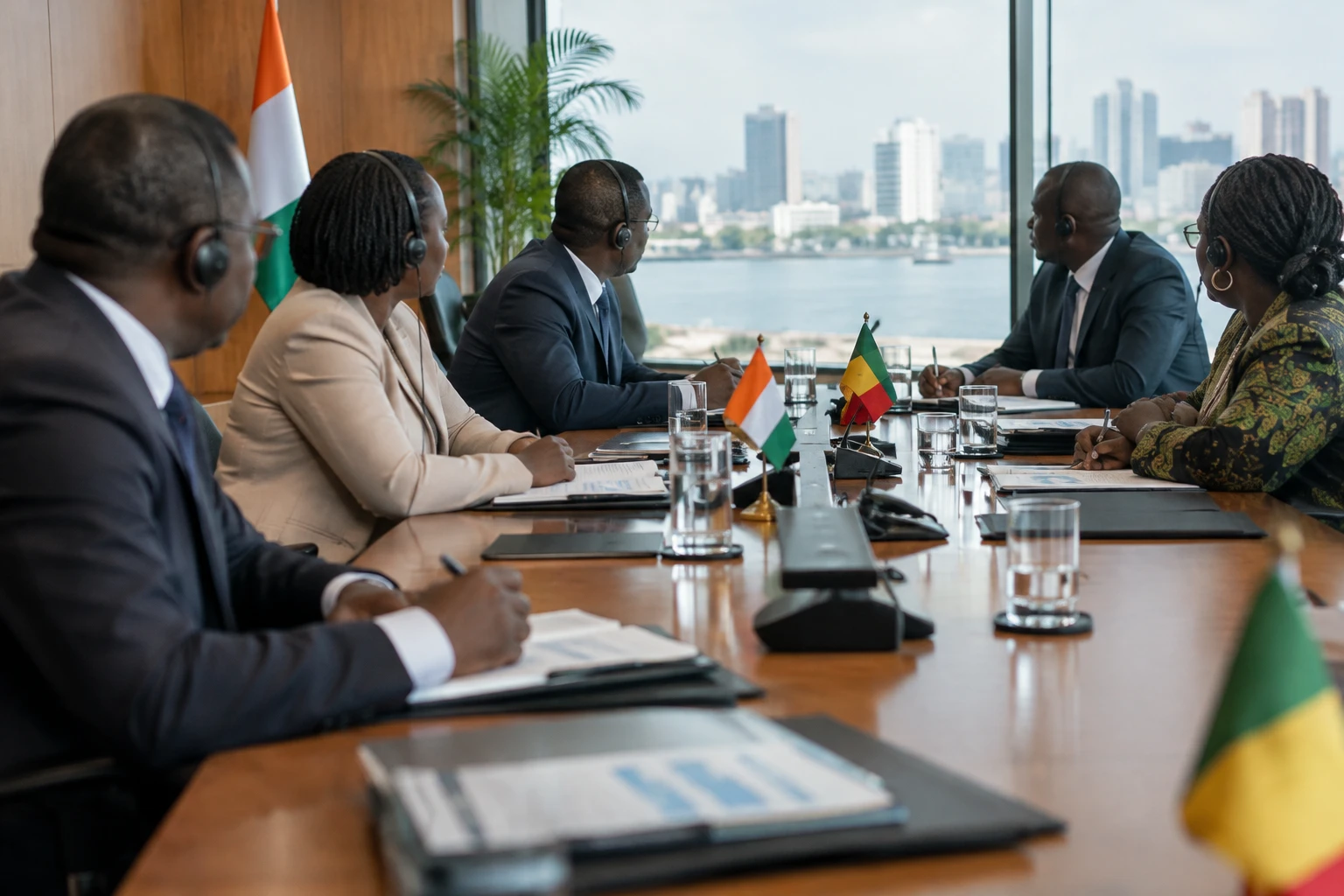
For Botswana and Côte d’Ivoire alike, the question is no longer simply how to extract minerals. It is also about processing more of them, developing local skills and keeping more value circulating on the continent. Duma Boko’s announced visit to Abidjan is intended to give political momentum to this shared ambition.
Two mining trajectories, one partnership to build
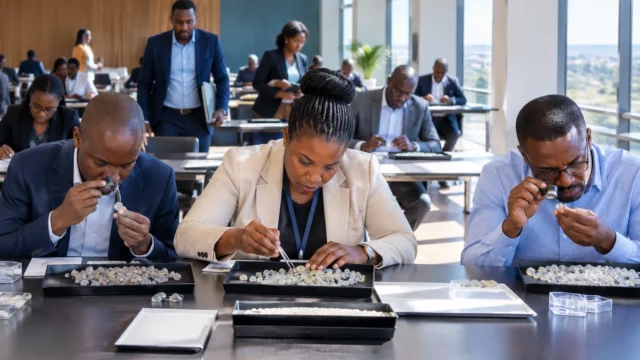
Botswana, a country in southern Africa whose capital is Gaborone, has long relied on diamond mining. This specialisation has generated significant revenue, but it also makes the economy sensitive to fluctuations in global demand. The recent decline in the diamond market is a reminder of this vulnerability. President Duma Boko has also announced that his country wants to increase its stake in De Beers, underlining the industry’s strategic importance to Gaborone.
Côte d’Ivoire, for its part, is rapidly developing its mining sector, particularly gold. Abidjan is seeking to attract investment and increase the domestic benefits of mining activity. The two economies therefore differ in scale and priorities. But they share an interest in making their resources a lever for diversification and development, rather than simply a source of exports.
Botswana is a member of the Southern African Development Community (SADC), an organisation that supports economic cooperation and integration in the region. Côte d’Ivoire, meanwhile, is in West Africa. Their rapprochement thus connects two regional blocs seeking to better link their markets, businesses and value chains.
A visit backed by an agreement already signed
Duma Boko is expected in Côte d’Ivoire from 15 to 18 November 2026, at the invitation of his counterpart, Alassane Ouattara. The announcement was reported by Botswana’s public broadcaster Daily News, which cited a statement from government offices. Talks are due to cover mining, agriculture, trade, investment and energy. The Botswana president is also due to attend the second edition of the International Extractive and Energy Resources Show (SIREXE), scheduled to take place in Abidjan from 18 to 22 November.
The visit builds on an existing rapprochement. On 30 July 2026, in Gaborone, the two countries’ ministers for mines and energy signed a cooperation agreement. The text covers geological research, exploration, diamonds, gold, critical minerals, training and sector governance. The announcement was confirmed by the Ivorian government and the pan-African news agency APA.
The state visit and SIREXE must now give practical substance to this agreement. Bilateral discussions have been announced. New agreements could be signed, but their content has not been made public. Declarations of intent will therefore need to be distinguished from projects that are actually funded and implemented.
Value addition at the heart of expectations
For Côte d’Ivoire, Botswana’s experience could inform debates on resource management, traceability and negotiations with mining operators. But one country’s experience cannot simply be transferred to another. Regulatory frameworks, the structure of deposits and industrial capabilities differ. Cooperation will therefore need to take the form of tailored technical exchanges, accessible training and clearly defined economic partnerships.
Botswana may, in turn, be looking to diversify its trade relations beyond its traditional partners and open up more opportunities in West Africa. The Ivorian market, its business community and its role as a regional hub could offer entry points. However, a summit alone will not remedy the low level of bilateral trade. That will also depend on logistics costs, air and road links, trade information and businesses’ ability to secure contracts.
The stakes also concern local communities. In mining areas, the benefits depend on local employment, public revenue, environmental requirements and relations with communities. In cities, service companies and small and medium-sized enterprises can benefit from new markets if they gain access to tenders. In agriculture, the partnerships under discussion could focus on processing and the exchange of expertise. At this stage, however, no specific programme or public timetable has been announced for this area.
From diplomatic meeting to measurable results
SIREXE provides a continental platform for this cooperation. Botswana has been designated the guest of honour. The trade show brings together players in extractive resources and energy to discuss infrastructure, investment and local processing. The announced presence of delegations from several African regions underlines that the issues extend beyond the Abidjan-Gaborone relationship alone.
For the African Union, this kind of South-South partnership aligns with a broader goal: better connecting the continent’s expertise, capital and markets. But its impact will depend on concrete follow-up. Key points to watch are the implementation of the July agreement, the nature of any agreements signed during the visit and the effective participation of Ivorian and Botswana businesses in joint projects.
The meeting comes as Botswana enters a new political era. In 2024, Duma Boko became president after the defeat of the party that had governed since independence. His government must balance economic diversification with managing pressure on the diamond industry. For Abidjan and Gaborone alike, the test is therefore easy to define: turn a recent diplomatic rapprochement into lasting trade, local skills and more widely shared benefits.