Algeria
 Egypt
 Libya
 Morocco
 Sudan
 Tunisia
 Benin
 Burkina Faso
 Cabo Verde
 Ghana
 Guinea
 Guinea-Bissau
 Liberia
 Mali
 Mauritania
 Niger
 Nigeria
 Senegal
 Sierra Leone
 The Gambia
 Togo
 Cameroon
 Central African Republic
 Chad
 DR Congo
 Equatorial Guinea
 Gabon
 Republic of the Congo
 São Tomé and Príncipe
 Burundi
 Comoros
 Djibouti
 Eritrea
 Ethiopia
 Kenya
 Madagascar
 Malawi
 Mauritius
 Mozambique
 Rwanda
 Seychelles
 Somalia
 South Sudan
 Tanzania
 Uganda
 Angola
 Botswana
 Eswatini
 Lesotho
 Namibia
 South Africa
 Zambia
 Zimbabwe
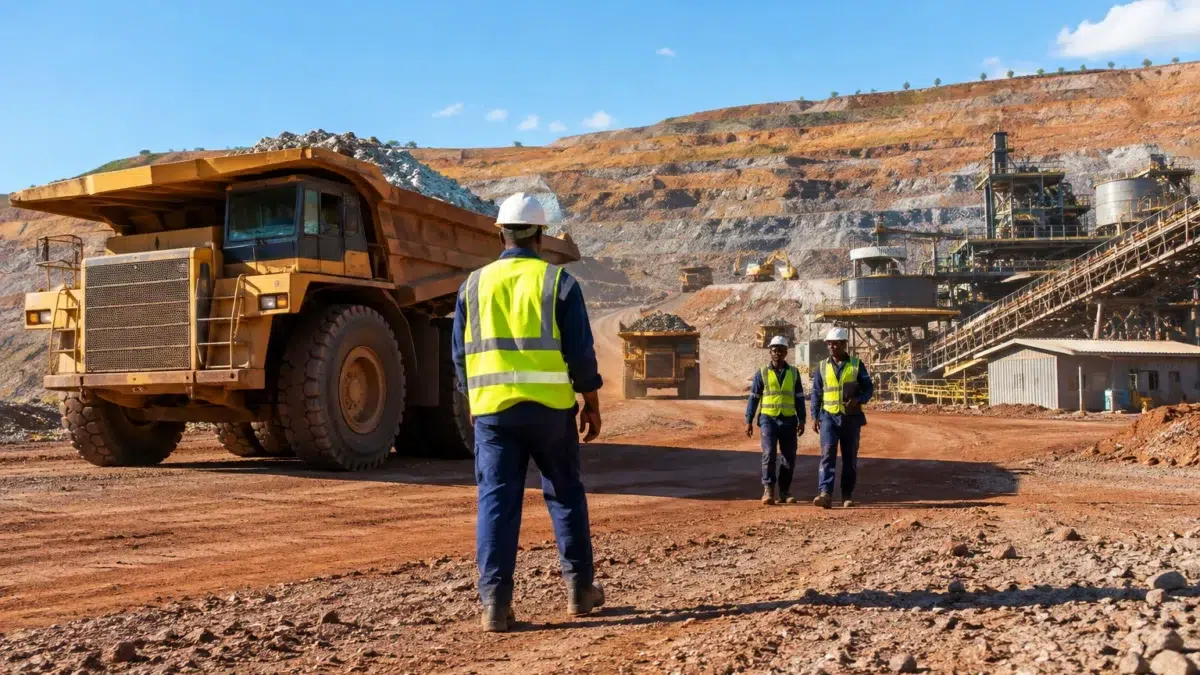
A gold mine cannot be built on permits and equipment alone. It also takes hundreds of billions of CFA francs, often over several years. In Côte d’Ivoire, part of that equation is beginning to be addressed in Abidjan: local banks are now helping to finance major mining projects.
An expanding sector, and the question of financing
Côte d’Ivoire is stepping up development of its gold industry. According to figures reported by the authorities and cited by several media outlets, production reached 59.33 tonnes in 2025. Projections cited for 2026 are close to 62 tonnes. These estimates are separate from final annual figures.
The inauguration of the Koné mine on 12 November 2026 illustrates the scale of investment under way. The project by Montage Gold, in the north-west of the country, represents more than CFAF 580bn. Its first gold pour took place on 26 September, according to the Ivorian Ministry of Mines. At Doropo, in the north-east, Resolute Mining is preparing another major project.
This development is part of a national economic diversification strategy. It also positions Côte d’Ivoire in a region where governments are seeking to capture more mining revenue and strengthen local benefits. ECOWAS, the economic community of West African countries, provides a framework for regional co-operation, although mining policies are set by each state.
Ivorian banks join Doropo financing consortium
According to information published in November by several Ivorian media outlets, Resolute Mining secured CFAF 148bn in financing in Abidjan from seven banks established in Côte d’Ivoire. AFG Bank Côte d’Ivoire is reported to be contributing CFAF 28bn. The total amount and the composition of the consortium have been reported by these media outlets; the information consulted does not make it possible to independently confirm each contribution with Resolute.
If confirmed, the figures would mark an important milestone: Ivorian institutions are no longer limiting themselves to routine services for mining companies. They are helping to finance mine construction. Using several banks also makes it possible to share risk when a project exceeds the lending capacity of a single lender.
The Ivorian banking system has a substantial asset base. Data from the 2025 annual report of the UMOA Banking Commission show around CFAF 31,199bn in banking assets in the country, or nearly 38% of the Union’s total. According to the data, AFG Bank Côte d’Ivoire had a balance sheet of CFAF 1,373.7bn at the end of 2025. These figures indicate the market’s depth, but do not mean that every bank can finance large-scale mining projects on its own.
From participation to financial arranging
AFG Bank Côte d’Ivoire says it wants to go beyond participating in syndicated loans. The bank is seeking to structure transactions and co-ordinate lenders. In the sector, an arranger organises financing, allocates commitments among banks and co-ordinates loan terms.
The ambition is backed by a specialist team, a Mining Desk dedicated to extractive companies. The bank also highlights its network of 88 points of presence. In mining regions, this footprint can facilitate payments to employees and suppliers, as well as access to banking services for local businesses. But the network alone guarantees neither contracts for Ivorian subcontractors nor a fairer distribution of revenue around mine sites.
The strategy also carries risks. Mines require large sums and long-term financing. Repayment depends in particular on construction schedules, actual production and gold prices. Prudential rules also limit the concentration of loans to a single borrower. Banks will therefore have to spread their commitments and carefully assess projects, including delays, cost overruns and price fluctuations.
Local content beyond lending
For the Ivorian authorities, the challenge is not simply to attract capital. The government has argued for financing mechanisms more firmly rooted in the national economy. The aim is for Ivorian companies, banks and suppliers to take a larger share of the mining value chain.
The difference will be measured on the ground. Major projects concentrate their financial decisions in Abidjan or abroad, while construction takes place far from the political capital, Yamoussoukro. Communities near the mines, small businesses and employees expect tangible benefits: jobs, local procurement, reliable payments and sustained investment in the areas concerned. Access to credit for local businesses therefore remains an important test of local-content policy.
SIREXE 2026, held in Abidjan from 18 to 22 November, places extractive resources and infrastructure at the heart of discussions. The event puts local financing ambitions in the spotlight. But announcing capacity is not enough: upcoming financing deals, the terms offered to borrowers and the share of contracts going to Ivorian companies will need to be monitored.
Across West Africa, the issue extends beyond one bank or one country. Côte d’Ivoire has a sizeable banking sector and is attracting new mining investment. If its institutions succeed in structuring sound loans, they could strengthen their role in regional financing. The next step will be to see whether that presence also means more value is retained in the Ivorian economy.