Algeria
 Egypt
 Libya
 Sudan
 Tunisia
 Benin
 Burkina Faso
 Cabo Verde
 Côte d'Ivoire
 Ghana
 Guinea
 Guinea-Bissau
 Liberia
 Mali
 Mauritania
 Niger
 Nigeria
 Senegal
 Sierra Leone
 The Gambia
 Togo
 Cameroon
 Central African Republic
 Chad
 DR Congo
 Equatorial Guinea
 Gabon
 Republic of the Congo
 São Tomé and Príncipe
 Burundi
 Comoros
 Djibouti
 Eritrea
 Ethiopia
 Kenya
 Madagascar
 Malawi
 Mauritius
 Mozambique
 Rwanda
 Seychelles
 Somalia
 South Sudan
 Tanzania
 Uganda
 Angola
 Botswana
 Eswatini
 Lesotho
 Namibia
 South Africa
 Zambia
 Zimbabwe
Casablanca gains ground on a still highly concentrated financial map
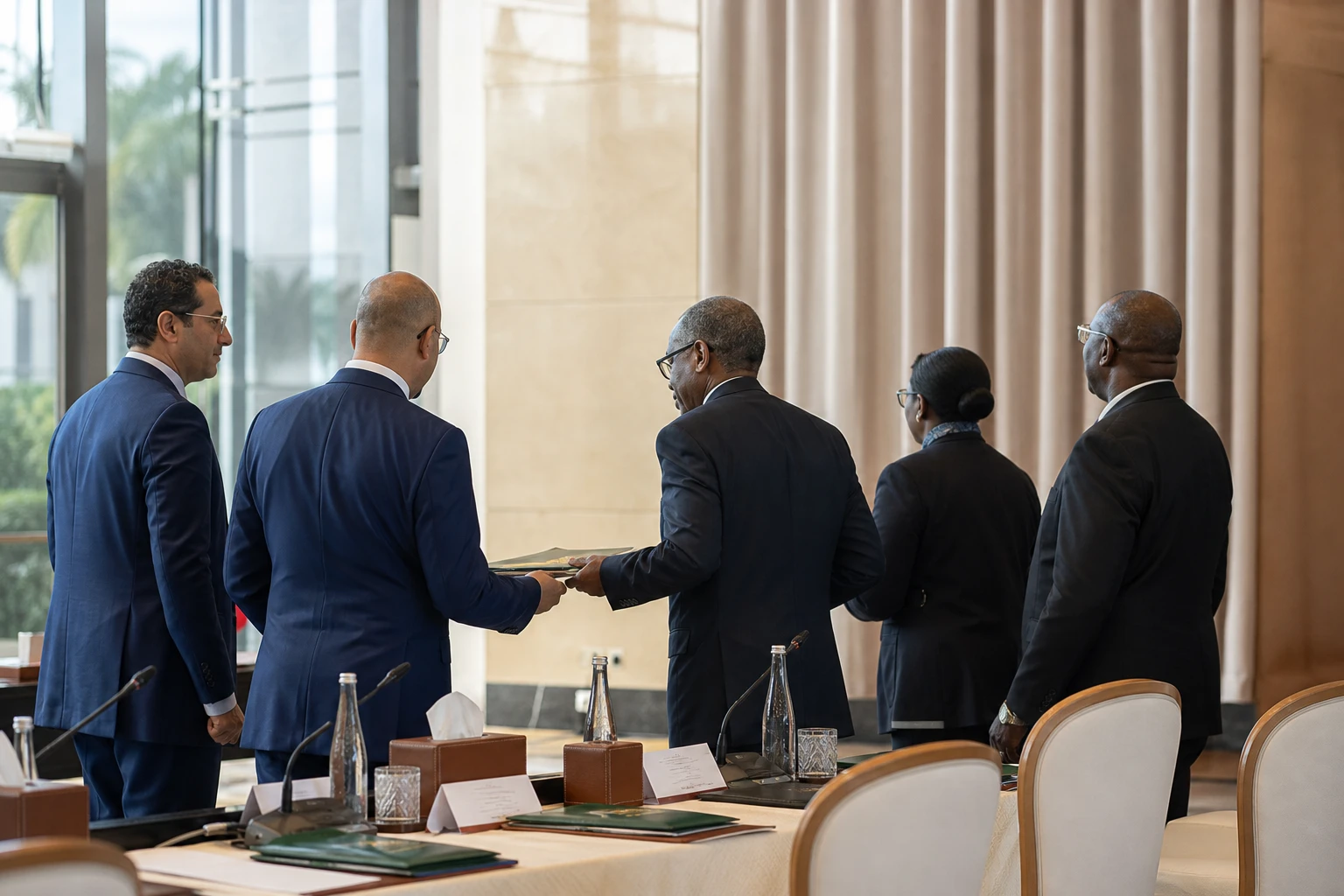
At a time when capital is primarily seeking stability, visibility and fast links to multiple markets, Casablanca wants to show that an African financial centre can compete globally without giving up its regional role. Casablanca Finance City’s rise in the GFCI 40 ranking confirms this positioning, as financial centres in the Gulf, Asia and North America continue to dominate the international league table.
Morocco is relying on an asset that has become central to its economic diplomacy: making Rabat the seat of decision-making and Casablanca the financial, commercial and entrepreneurial showcase for Africa. This strategy is part of a broader South-South cooperation drive, already evident in the partnerships forged by Casablanca Finance City with other hubs, including Nairobi.
What the new ranking really shows
The Global Financial Centres Index 40, published on 16 September 2026, assesses 117 financial centres around the world. In its 40th edition, Casablanca rises 11 places to 38th globally. The Moroccan centre also ranks third in the Middle East and Africa region, behind Dubai and Abu Dhabi, while remaining the leading African centre in the ranking.
The ranking is not based on a single measure of opinion. It combines 144 quantitative factors provided by institutions such as the World Bank, the OECD and the UN, alongside a survey of 6,147 financial services professionals, for a total of 39,531 assessments. This methodology sheds less light on a centre’s raw strength than on its perceived competitiveness, reputation and ability to attract talent and investors.
At the same time, the report identifies Casablanca as one of the centres likely to grow in importance over the next two to three years. Kigali is in the same category. In other words, the index does not merely describe a fixed position. It also maps a possible trajectory, useful to investors as well as policymakers.
Why Casablanca Finance City matters to Morocco
Established in 2010, Casablanca Finance City has become one of the most visible instruments of Morocco’s economic outreach to Africa. The centre now says it has 280 members, covers 110 countries, represents 67 nationalities and has 7,800 employees in its ecosystem. These figures show that it is not simply a business district, but a coordination platform for companies managing regional operations from Casablanca.
The scheme is also underpinned by a specific incentive framework. The Casablanca-Settat Regional Investment Centre says that companies based in Casablanca Finance City benefit from a full exemption from corporate income tax for five years, followed by a 20% rate thereafter, as well as a 20% rate for employees’ income tax, subject to certain limits. Morocco’s objective is clear: to attract management, advisory, financing and administrative functions to Casablanca rather than export these services to other centres.
The make-up of the CFC community is revealing. It includes banks, insurers, consultancies, technology groups and multinationals active in several African markets. Names visible on the platform include McKinsey, Deloitte, KPMG, Huawei, Mastercard, Allianz Africa and Africa50, as well as several organisations linked to pan-African operations. This portfolio partly explains Casablanca’s weight in business services and regional intermediation.
A signal for North Africa and African business
Casablanca’s rise has implications beyond Morocco alone. In North Africa, it confirms that a financial hub can be built on a local ecosystem, solid infrastructure and a clear regulatory offer. Across the continent, it also shows that competition is not only between political capitals, but between centres capable of connecting finance, services, compliance, tax and market access.
The shift comes as other African centres seek to capture the same value chain. The report ranks Mauritius second in Africa, Kigali third, followed by Cape Town, Johannesburg, Nairobi and Lagos. The message is significant: Africa is not absent from global finance, but remains split across several hubs advancing at different speeds. Casablanca retains an advantage in longevity, networks and proximity to Europe.
For Moroccans, the stakes are not abstract. A more attractive financial centre means regional headquarters, skilled jobs and increased business for legal, accounting, digital and insurance services, but also greater pressure to meet governance, transparency and training standards. For local companies, it opens up markets. For smaller firms, it can also raise expectations and accelerate professionalisation.
The next test will be whether this progress lasts. The GFCI is published every March and September. The question will therefore be whether Casablanca consolidates its 11-place gain or turns it into a lasting position in the global Top 40. That is what distinguishes a strong ranking score from a firmly established place in the international financial hierarchy.