Algeria
 Libya
 Morocco
 Sudan
 Tunisia
 Benin
 Burkina Faso
 Cabo Verde
 Côte d'Ivoire
 Ghana
 Guinea
 Guinea-Bissau
 Liberia
 Mali
 Mauritania
 Niger
 Nigeria
 Senegal
 Sierra Leone
 The Gambia
 Togo
 Cameroon
 Central African Republic
 Chad
 DR Congo
 Equatorial Guinea
 Gabon
 Republic of the Congo
 São Tomé and Príncipe
 Burundi
 Comoros
 Djibouti
 Eritrea
 Ethiopia
 Kenya
 Madagascar
 Malawi
 Mauritius
 Mozambique
 Rwanda
 Seychelles
 Somalia
 South Sudan
 Tanzania
 Uganda
 Angola
 Botswana
 Eswatini
 Lesotho
 Namibia
 South Africa
 Zambia
 Zimbabwe
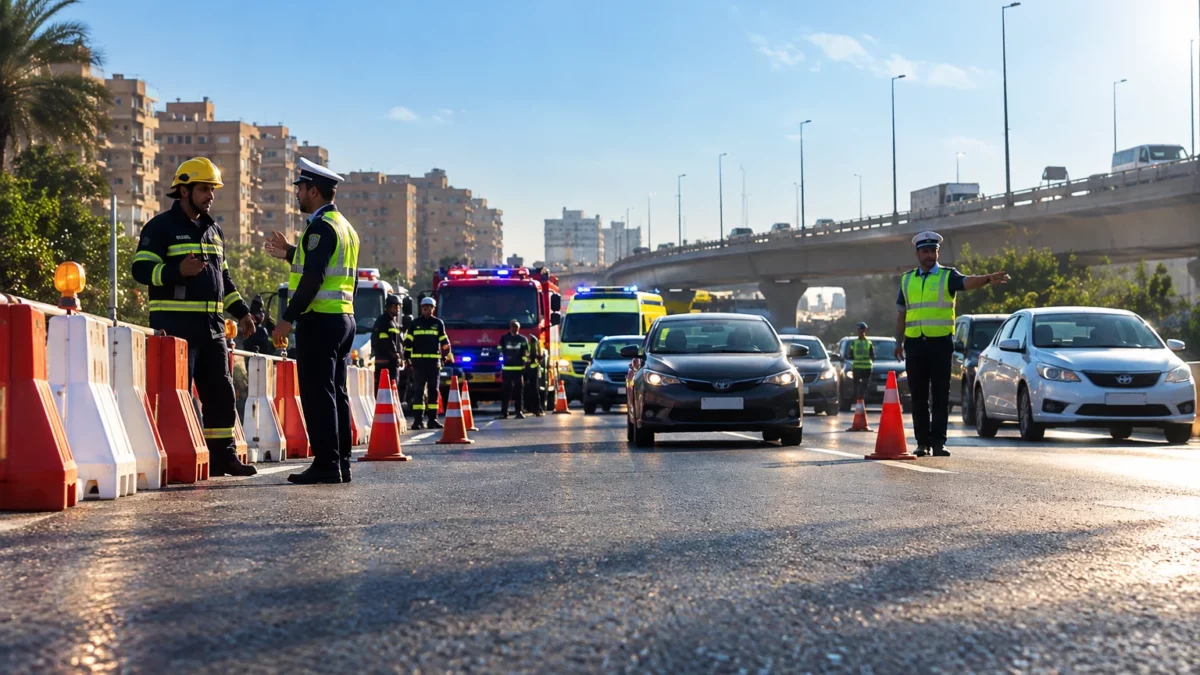
On Cairo’s ring road, a collision between a car and a truck carrying petroleum products triggered a deadly fire. Beyond the investigation into the driver who was arrested, the tragedy has once again highlighted the risks faced every day by users of a route essential to life in the Egyptian capital.
An accident on a vital artery of Greater Cairo
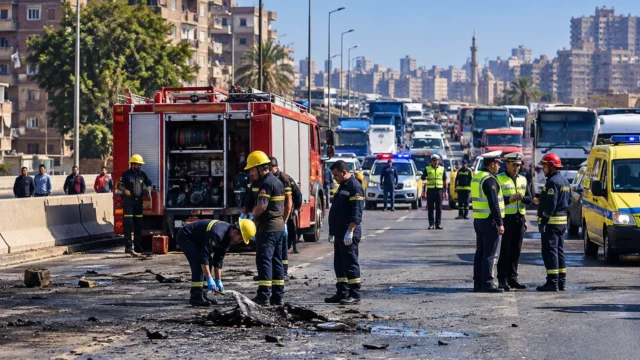
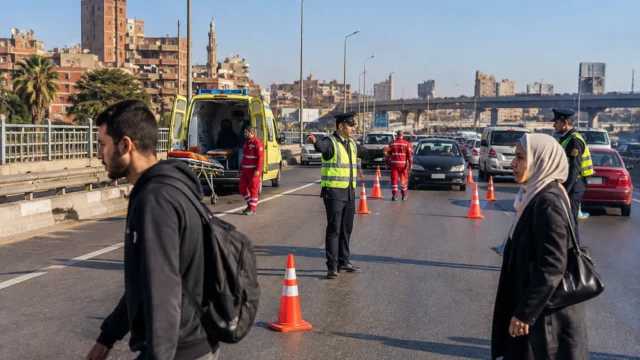
The fire broke out on the evening of Wednesday 25 November 2026, in the Al-Warraq area of Giza, on the ring road encircling Cairo. The route links several major roads and serves densely populated neighbourhoods, business districts and the suburbs of Greater Cairo. It is used by cars, minibuses and heavy goods vehicles alike.
The proximity of these different traffic flows matters. For many residents, the ring road is part of the daily journey to work, education or services. But the mix of vehicles of different sizes and speeds increases the potential consequences of a collision, particularly when a truck is carrying flammable material.
The death toll reported by the Egyptian authorities is 31, with 26 injured. Twenty-seven vehicles, including cars and motorcycles, were reportedly destroyed by the fire. Thirty-nine ambulances were sent to the scene and the victims were taken to several hospitals. DNA samples were ordered to identify some of the bodies. These details were reported by the Egyptian press and international media. The toll and rescue operation in the Al-Warraq area were also detailed by Arab News.
What the investigation is seeking to establish
Egypt’s public prosecution announced on Thursday 26 November that a 21-year-old motorist had been arrested and remanded in custody. He is suspected of causing the collision. At this stage, the investigation is ongoing: the driver’s criminal liability has not been determined by a court.
According to statements attributed to the suspect by the prosecution, he was travelling at 110 km/h and changing lanes to overtake when his car allegedly struck the truck’s rear right side. The driver is said to have then lost control of his vehicle. A tyre on the heavy goods vehicle reportedly burst; the truck then hit a concrete barrier, overturned and spilled its fuel, which caught fire. The prosecution says it is cross-checking these statements against witness accounts, observations at the scene and technical evidence. The procedure announced by the Egyptian public prosecution also includes forensic tests to determine whether there was any drug use.
These checks do not replace an examination of other material factors. The investigation must clarify the precise sequence of events and the circumstances in which the truck was on this stretch of the ring road. At this stage, the authorities have not issued a full conclusion on any potential liability beyond that of the driver who was arrested.
After the emergency, the question of road safety
The human toll extends beyond those who were on the road. Families are waiting for their relatives to be identified; the injured need medical care, particularly for burns. Travel around the area and business activity at nearby shops were also affected by the fire and the emergency response.
Prime Minister Mostafa Madbouly visited hospitals and announced support for bereaved families, including investment certificates intended to provide them with regular income. The government also raised the prospect of replacing the vehicles that were destroyed. These measures address immediate losses, but do not yet indicate what decisions will be taken to reduce risks on the roads.
The accident recalls a recent earlier tragedy: in January 2026, a pile-up near Beni Suef killed 21 people and injured 16, according to the Associated Press. The circumstances are different; nevertheless, the recurrence of deadly road accidents makes it necessary to examine factors beyond the behaviour of a single motorist: heavy goods vehicle traffic, speed enforcement, vehicle condition and the implementation of regulations.
This analysis must remain grounded in the facts of each accident. In the Al-Warraq case, the prosecution is continuing its investigation and must establish responsibility on the basis of the evidence. Individual suspicion alone is not enough to explain why a fire was able to spread to so many vehicles on such a busy route.
A tragedy that resonates beyond Egypt’s borders
The tragedy prompted a continental response. African Union Commission Chairperson Mahmoud Ali Youssouf offered his condolences to the families on 26 November. His statement referred to 21 injured people, while the later toll reported in Egypt and carried by several media outlets put the figure at 26. The discrepancy reflects how casualty figures can change over the hours; the latest Egyptian figure consulted is 26.
Egypt is a member of the African Union and the Arab Maghreb Union, but the accident falls first and foremost under the remit of the Egyptian authorities and their national investigation. Its regional significance lies mainly in a shared reality: major African cities depend on roads where public transport, cars and freight intersect. Attention will therefore focus on the judicial findings, the identification of victims and concrete prevention measures. The African Union statement on the Giza fire reflects the solidarity expressed across the continent.