Algeria
 Egypt
 Libya
 Morocco
 Sudan
 Tunisia
 Benin
 Burkina Faso
 Cabo Verde
 Côte d'Ivoire
 Ghana
 Guinea
 Guinea-Bissau
 Liberia
 Mali
 Mauritania
 Niger
 Nigeria
 Senegal
 Sierra Leone
 The Gambia
 Togo
 Cameroon
 Chad
 DR Congo
 Equatorial Guinea
 Gabon
 Republic of the Congo
 São Tomé and Príncipe
 Burundi
 Comoros
 Djibouti
 Eritrea
 Ethiopia
 Kenya
 Madagascar
 Malawi
 Mauritius
 Mozambique
 Rwanda
 Seychelles
 Somalia
 South Sudan
 Tanzania
 Uganda
 Angola
 Botswana
 Eswatini
 Lesotho
 Namibia
 South Africa
 Zambia
 Zimbabwe
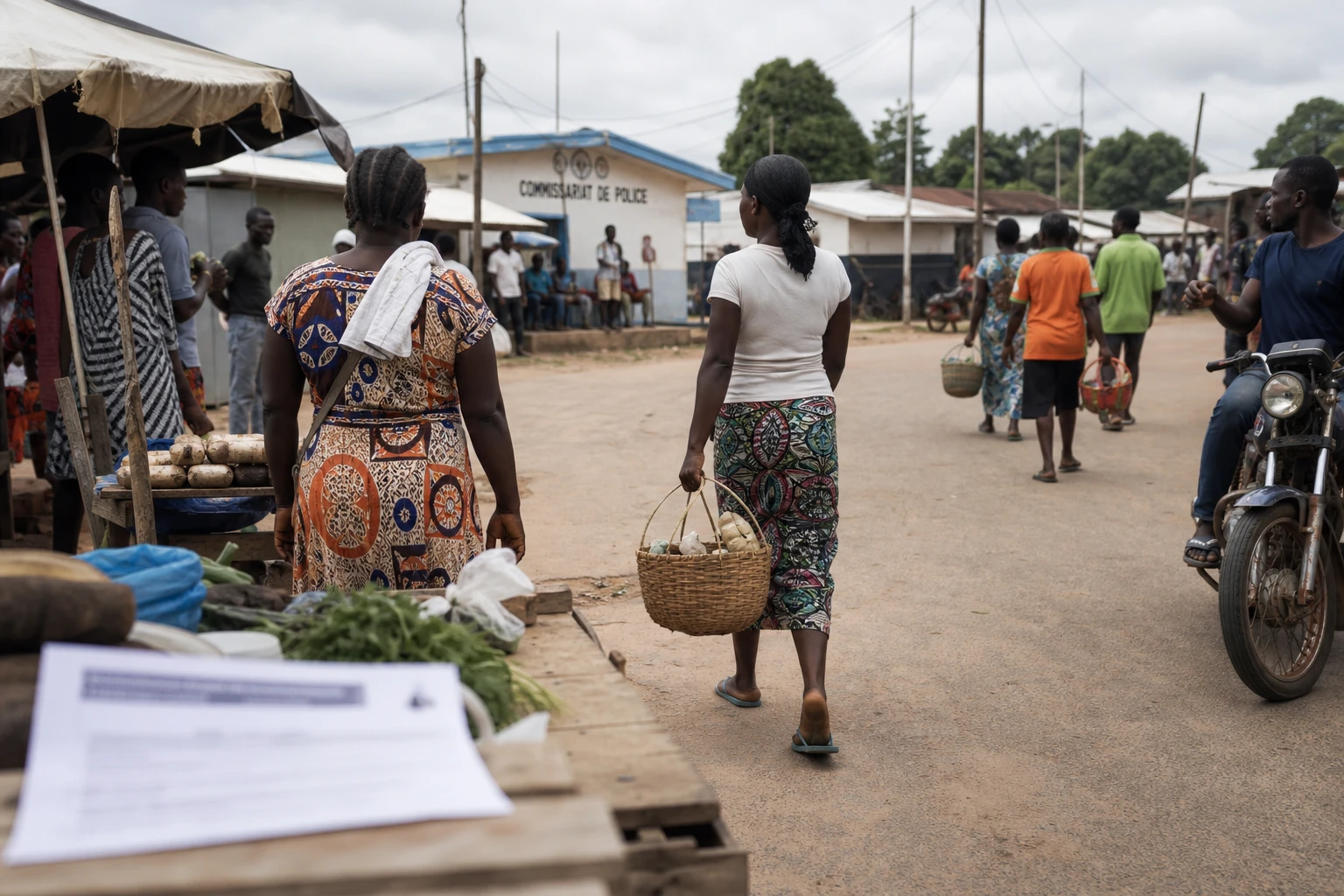
In Bayanga, fear comes not only from the forest
In south-west Central African Republic, rural life depends on fields, tracks and journeys on foot. When these paths become a source of anxiety, the whole balance of a place like Bayanga is shaken. People travel less, agricultural work slows and even funeral rites become a source of unease.
Bayanga is in Sangha-Mbaéré prefecture, a border region adjoining Cameroon and Congo, at the heart of an area where the state is still seeking to consolidate its presence. In recent months, however, the sub-prefecture has seen security arrangements strengthened, with support from national forces and MINUSCA, the United Nations stabilisation mission in the Central African Republic. This context says a great deal: here, security is not limited to roads or police stations; it also concerns the dignity of the dead and the trust of the living.
Serious allegations, responses that remain fragile
In Bayanga, residents and local authorities have reported worrying disappearances, desecrated graves and suspicions of trafficking in human organs or human remains. The reported incidents have fuelled a lasting climate of fear, to the point that some villagers have stayed away from their plantations and avoided travelling alone in the bush. Local accounts also refer to blood being taken and night patrols set up to curb the phenomenon.
These accusations should be treated with caution. They are serious, but some concern investigations that are still incomplete or accounts that are difficult to document publicly. What can be established, however, is the response of the local authorities: defence committees, night patrols, coordination with the police, gendarmerie and eco-guards, as well as calls for judicial investigations to continue. In the summer of 2026, local officials said no new cases had been reported since security arrangements were strengthened.
Sangha-Mbaéré is not cut off from the rest of the country. It has already been the focus of efforts to restore state authority, including the handover of police stations in Nola and Bayanga. The stakes are clear: when the administration, the justice system and security forces are scarcely visible, rumours spread faster, complaints are less likely to be heard and suspected trafficking finds fertile ground.
An agricultural region cannot live in a state of mistrust
Bayanga depends first and foremost on agriculture, directly or indirectly. Available humanitarian data show that the sub-prefecture has a population of several tens of thousands, with heavy reliance on rural activities. In such an area, persistent fear affects more than bereaved families. It takes a toll on harvests, small businesses, journeys to markets and exchanges between villages.
The problem therefore goes beyond the criminal justice system. It affects the flow of information, trust in the authorities and the state’s ability to protect citizens, even in remote areas. When residents hesitate to go to the fields alone, household incomes fall. When a grave is desecrated, family memory is wounded. And when disappearances receive no swift response, public trust is weakened.
Bayanga’s situation also highlights a wider reality in Central Africa: in borderlands, forest areas and along secondary routes, security often rests on a fragile network of national forces, local units, eco-guards and international partners. Where that network is stretched, various forms of trafficking, opportunistic violence and criminal beliefs can flourish. This is not unique to the Central African Republic, but Sangha-Mbaéré offers a clear illustration.
What Bayanga says about the Central African Republic today
The case of Bayanga is part of the broader trajectory of the Central African Republic, where extending state authority remains a central challenge. In several prefectures, the return of the administration, the opening or rehabilitation of police posts and joint patrols are presented as practical responses to widespread insecurity. Sangha-Mbaéré is one of the areas where the state’s presence still needs to be consolidated day by day.
At the regional level, the prefecture lies in a cross-border area linking Cameroon and Congo, within the Economic and Monetary Community of Central Africa (CEMAC). This proximity makes border surveillance important, but it also complicates investigations into alleged trafficking in human remains, which is often mobile, discreet and difficult to document. In this part of the Congo Basin, cooperation between security services, the justice system and local authorities is therefore crucial.
The wider significance comes down to a simple point: when a phenomenon combines grave desecration, disappearances and a criminal economy, it is not merely a matter of public order. It raises questions about protecting rural communities, local access to justice and tackling cross-border trafficking. For the Central African Republic, the immediate challenge is to turn the decline in fear into visible judicial results. For the region, the challenge is to prevent forest and border areas from becoming blind spots in public security.