Algeria
 Egypt
 Libya
 Morocco
 Sudan
 Tunisia
 Benin
 Burkina Faso
 Cabo Verde
 Côte d'Ivoire
 Ghana
 Guinea
 Guinea-Bissau
 Liberia
 Mali
 Mauritania
 Niger
 Nigeria
 Senegal
 Sierra Leone
 The Gambia
 Togo
 Cameroon
 Chad
 DR Congo
 Equatorial Guinea
 Gabon
 Republic of the Congo
 São Tomé and Príncipe
 Burundi
 Comoros
 Djibouti
 Eritrea
 Ethiopia
 Kenya
 Madagascar
 Malawi
 Mauritius
 Mozambique
 Rwanda
 Seychelles
 Somalia
 South Sudan
 Tanzania
 Uganda
 Angola
 Botswana
 Eswatini
 Lesotho
 Namibia
 South Africa
 Zambia
 Zimbabwe
In Bangui, a fire with implications beyond the building
When a building housing lists, archives and servers catches fire, the problem is not limited to material damage. In Bangui, the vulnerability of an electoral centre immediately affects confidence in the vote, administrative continuity and the state’s ability to meet its timetable.
The Central African Republic is going through this period as it revives its local and legislative elections. In the CEMAC area, whose headquarters are also in Bangui, the country’s institutional stability carries weight beyond its borders. It matters for public administration, but also for the image of a state still seeking to consolidate its electoral procedures.
What happened on the night of 18–19 September
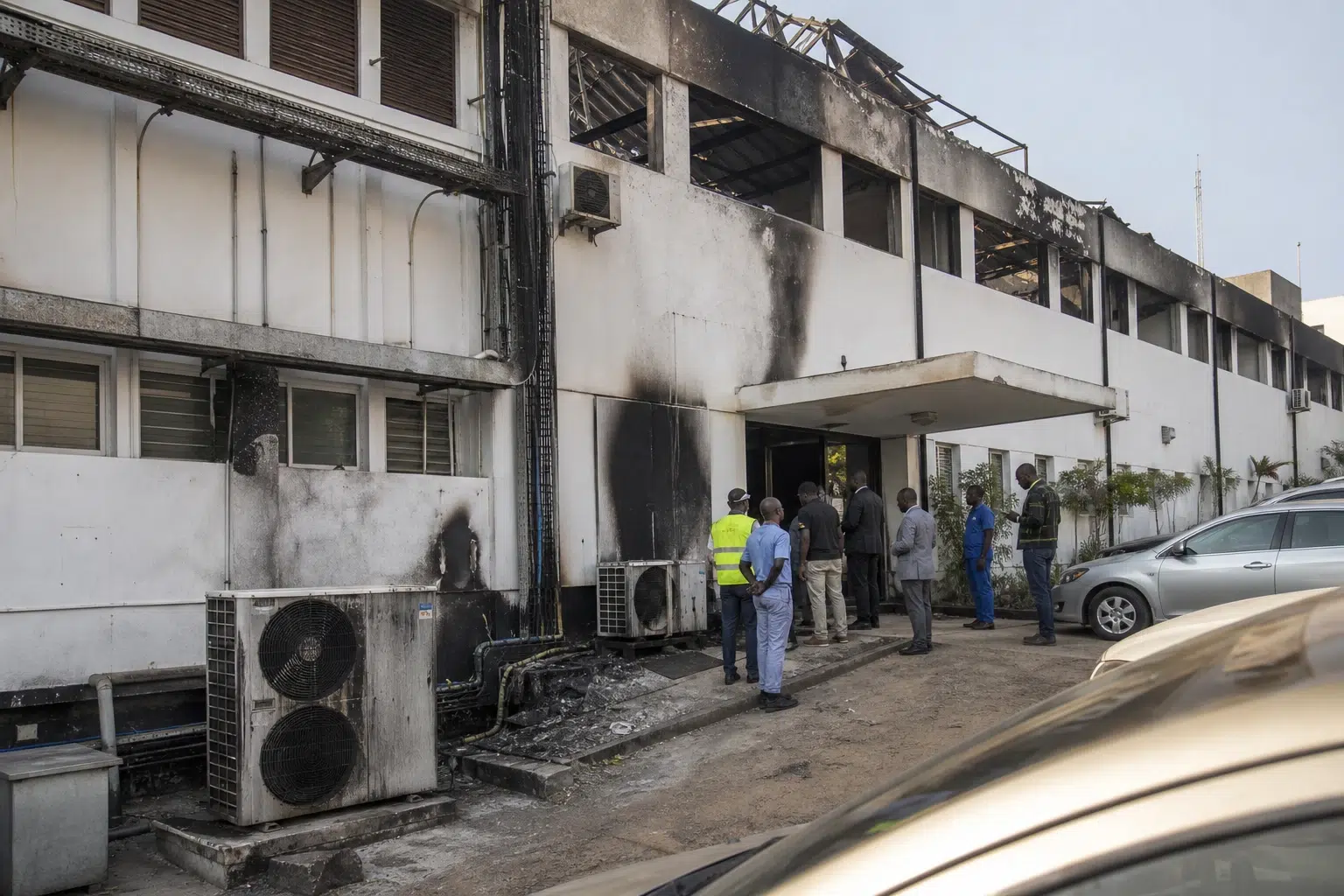
A fire broke out in part of the National Elections Authority’s data processing centre in Bangui on the night of 18 September 2026. The blaze damaged technical rooms and caused significant material losses. Radio Ndeke Luka reported that an electrical short circuit was the initial suspected cause.
According to reports by media outlets that spoke to the institution’s president, Mathias Barthélemy Morouba, archives, the electoral-list printing room, printers, scanners and around 70 computers were destroyed or rendered unusable. One other detail, however, appears decisive: the server containing the electoral register was saved. This changes the immediate nature of the incident, as the data were preserved even though the equipment was damaged.
Emergency services, supported by the Civil Protection Service and MINUSCA, brought the flames under control overnight. The building was left blackened, with its roof badly damaged. No definitive conclusion has been made public about the exact cause of the fire. The short-circuit theory therefore remains a line of inquiry, not a certainty.
Why the site is strategic for Central African elections
The data processing centre is not just an administrative building. According to the ANE’s operational handbook, all candidates’ applications and data related to scheduled elections are processed digitally in Bangui. In other words, the site lies at the heart of the electoral system.
The same document says the ANE organises the receipt and processing of candidacies for presidential, legislative, regional and municipal elections. It also notes that the institution works to tight deadlines and faces demanding technical requirements. In this context, the loss of machines and archives may slow its work, even though the essential digital data were spared.
The electoral timetable remains a sensitive matter. ANE documents and statements published in 2025 and 2026 show that the process is under way for several elections, including legislative, municipal and partial regional polls. The timetable has already been adjusted, adding to the pressure on the electoral administration as deadlines approach.
A second fire renews questions about security
The latest blaze is all the more serious because the same building was hit by a fire around six months earlier. At the time, the investigation concluded that an electrical short circuit had caused it. The recurrence of the same type of incident prompts two interpretations: the first points to the site’s age or electrical vulnerability; the second, more political, raises questions about the security of an electoral facility amid heightened institutional sensitivities.
For the ANE, the immediate challenge is practical. It must take stock of the losses, repair the facilities, secure the remaining equipment and reorganise technical work. For voters, candidates and parties, the question is simpler still: can the electoral administration deliver reliable lists and transparent data processing on time?
The message sent to voters matters as much as repairing the walls. In a country where political competition remains closely tied to the credibility of institutions, a fire at the heart of the electoral system can fuel mistrust, even without evidence of sabotage. The ANE therefore has every reason to communicate quickly, document the losses and show that the electoral register itself is intact.
What the incident says about the Central African Republic and the region
Bangui brings together several symbols here: it is the political capital, the home of the ANE and the host city of the CEMAC Commission. This overlap underlines the importance of the Central African capital in Central Africa’s institutional architecture. A breakdown or technical incident in Bangui therefore has implications beyond the national level.
Regionally, the Central African Republic is part of an area where electoral administrations, mechanisms for verifying results and the movement of data are becoming strategic issues. Securing public infrastructure is a shared challenge, whether in finance, health or elections. The Bangui incident is a reminder that democracy also depends on technical rooms, cables, servers and backup procedures.
What happens next will depend on two things. First, the investigation must establish the exact cause of the fire. Second, the ANE must show that it can quickly restore its processing centre without losing control of the operations scheduled in the electoral timetable. In the Central African Republic, the issue is not just replacing equipment. It is keeping the electoral chain running in Bangui, so the rest of the country can follow.