Egypt
 Libya
 Morocco
 Sudan
 Tunisia
 Benin
 Burkina Faso
 Cabo Verde
 Côte d'Ivoire
 Ghana
 Guinea
 Guinea-Bissau
 Liberia
 Mali
 Mauritania
 Niger
 Nigeria
 Senegal
 Sierra Leone
 The Gambia
 Togo
 Cameroon
 Central African Republic
 Chad
 DR Congo
 Equatorial Guinea
 Gabon
 Republic of the Congo
 São Tomé and Príncipe
 Burundi
 Comoros
 Djibouti
 Eritrea
 Ethiopia
 Kenya
 Madagascar
 Malawi
 Mauritius
 Mozambique
 Rwanda
 Seychelles
 Somalia
 South Sudan
 Tanzania
 Uganda
 Angola
 Botswana
 Eswatini
 Lesotho
 Namibia
 South Africa
 Zambia
 Zimbabwe
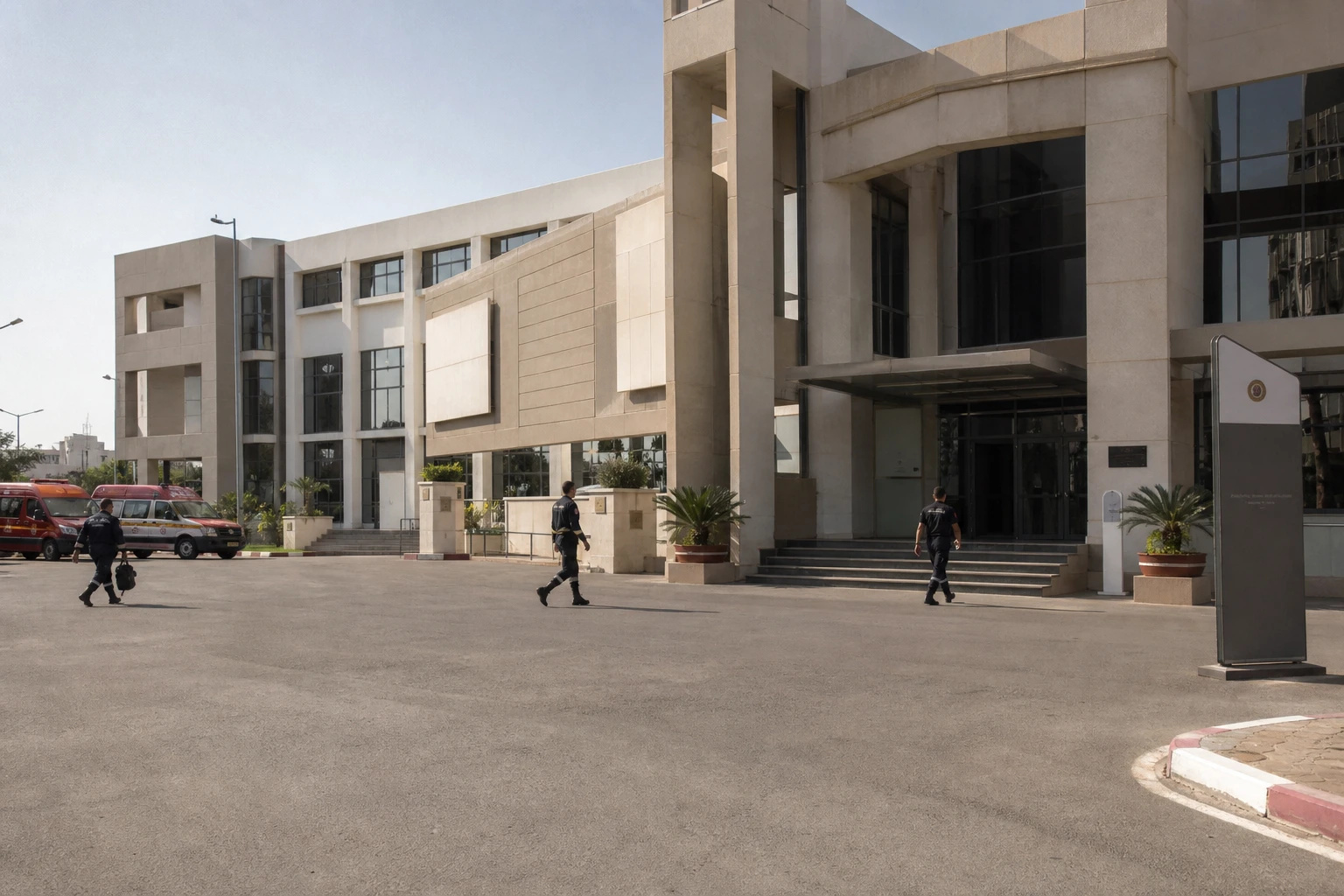
A respite in Algeria during a tense Mediterranean summer
In northern Algeria, summer is measured not only by the heat. It is also measured by how quickly emergency services move from one blaze to another, from one wilaya to the next, and then bring a crisis under control before it spreads. This time, Algeria’s Civil Protection service says it has extinguished all the fires recorded since 8 July, a total of 1,968 blazes. The contrast is striking with the northern Mediterranean shore, where the same weather pattern continues to fuel megafires in Spain and France.
This divergence speaks as much to the level of risk as to how it is addressed. In the Mediterranean basin, heatwaves, drought and wind turn every spell of hot weather into a logistical test. The European Union’s Joint Research Centre points out that EFFIS maps track only fires covering more than 30 hectares, meaning that part of the reality remains out of view. But the trend is clear: by the end of July 2026, southern Europe is experiencing an exceptional fire season, and health and climate authorities see it as a lasting warning.
Algeria extinguished 1,968 fires, but the season has left a heavy toll
The figures made public on Tuesday 28 July by the Directorate General of Civil Protection show that 1,968 fires have been extinguished since 8 July. Of these, 667 affected forests, scrubland and brush, while 1,301 hit crops, fruit trees and palm groves. The same report says no new fires were being reported anywhere in the country on that date. A few days earlier, the same source had already said that 97% of the fires were under control, before confirming that they had all been extinguished.
This rapid outcome is down to a combination of resources. Civil Protection services worked with the forestry directorates and detachments of the People’s National Army (ANP), while local authorities began assessing the damage in preparation for compensation. The Interior Ministry requested a detailed inventory of losses. In several areas of the north-east, from Béjaïa to Annaba via Skikda, El Tarf, Bouira and Guelma, interventions followed one another at a sustained pace. Preventive evacuations were also ordered in Souk Ahras and the Kanoua region.
The human toll remains the most sensitive figure. APS reported two deaths in Sétif and, more broadly, six deaths since the start of the heatwave. This information should not be read as a mere statistic. It speaks to the vulnerability of people in peri-urban and rural areas, where homes stand alongside scrubland, orchards and forest tracks. It also points to the pressure on emergency services when several fires break out at once, rather than a single blaze commanding everyone’s attention.
The same climate, different national responses
At the other end of the Mediterranean, Spain and France are experiencing a far more destructive spell. The European EFFIS centre, cited by the Commission’s Joint Research Centre, shows that the 2026 season is already well above the usual European averages. Spain’s emergency services have activated the European Union Civil Protection Mechanism, while the Commission has announced additional aircraft to help Madrid and Paris. Meanwhile, the World Health Organization’s Regional Office for Europe warns that the coming weeks could be even more dangerous, as heat remains a direct driver of fire risk.
The situation in Spain is particularly revealing. The fire that started in Burgohondo, in the province of Ávila, crossed a historic threshold, becoming, according to officials cited by the international press, the largest wildfire ever recorded in the country. At the same time, the national total of land burned continues to rise sharply. In France, major fires have also hit the Mediterranean coast and then the south-west, with mass evacuations in Gironde and the Landes. The common factor is not just temperature. It is the strain created by the combination of drought, dispersed urban development and emergency infrastructure pushed to its limits.
Against this backdrop, Algeria does not appear to be a fortunate exception. Rather, it shows that a rapid, coordinated and centralised response can shorten a crisis, even when the number of fires is high. But this effectiveness does not erase structural limitations: a limited fleet of aerial resources, vast wooded areas that are difficult to access, pressure on the northern wilayas and the exposure of agricultural holdings. In other words, the crisis did not turn into a national disaster, but it confirmed the vulnerability of an area where forests, crops and settlements are increasingly close together.
What this episode says to the continent
For North Africa, the lesson extends beyond Algeria. The Maghreb shares the same climate corridor as southern Europe: longer summers, more intense heatwaves and more flammable vegetation. Fire does not stop at borders. It moves with air masses, droughts and winds. That is why forecasting agencies, forestry services and civil protection bodies must now be conceived as part of a Mediterranean civil defence system, with countries in the South and North sharing experience.
The continent-wide implications are also institutional. The African Union, Maghreb states and regional technical bodies have reason to view these episodes as early-warning signals, not isolated accidents. The fires of 2026 are a reminder that prevention is less visible than emergency response, but costs less than repair. In Algeria, the focus now shifts to another phase: assessing losses, paying compensation, restoring orchards, securing forested areas and preparing for August and September, which remain the most sensitive months every year. The immediate crisis is over. The season is not yet finished.