
 Egypt
 Libya
 Morocco
 Sudan
 Tunisia
 Benin
 Burkina Faso
 Cabo Verde
 Côte d'Ivoire
 Ghana
 Guinea
 Guinea-Bissau
 Liberia
 Mali
 Mauritania
 Niger
 Nigeria
 Senegal
 Sierra Leone
 The Gambia
 Togo
 Cameroon
 Central African Republic
 Chad
 DR Congo
 Equatorial Guinea
 Gabon
 Republic of the Congo
 São Tomé and Príncipe
 Burundi
 Comoros
 Djibouti
 Eritrea
 Ethiopia
 Kenya
 Madagascar
 Malawi
 Mauritius
 Mozambique
 Rwanda
 Seychelles
 Somalia
 South Sudan
 Tanzania
 Uganda
 Angola
 Botswana
 Eswatini
 Lesotho
 Namibia
 South Africa
 Zambia
 Zimbabwe
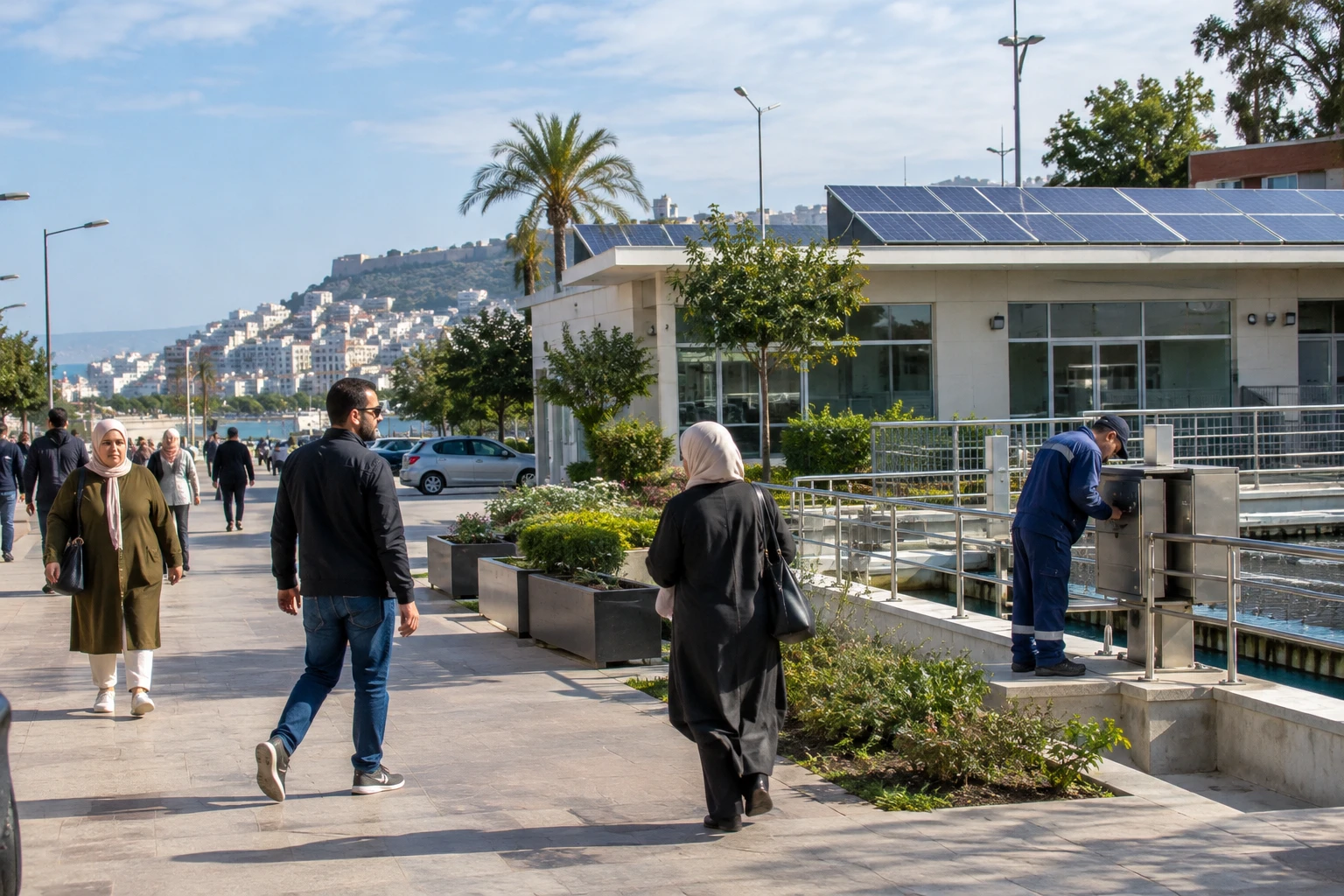
In Algeria, the energy transition is playing out on two fronts: generating more solar electricity and reducing the footprint of a hydrocarbons sector that remains central to the economy. Discussions opened with Scatec focus precisely on this intersection. They concern possible avenues for cooperation, but no agreement or investment project has been announced.
Still exploratory discussions in Algiers
On 19 October 2026, Mohamed Arkab, Minister of State in charge of Hydrocarbons, received Terje Pilskog, chief executive of Norwegian company Scatec, in Algiers. The talks concerned potential partnerships with Sonatrach, Algeria’s state-owned hydrocarbons group. The meeting was attended by Norway’s ambassador and representatives of both sides, according to the ministry, whose account was published by the Algeria Press Service.
The topics discussed went beyond the construction of renewable power plants. They included reducing methane and greenhouse gas emissions from oil and gas facilities, improving their energy efficiency and technical solutions to limit industrial emissions. The two sides also discussed seawater desalination powered by renewable energy.
This distinction matters: a ministerial meeting and the expression of commercial interest do not amount to a contract or an investment decision. The Algerian statement describes the discussions as an exploration of partnership and expertise-sharing opportunities. The terms, timetable, financing and possible involvement of local companies remain to be specified.
An ambitious solar programme, with an execution challenge
The Algerian government is targeting 15,000 megawatts of renewable capacity by 2035. An initial tranche of 3,200 MW is under construction. The Ministry of Energy and Renewable Energy says the plants are to be spread across several wilayas, particularly in the south and the High Plateaux. This is a capacity target, not power already available on the grid.
The programme forms part of a trajectory in which gas remains essential for electricity generation and exports. For Algiers, developing solar power could help meet growing domestic demand and, in time, preserve more gas for other uses. But the impact will depend on projects being delivered, connected to the grid and operating effectively. The authorities also cite the development of local skills and industrial integration.
The meeting with Scatec therefore opens up an avenue distinct from the renewable capacity target alone: improving the environmental performance of existing facilities. Cutting methane leaks, using energy more efficiently and making use of associated gas could directly affect Sonatrach’s operations. The state-owned group has its own programmes in these areas. Any potential cooperation will therefore need to clarify how its in-house capabilities complement the expertise Scatec could bring.
Energy and desalination: a practical issue for communities
Desalination links energy policy with water security. Producing drinking water from seawater requires energy; powering these facilities with renewables could reduce their reliance on fossil fuels, provided reliable solutions suited to the grid are available. For coastal cities and areas served by these plants, the issue is continuity of water supply. For the electricity system, it is also a matter of managing substantial, steady demand.
Geography matters. The national programme’s solar plants are planned for inland and southern regions, while desalination facilities are on the coast. Bringing them together is not straightforward: it requires electricity transmission infrastructure, storage or other means of managing supply, as well as coordination between sectors. The benefits for Algerian businesses and workers will also depend on procurement terms, training and skills transfer. No such details were released after the meeting.
An African presence to compare, not replicate
Scatec is developing solar and storage projects in several African markets. Its official portfolio includes activities in Egypt, South Africa, Botswana and Tunisia. Its subsidiary Release offers modular solar installations with batteries, particularly for public electricity services. In Cameroon, for example, it has commissioned hybrid power plants intended to strengthen supply in the north of the country. These examples show possible models, but do not predetermine what would suit Algeria.
In Egypt, the Obelisk project combines a large-scale solar plant with a battery system. Scatec announced the commercial operation of its first phase in February 2026; the second phase was still to be completed. The example illustrates the group’s ability to combine generation and storage. It does not, however, make it possible to anticipate the terms of any potential Algerian project, which would depend on the regulatory framework, Sonatrach’s needs and national priorities.
Regionally, Algeria is a member of the Arab Maghreb Union, whose economic cooperation remains limited. Energy prospects nevertheless extend beyond this framework: grid interconnection and electricity trading in North Africa are among the long-term issues. Algeria’s ministry also presents renewable development as a means of co-operation with other African countries. For the African Union, the challenge is a familiar one: increasing clean capacity while ensuring access, grid stability and local benefits.
The next step will be less diplomatic than practical: determining whether the discussions lead to a study, a protocol or a defined project, and on what terms. Indicators to watch include the publication of an agreement, identification of sites, financing and the role assigned to Algerian companies. For now, Scatec has expressed interest; Algeria, meanwhile, is pursuing a renewable energy programme whose implementation remains the main test.



