
 Egypt
 Libya
 Morocco
 Sudan
 Tunisia
 Benin
 Burkina Faso
 Cabo Verde
 Côte d'Ivoire
 Ghana
 Guinea
 Guinea-Bissau
 Liberia
 Mali
 Mauritania
 Niger
 Nigeria
 Senegal
 Sierra Leone
 The Gambia
 Togo
 Cameroon
 Central African Republic
 Chad
 DR Congo
 Equatorial Guinea
 Gabon
 Republic of the Congo
 São Tomé and Príncipe
 Burundi
 Comoros
 Djibouti
 Eritrea
 Ethiopia
 Kenya
 Madagascar
 Malawi
 Mauritius
 Mozambique
 Rwanda
 Seychelles
 Somalia
 South Sudan
 Tanzania
 Uganda
 Angola
 Botswana
 Eswatini
 Lesotho
 Namibia
 South Africa
 Zambia
 Zimbabwe
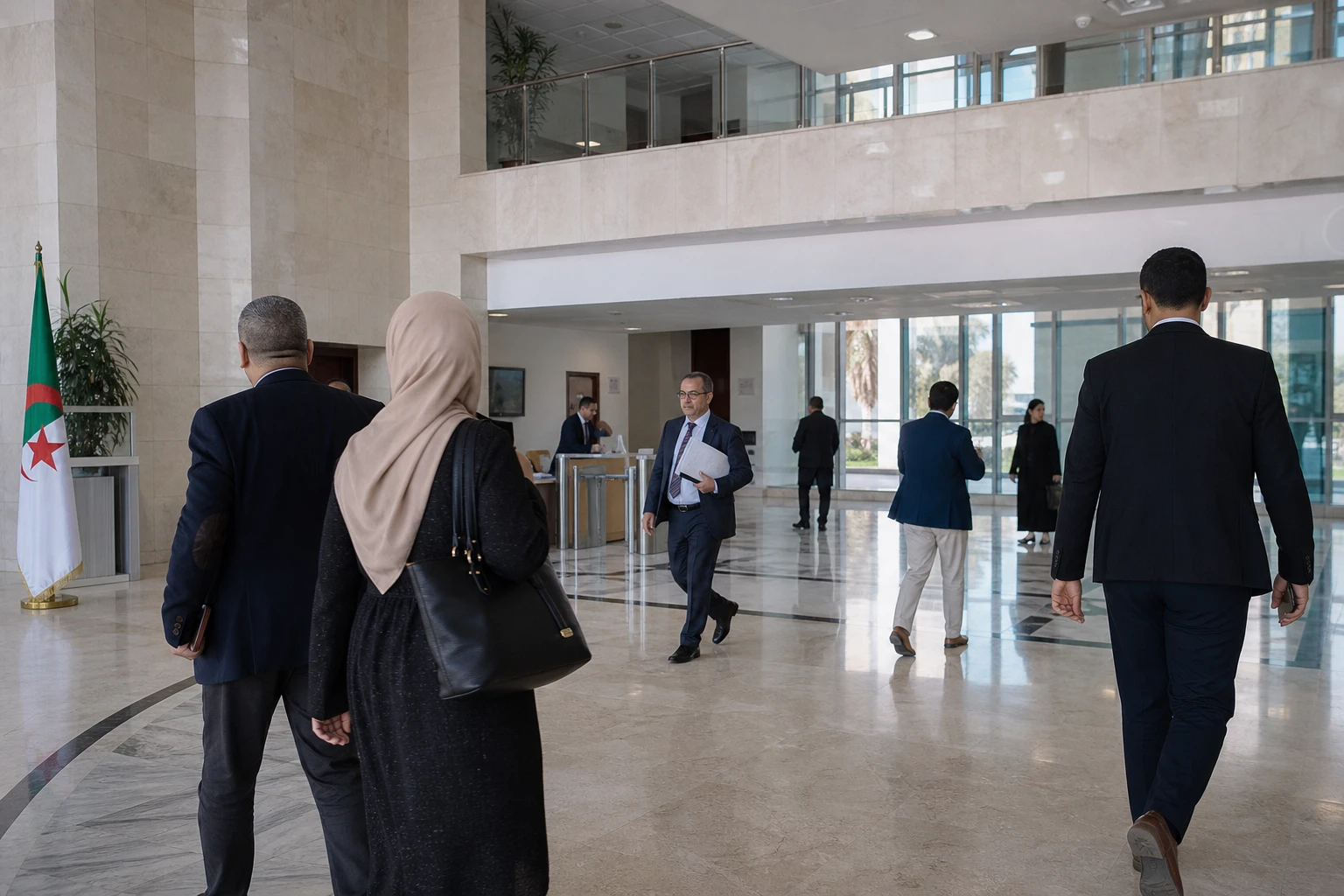
The Sahel neighbourhood returns to the centre of Algiers’ agenda
In the Sahara, geography carries more weight than communiqués. Between Algeria, Mali and Niger, the border is not merely a line on a map: it is a space of security, trade, movement and tension. When this corridor comes under strain, the entire Sahelian front is reshaped.
Since last year, Algiers has sought to close a chapter of ruptured ties with its neighbours in the central Sahel. Following the crisis that erupted with Bamako in April 2025, and then the gradual easing of tensions with Niamey and Ouagadougou, Algerian diplomacy is once again relying on direct, security-focused and highly bilateral relations with the capitals of the Sahel region. This approach is part of the regional framework of the African Union and, more broadly, of the new balance of power created by the rise of the Alliance of Sahel States, the confederation formed by Mali, Niger and Burkina Faso.
What has changed between Algiers, Bamako and Niamey
The most visible turning point concerns Mali. After the Algerian army destroyed a Malian drone near Tin Zaouatine, on the shared border, in March 2025, the two countries recalled their ambassadors and closed their airspace. Algiers justified its decision on the grounds of repeated violations of its airspace, while Bamako denounced an infringement of its sovereignty.
The sequence then went into reverse. On 10 July 2026, Algeria reopened its airspace to Malian traffic and ordered its ambassador to return to Bamako. On 11 July, Mali confirmed its own move by announcing the return of its ambassador to Algiers and the reopening of its airspace to civilian and military flights to and from Algeria. Then, on 14 September 2026, Algerian Prime Minister Sifi Ghrieb concluded a friendship visit to Bamako, where Algiers said it wanted to reactivate its institutional co-operation mechanisms.
With Niger, the most striking image came on 30 August 2026. At the request of the Nigerien authorities, Algiers sent two Su-30 fighter patrols, comprising four aircraft, accompanied by a refuelling aircraft, to support the Nigerien army after an attempt to destabilise Niamey. The Nigerien government later described the deployment as strategic support, not an improvised operation.
The political significance of this normalisation
For Algeria, this easing of tensions is more than a matter of protocol. It reflects a consistent understanding of its national security: stabilising the Sahel belt to protect southern Algeria, its energy infrastructure and its trans-Saharan routes. Algeria does not want a lasting zone of military fragmentation or competition between external powers taking hold on its doorstep. This caution also explains its wariness of any military presence that bypasses local actors.
For Mali, the stakes are just as concrete. The transitional authorities in Bamako continue to face persistent security pressure in the north and centre of the country, while the restoration of state authority is making little headway. Reopening dialogue with Algiers offers a useful safety valve: it reduces tension along a border of more than 1,000 kilometres and gives fresh impetus to border co-operation, transport and official exchanges.
Niger, meanwhile, occupies a different position. More than a neighbour to pass through, it has become a pivot. The military co-operation of 30 August shows that Algiers sees it as a partner of prime importance, particularly because the country links the Maghreb to West Africa and features in plans for the Trans-Saharan Gas Pipeline, designed to link Nigeria to Algeria via Niger. Sonatrach and the Algerian authorities have also stressed that the project is intended to create a strategic energy corridor linking three African countries and opening a route to international markets.
A more assertive, but still selective, Algerian diplomacy
This shift does not mean Algiers is abandoning its language of principle. Algeria continues to champion non-interference and the political settlement of crises. But it is adjusting its means. Where it long relied on its diplomatic standing, its anti-colonial history and its role as an intermediary, it is now showing that it can also project power visibly, at least in certain specific cases. The deployment of aircraft to Niger marked this change.
This stance remains selective, however. All indications are that Algiers favours Niger over Mali or Burkina Faso because the country lies at the heart of the future Nigeria-Algeria axis. The gas corridor, road links and economic integration projects give Niamey particular strategic weight. The message to the Sahel is clear: Algeria is prepared to go further where its structural interests converge with those of its neighbour.
Reconciliation with Bamako and the opening of co-operation with Niamey also have continental significance. They are a reminder that diplomacy in the Sahel is no longer conducted solely between nation states, but also through new regional blocs, energy partnerships and rivalries for influence. On this chessboard, Algeria is seeking to preserve its role as a leading African actor without disavowing its principles. The next step will be to see whether recent gestures lead to lasting mechanisms: a joint commission meeting with Mali, the consolidation of security dialogue with Niger and tangible progress on trans-Saharan infrastructure.



