
 Egypt
 Libya
 Morocco
 Sudan
 Tunisia
 Benin
 Burkina Faso
 Cabo Verde
 Côte d'Ivoire
 Ghana
 Guinea
 Guinea-Bissau
 Liberia
 Mali
 Mauritania
 Niger
 Nigeria
 Senegal
 Sierra Leone
 The Gambia
 Togo
 Cameroon
 Central African Republic
 Chad
 DR Congo
 Equatorial Guinea
 Gabon
 Republic of the Congo
 São Tomé and Príncipe
 Burundi
 Comoros
 Djibouti
 Eritrea
 Ethiopia
 Kenya
 Madagascar
 Malawi
 Mauritius
 Mozambique
 Rwanda
 Seychelles
 Somalia
 South Sudan
 Tanzania
 Uganda
 Angola
 Botswana
 Eswatini
 Lesotho
 Namibia
 South Africa
 Zambia
 Zimbabwe
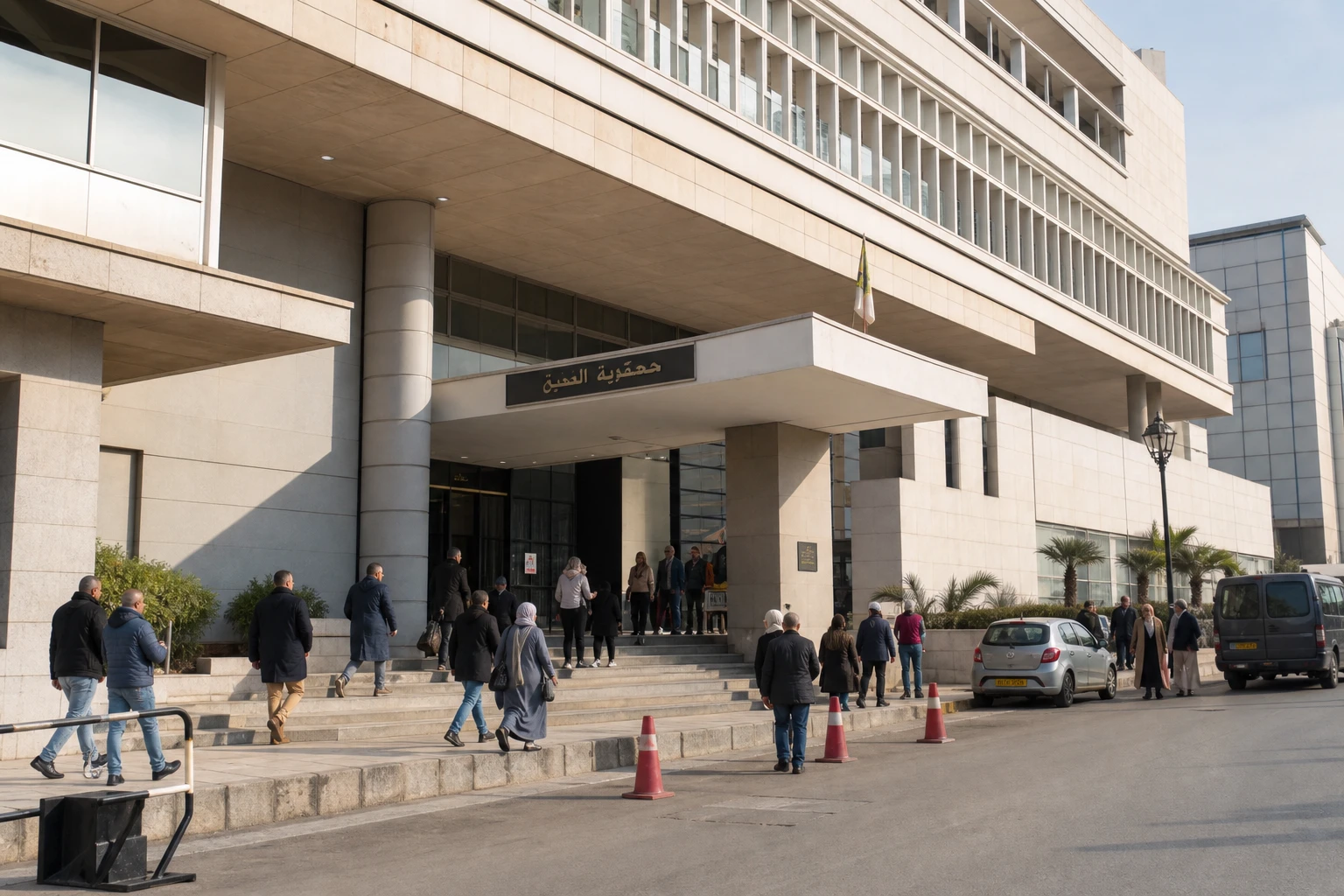
A huge seizure, but above all a case about supply chains
In Algiers, the figures are striking. But behind the crates, vehicles and capsules lined up for the cameras, another reality is emerging: a structured, mobile trafficking operation designed to cross borders. In Algeria, the fight against psychotropic drugs is no longer just a matter for the judicial police. It now concerns public safety, health and criminal finances.
The case also reveals a change in scale. Networks are no longer content to move a few isolated consignments. They organise large flows, divide up roles, move their proceeds and rely on several countries. In investigations of this kind, a high-profile seizure is often only the starting point.
An Algerian context marked by rising cross-border trafficking
Algeria has been maintaining sustained pressure on drug trafficking for several years. The Central Service for the Fight Against Illicit Drug Trafficking, supported by the police, the gendarmerie and sometimes the People’s National Army, has stepped up interceptions in the west, the south and the country’s central corridor. The past few weeks have again seen major seizures, with significant quantities of psychotropic drugs and cocaine reported in Algiers, Tamanrasset, Constantine and Djelfa.
This latest operation comes amid regional tensions. In North Africa, drug flows move between the Maghreb, the Sahel, Europe and sometimes the Gulf. Cocaine and diverted medicines travel along routes that adapt to checkpoints. Pregabalin, a medicine normally used to treat certain neuropathic pain conditions and epilepsy, also feeds a parallel market because of the effects sought outside medical settings.
The issue is all the more sensitive because relations between Algiers and Rabat have been severed since August 2021, while the land border has remained closed since 1994. This situation, on its own, proves nothing about a network’s origins. It does, however, complicate direct judicial cooperation and increase reliance on international mutual-assistance mechanisms.
What the authorities say about the targeted network
According to the public prosecutor at the National Criminal Division for Combating Terrorism and Transnational Organised Crime of the Sidi M’Hamed court, the case concerns an organised criminal group of 50 people. Twenty-five were arrested in the act and placed in pre-trial detention. The other 25 are still being sought.
The General Directorate of National Security says the operation led to the seizure of 10,402,700 pregabalin capsules at a dosage of 300mg and 33.4kg of cocaine. Investigators also seized 19 vehicles, including a semi-trailer truck fitted with a tanker, as well as three motorbikes. More than 1.5 billion centimes were found in cash. The authorities estimate the total market value of the seized products at nearly 10 billion dinars, or about €65 million at the official exchange rate cited in the case file.
The investigation is based on several months of inquiries opened in January by the SCLTIS. Officers tracked shipments from provinces in the south before launching simultaneous operations in Oran, Algiers, Blida, Tipasa and Tizi Ouzou. The prosecutor also says suspected intermediaries are based outside Algeria, notably in Morocco, Dubai and France. These elements remain to be substantiated during the investigation.
Why this case goes beyond the courtroom
The heart of the case is financial. In this kind of trafficking, the goods move, but so must the money. If confirmed, the use of foreign intermediaries serves to divide up responsibilities, muddy the trail and move profits to jurisdictions that are harder to reach. This is precisely where the investigation becomes transnational.
For Algeria, the challenge is twofold. On the one hand, the state wants to show it can strike at major networks, including their logistical support. On the other, it must ensure that the sheer volume of seizures does not obscure the central question: why does demand persist, and how do supply chains continue to adapt? The quantities intercepted may point to an increase in trafficking, but also to better intelligence and interception capabilities.
For the public, the impact is very tangible. Diverted psychotropic drugs are entering markets in major cities and smaller towns alike. They affect young people, families and neighbourhoods where the informal economy absorbs some of the proceeds. Cocaine, meanwhile, generates highly profitable criminal margins and fuels corruption, money laundering and the circulation of weapons or forged documents.
Institutionally, the case also tests the strength of cooperation networks. Interpol, mutual legal assistance and regional police networks become essential as soon as a suspect, financier or logistics operative leaves the country. In North Africa, where political tensions sometimes overlap with security concerns, this cooperation is often slower than the networks it seeks to pursue.
A warning for the whole region, from the Maghreb to the Sahel
The Algerian case resonates beyond the country’s borders. It confirms that part of the international drug trade uses North Africa as a transit, storage or redistribution zone. Recent seizures in the Sahel and the Maghreb show that routes are constantly shifting in response to checkpoints, alliances and available crossing points.
For the African Union, the issue is not marginal. Drug trafficking feeds parallel economies, weakens public administrations and complicates border security. It requires states to bring together the police, customs, public health and the justice system. In this case, the next stage will therefore depend less on the spectacle of the seizure than on the ability of magistrates to identify those who ordered it, freeze assets and secure cooperation from the states concerned.
In Algiers, the investigation will establish whether the network was indeed run from abroad, as the authorities maintain. But beyond this case, one fact remains: trafficking in psychotropic drugs and cocaine is becoming more sophisticated, and Algeria, like several African countries, is on the front line of a battle involving borders, money, health and sovereignty.



