
 Egypt
 Libya
 Morocco
 Sudan
 Tunisia
 Benin
 Burkina Faso
 Cabo Verde
 Côte d'Ivoire
 Ghana
 Guinea
 Guinea-Bissau
 Liberia
 Mali
 Mauritania
 Niger
 Nigeria
 Senegal
 Sierra Leone
 The Gambia
 Togo
 Cameroon
 Central African Republic
 Chad
 DR Congo
 Equatorial Guinea
 Gabon
 Republic of the Congo
 São Tomé and Príncipe
 Burundi
 Comoros
 Djibouti
 Eritrea
 Ethiopia
 Kenya
 Madagascar
 Malawi
 Mauritius
 Mozambique
 Rwanda
 Seychelles
 Somalia
 South Sudan
 Tanzania
 Uganda
 Angola
 Botswana
 Eswatini
 Lesotho
 Namibia
 South Africa
 Zambia
 Zimbabwe
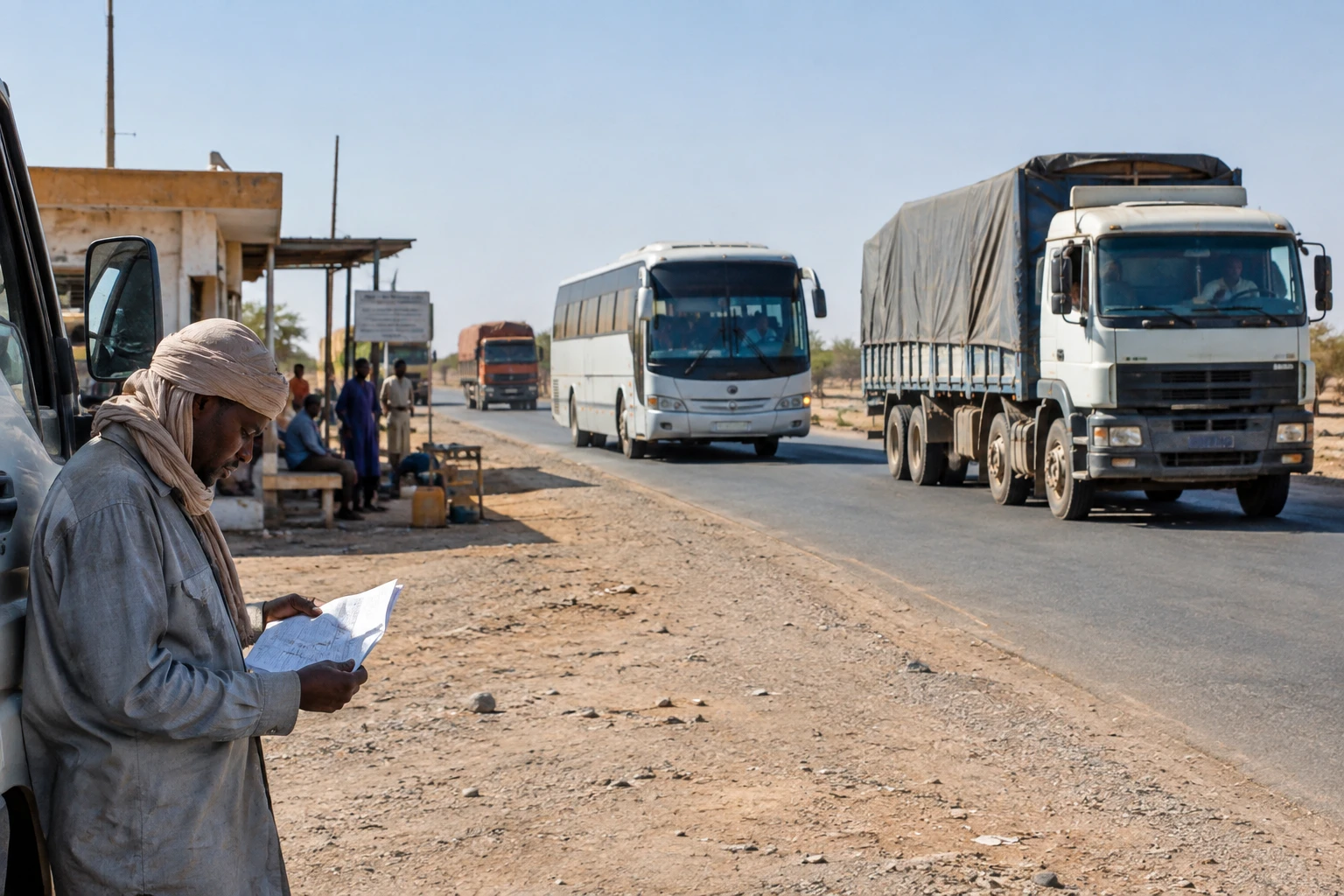
At Madama, in northern Niger, the stakes go beyond border surveillance. The Kafra oil site and a future gas corridor already link Algeria’s interests to the stability of its Sahelian neighbour.
A decision approved by both chambers of Parliament
On 25 October 2026, both chambers of the Algerian Parliament approved the deployment of units of the National People’s Army to Niger. The following day, President Abdelmadjid Tebboune confirmed the decision, at the request of the Nigerien authorities. Algiers presents the mission as a means of protecting shared economic and energy interests. The force size, timetable and operational details have not been made public.
The site at Madama, in Niger’s Agadez region, is close to the Libyan border. Reports circulating after the vote placed the planned deployment in this area, but official announcements have yet to detail the mission on the ground. Algerian senator Belkacem Boulghiti described the operation as securing infrastructure, rather than intervening in Niger’s internal affairs. The Algerian presidency confirms the deployment of units to Niger.
The vote marks a significant step for Algiers, which has long adhered to the principle of non-intervention beyond its borders. However, it does not in itself establish the scale or duration of the commitment. The distinction matters: political authorisation has been granted, but practical details remain to be clarified.
Kafra, an oil project still in the exploration phase
The most direct economic interest lies in the Kafra block in northern Niger. Algeria’s state-owned company Sonatrach, through its subsidiary Sipex, is working there with the Nigerien authorities. Drilling of the Kafra Sud-Est 1 exploration well began on 13 August 2026, about 85 kilometres from the Algerian border, according to the Nigerien Press Agency.
Older estimates linked to the initial wells cite in-place volumes of 168 million and 100 million barrels. These figures are not equivalent to commercially recoverable reserves or guaranteed production. They indicate potential that must be assessed through exploration and technical work. In September, Niger’s oil minister also called for prospective resources to be distinguished from established reserves. Sonatrach documents the agreement and initial assessments of Kafra; the Nigerien Press Agency reported the start of drilling.
For Niamey, Kafra is part of a strategy to develop domestic production and diversify oil activities. The project also involves equipment, travel and workers in a region far from major urban centres. Security around the site therefore concerns Sonatrach’s operations, as well as local authorities and the communities living in the Agadez region.
The gas pipeline links three countries and several ambitions
Beyond oil, Algeria, Niger and Nigeria are pursuing the Trans-Saharan gas pipeline project. The proposed route is intended to carry Nigerian gas through Niger to Algeria, where it could connect to export networks. The project is often presented as a continental energy corridor. However, it depends on agreements between the three states, financing, studies and work yet to be completed.
In February 2026, during Nigerien President Abdourahamane Tiani’s visit to Algiers, the Algerian authorities announced plans to begin work on the Nigerien section after Ramadan. The Algerian Press Service also reported that work on the Algerian section would begin in 2026. These steps point to a political revival of the project, but do not mean that the pipeline has been built or that its final timetable is guaranteed. None of the available announcements specifies that the military units will have the specific task of protecting its route. The Algerian announcement on the Nigerien section places the project within bilateral co-operation.
A thaw after a period of tension
The military decision comes after a turbulent period in bilateral relations. Algiers condemned the July 2023 coup that ousted President Mohamed Bazoum. In 2025, regional tensions flared again after a Malian drone was shot down near the Algerian border. Niger, along with Mali and Burkina Faso, then recalled its ambassador to Algeria.
The thaw accelerated in 2026. Tiani visited Algiers in February. In August, Algeria supplied Niger with four helicopters and other military equipment, according to the Nigerien Press Agency. The start of drilling at Kafra, the diplomatic rapprochement and the decision to send troops are therefore part of broader co-operation, in which security and energy are advancing in tandem.
For the Nigerien government, the partnership could support production projects and strengthen security capacity in a vast region. For Algiers, it protects economic interests and asserts a role as a neighbour in the Sahel. But any military presence also carries risks: a border incident, danger to soldiers or the perception among local people of outside intervention. Niger’s request and parliamentary approval provide a political framework for the decision, without resolving questions about its practical limits.
A Sahel-Saharan issue to watch
Niger is a member of the Alliance of Sahel States alongside Mali and Burkina Faso, while Algeria plays a central role in the Maghreb and in exchanges with its southern neighbours. The region has no single political framework bringing these states together: bilateral relations and security co-operation mechanisms remain decisive. The issue thus highlights a broader question for the continent: how can cross-border infrastructure be protected without undermining the sovereignty of the countries concerned or the communities living nearby?
The next steps will be practical: establishing the size and duration of the deployment, clarifying its rules of engagement, and monitoring progress on drilling at Kafra and on the sections of the gas pipeline. For now, the Algerian-Nigerien rapprochement is established at the political and energy levels. Its military dimension remains to be seen.



