
 Egypt
 Libya
 Morocco
 Sudan
 Tunisia
 Benin
 Burkina Faso
 Cabo Verde
 Côte d'Ivoire
 Ghana
 Guinea
 Guinea-Bissau
 Liberia
 Mali
 Mauritania
 Niger
 Nigeria
 Senegal
 Sierra Leone
 The Gambia
 Togo
 Cameroon
 Central African Republic
 Chad
 DR Congo
 Equatorial Guinea
 Gabon
 Republic of the Congo
 São Tomé and Príncipe
 Burundi
 Comoros
 Djibouti
 Eritrea
 Ethiopia
 Kenya
 Madagascar
 Malawi
 Mauritius
 Mozambique
 Rwanda
 Seychelles
 Somalia
 South Sudan
 Tanzania
 Uganda
 Angola
 Botswana
 Eswatini
 Lesotho
 Namibia
 South Africa
 Zambia
 Zimbabwe
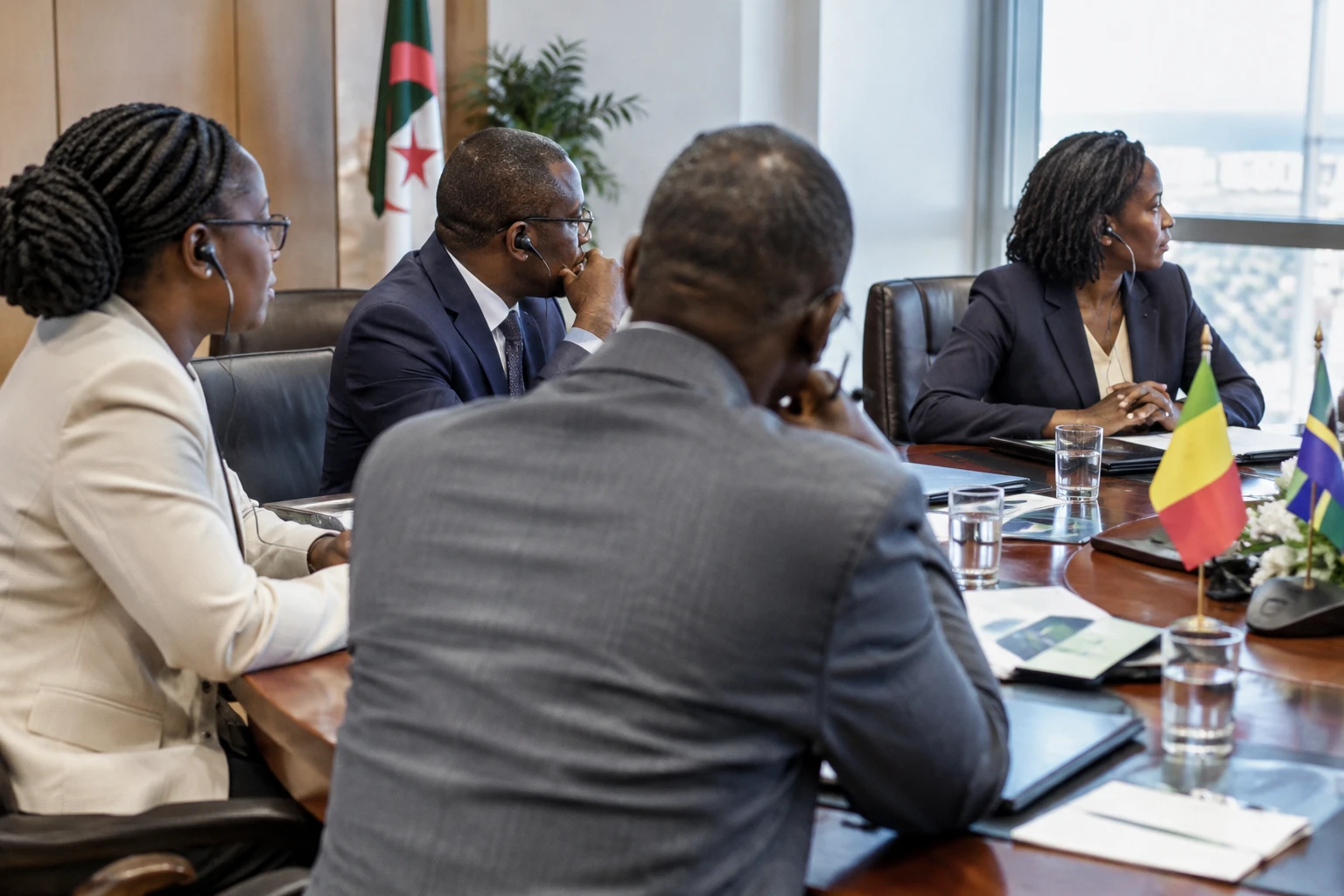
A military agreement can bring two armies closer. On its own, it does not say what operations they will conduct together. That is the question raised by the new text signed by Algiers and Niamey, as Niger faces a period of acute security tensions and Algeria strengthens ties with its Sahelian neighbour.
A northern-Sahel axis under reconstruction
Algeria and Niger share a long border in an area crossed by armed groups, goods and people. For Algiers, stability in Niger has a direct bearing on the security of its southern border. For Niamey, relations with its northern neighbour also matter diplomatically, economically and militarily.
The current rapprochement follows a period of tensions. In 2025, Algiers and Niamey recalled their ambassadors amid a dispute with Mali, another member of the Alliance of Sahel States (AES), which brings together Niger, Mali and Burkina Faso. Algerian-Nigerien relations subsequently warmed, notably with the resumption of high-level exchanges.
This rapprochement is unfolding in a region where cooperation frameworks are changing. Niger, Mali and Burkina Faso have left the Economic Community of West African States (ECOWAS), a regional organisation for integration and political consultation. Algeria, meanwhile, belongs to the Arab Maghreb Union (AMU), whose activity remains limited. Security issues therefore span several institutional frameworks, none of which currently brings together all the actors concerned.
Agreement signed in Algiers, with no public details
On 21 October 2026, General Saïd Chanegriha, chief of staff of Algeria’s People’s National Army, received General Salifou Modi, Niger’s minister of state and minister of defence, in Algiers. The two officials signed a military cooperation memorandum of understanding. Algerian President Abdelmadjid Tebboune also received the Nigerien minister and his delegation, according to Algeria Press Service and the Algerian presidency.
The Algerian military statement specifies neither an implementation timetable nor the resources planned. Nor does it set out the areas covered: training, intelligence, equipment or operational coordination. Its practical scope therefore remains to be established. Official statements refer to a desire to strengthen cooperation and coordination between the two armies, but do not make it possible to conclude that a joint operation is planned.
The visit comes less than two months after a mutiny in Niamey on 28 and 29 August. Soldiers took up positions around strategic sites, including in the airport area and near the presidential palace. The Associated Press reports that Nigerien authorities announced deaths and arrests, although the agency was unable independently to verify that full control of the base had been restored. That account should therefore remain attributed to information released in Niger.
After these events, Algeria sent four Su-30 fighter jets to Niamey, along with a transport aircraft and a tanker, according to Nigerien and Algerian media. Algiers said the mission was in response to a request from the Nigerien authorities. The aircraft arrived after the fighting reported by the sources consulted had ended; nothing indicates that they took part in the clashes. The Nigerien news agency Niameyinfo also reported the presence of an Algerian delegation in Niamey.
Security, sovereignty and unanswered questions
For the authorities in Algiers, Niger is a strategic neighbour to the south. A weakened state or a less controlled border can heighten risks in a region already facing armed attacks and population displacement. The August deployment nevertheless marked a notable shift: it made visible Algerian military support beyond its borders. Algeria’s 2020 Constitution sets conditions for deploying forces abroad, including approval by a two-thirds parliamentary majority. The precise nature of the August mission and how it fits within this framework have been publicly debated.
For Niger’s authorities, partnership with Algiers could diversify defence relations following the break with several Western partners and the closer ties with Russia. But the agreement does not yet reveal whether this cooperation will be temporary or lasting. Details on equipment, training, responsibilities and political oversight will be crucial to understanding what it actually changes.
The effects are not measured only between military high commands. Residents of Niamey and border regions need security, but also public services and economic activity that are not disrupted by instability. For traders and transport operators, cross-border movement matters as much as military announcements. At this stage, no public information explains how the protocol could affect these everyday realities.
A test for Sahelian cooperation
The signing signals a political rapprochement; it guarantees neither stability in Niger nor a joint response to armed threats. It also comes amid a regional realignment, as AES countries seek partnerships outside the frameworks that have long shaped security cooperation. Algeria, for its part, is seeking to restore its influence in the Sahel while protecting its border interests.
What happens next will depend on what information the two governments make public: the areas covered by the protocol, monitoring mechanisms and any formal approval of the commitments. It will also be important to see whether cooperation remains strictly bilateral or is linked to African Union initiatives and existing regional mechanisms. For neighbouring countries, the key issue will be less the text signed than its measurable effects on border security and the protection of populations.



