
 Egypt
 Libya
 Morocco
 Sudan
 Tunisia
 Benin
 Burkina Faso
 Cabo Verde
 Côte d'Ivoire
 Ghana
 Guinea
 Guinea-Bissau
 Liberia
 Mali
 Mauritania
 Niger
 Nigeria
 Senegal
 Sierra Leone
 The Gambia
 Togo
 Cameroon
 Central African Republic
 Chad
 DR Congo
 Equatorial Guinea
 Gabon
 Republic of the Congo
 São Tomé and Príncipe
 Burundi
 Comoros
 Djibouti
 Eritrea
 Ethiopia
 Kenya
 Madagascar
 Malawi
 Mauritius
 Mozambique
 Rwanda
 Seychelles
 Somalia
 South Sudan
 Tanzania
 Uganda
 Angola
 Botswana
 Eswatini
 Lesotho
 Namibia
 South Africa
 Zambia
 Zimbabwe
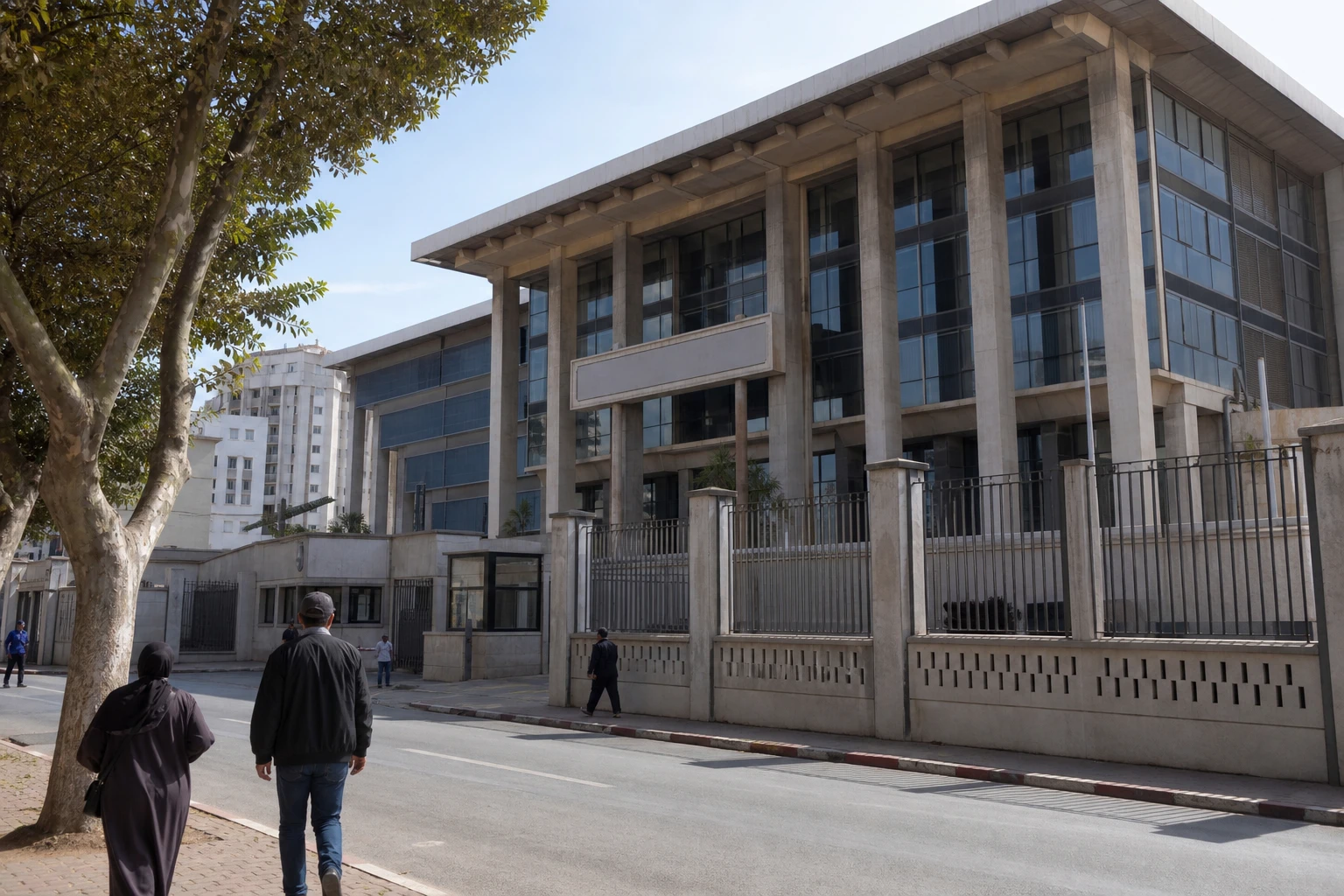
In Mohammadia, on the eastern outskirts of Algiers, a tragedy has brought a too-often-forgotten truth back into focus: the safety of a facility for children depends not only on its walls, but also on its equipment, exits and the speed of the emergency response. During the night of 15 to 16 July, a fire struck the Assisted Childhood Establishment, a centre for children, with a provisional toll of 11 dead and 19 injured.
The shock quickly spread beyond the local area. In Algeria, the state immediately acknowledged the political weight of the tragedy: President Abdelmadjid Tebboune offered his condolences, Prime Minister Sifi Ghrieb visited the injured, and the government later attended the funerals in Baraki, in Algiers province. These gestures reflect the symbolic significance of an accident involving children and point, beyond the immediate emergency, to the question of protecting vulnerable people in residential institutions.
What is known about the Mohammadia fire
The initial reports are consistent. The fire broke out at dawn on Thursday 16 July, at around 3am, in a building belonging to the Foundation for Assisted Childhood in Mohammadia. Civil Protection said it had rescued 19 injured people and treated five children with special needs, while firefighting operations were still under way in the morning. Other local sources confirmed the same toll of 11 dead and 19 injured.
The injured were taken to several hospitals in the capital. According to details released during the day, some were sent to the Zéralda Burns Hospital, while others went to Mustapha Pacha University Hospital Centre, where their treatment was described as rapid and immediate. The authorities have not, at this stage, disclosed the victims’ ages or the cause of the fire. An inquiry must establish the exact circumstances of the blaze.
The choice of words matters here. This was not simply an administrative building, but a facility housing children. In such a setting, the layout, alarm systems, access to windows and internal circulation can all determine who survives. Images broadcast by several media outlets showed complex efforts to get occupants out, an indication that a fire in this type of facility can come down to a matter of minutes.
A local accident, a national issue
The tragedy comes as Algeria is experiencing a period of severe climate stress. Civil Protection said it had extinguished 913 fires across the country since 8 July. The figure gives an idea of the pressure on emergency services at the height of summer, in a country where heat, winds and dry vegetation increase the risk of fires breaking out. Although the Mohammadia blaze was not a wildfire, it occurred at a time when emergency teams were already under considerable strain.
This reality also affects the management of public facilities. In Algeria, residential, health and care institutions share a common challenge: reducing vulnerabilities before an emergency occurs. When a fire breaks out in a facility housing people who depend on others, the chain of protection must work without delay, from detection to evacuation. That is where the strength of a public system is measured, far more than in crisis announcements alone. This applies in Algiers, but also in the country’s major urban centres, where density makes it harder for emergency services to gain access and evacuations to happen quickly.
The government opted for a visible and swift response, with the prime minister visiting hospitals and then the Sidi Rzine cemetery in Baraki. Institutionally, this signals a desire to show the executive branch united in the face of a tragedy affecting society as a whole. On a human level, however, this does not replace either the inquiry or the corrective measures that will be needed if technical or organisational failures are confirmed.
The tragedy also highlights the particular responsibility of local authorities and facility managers. In a capital such as Algiers, municipalities in the province bear a heavy burden: maintaining buildings, conducting inspections, preventing risks and co-ordinating with Civil Protection. Where people expect reliable services, even a minor weakness in maintenance or evacuation procedures can have irreversible consequences. This is a matter of practical governance, not communications.
Reverberations beyond Algiers
Across the continent, this fire touches on a wider concern: the safety of social infrastructure in North Africa and beyond. African states are investing more in childcare, health and urban social support. But these policies can only deliver results if risk prevention keeps pace. In care centres, hospitals, boarding schools and social housing, the challenge is the same: preparing for the unexpected.
For Algeria, the immediate next steps involve three areas. First, the technical and judicial inquiry, which must establish the cause of the fire. Second, the treatment of the injured, particularly the most serious cases. Finally, forthcoming inspections of facilities housing minors or vulnerable people. The public response will be judged on these points, far more than on the emotion of the first day.
In a Mediterranean region exposed to heatwaves and fire risks, this tragedy in Algeria is a reminder of a simple truth: civil protection is not just about responding after the event. It starts beforehand, with building design, regular inspections and the preparation of emergency teams. In Algiers, as in other African capitals, that is often what determines the difference between a controlled emergency and a tragedy.



