
 Egypt
 Libya
 Morocco
 Sudan
 Tunisia
 Benin
 Burkina Faso
 Cabo Verde
 Côte d'Ivoire
 Ghana
 Guinea
 Guinea-Bissau
 Liberia
 Mali
 Mauritania
 Niger
 Nigeria
 Senegal
 Sierra Leone
 The Gambia
 Togo
 Cameroon
 Central African Republic
 Chad
 DR Congo
 Equatorial Guinea
 Gabon
 Republic of the Congo
 São Tomé and Príncipe
 Burundi
 Comoros
 Djibouti
 Eritrea
 Ethiopia
 Kenya
 Madagascar
 Malawi
 Mauritius
 Mozambique
 Rwanda
 Seychelles
 Somalia
 South Sudan
 Tanzania
 Uganda
 Angola
 Botswana
 Eswatini
 Lesotho
 Namibia
 South Africa
 Zambia
 Zimbabwe
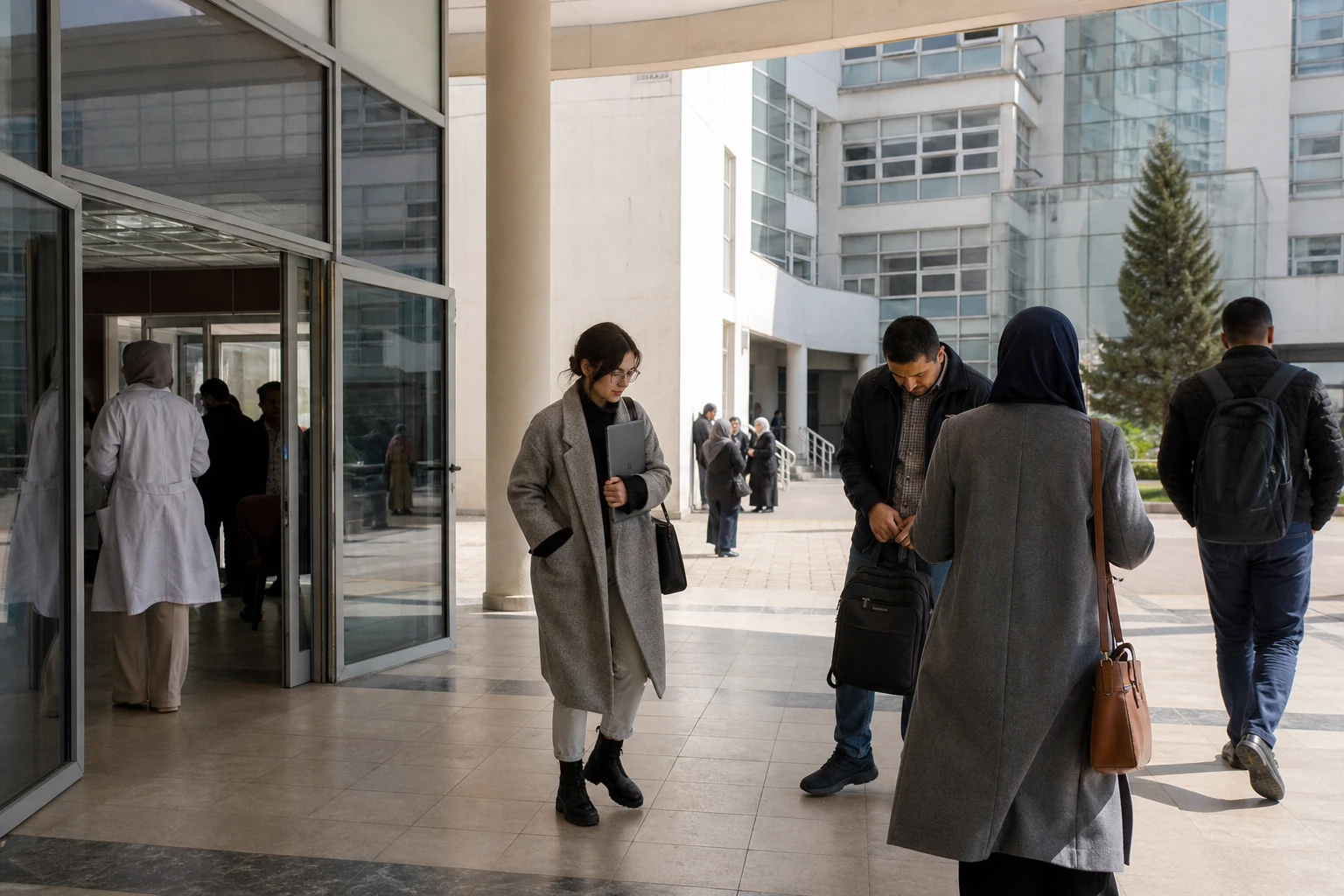
When diplomacy falters, laboratories carry on
Political tensions between Algiers and Paris flare up in waves. Visas, colonial memory, Western Sahara or a poorly received remark can be enough to strain relations. Yet another channel remains open, quieter and often more resilient: universities, laboratories and young researchers. In Algeria, this scientific connection has particular value. It shows that useful dialogue can survive diplomatic moods.
It is in this context that the Franco-Algerian Maurice Audin Mathematics Prize has opened applications for its 2026 edition. The deadline is 18 September 2026 at 4pm Paris time, or 3pm in Algiers. The prize is awarded every two years to two winners, one based in Algeria and the other in France, by an equally composed Franco-Algerian jury. Each winner receives €6,000.
A prize born of a long-contested Algerian memory
The prize is named after Maurice Audin, a mathematician at the University of Algiers and an activist for Algerian independence. Arrested by the French army in June 1957, he was tortured and then executed during the Algerian war, as the Académie des sciences now states in its presentation of the prize. In 2018, official recognition by the French Republic marked a major turning point in the historical reckoning over a case that had long poisoned relations between the two countries.
That is where the symbolism lies. A name associated with a historical wound is now used to fund and honour shared scientific work. This is not a decorative gesture. It is a way of saying that cooperation can be built on an acknowledged history, without erasing the contradictions of the past. For Algeria, this link between historical recognition and the circulation of knowledge matters in public life as much as it does in lecture halls.
The prize was established in 2004 and made permanent in 2024 through an agreement bringing together, on the French side, the Académie des sciences, the Société mathématique de France, the Société de mathématiques appliquées et industrielles and the Association Josette et Maurice Audin, and, on the Algerian side, the Directorate General for Scientific Research and Technological Development, under the Ministry of Higher Education and Scientific Research. In other words, it rests on a balanced binational institutional framework, rather than a simple protocol agreement.
What the prize actually rewards
The 2024 edition recognised two researchers whose profiles capture the spirit of the prize. Hacen Zelaci, a senior lecturer at Echahid-Hamma-Lakhdar University in El-Oued, works in algebraic geometry and on Hitchin systems. Léon-Matar Tine, a senior lecturer at Claude Bernard University Lyon 1, conducts research in mathematical modelling applied to physical and biological phenomena, including polymerisation mechanisms and certain processes linked to Alzheimer’s disease. The choice of winners shows that the prize recognises not just CVs, but fields of research capable of linking abstract theory with practical applications.
For researchers, the prize has a twofold significance. On the one hand, it brings academic recognition. On the other, it is a reminder that much research depends on exchange: joint supervision, laboratory visits, co-authored papers, participation in juries or summer schools. This kind of cooperation is more resilient to political tensions than grand diplomatic gestures because it is rooted in concrete professional networks. In mathematics, continuity depends less on press releases than on research teams and schedules.
Algeria’s current priorities also lend the prize particular resonance. For several months, the Algerian Ministry of Higher Education has highlighted improving mathematics teaching as a strategic priority. It has also underlined the role of higher schools, including the École supérieure des mathématiques, in educating new cohorts. In Algiers, this public policy aligns with a concrete need: to train more teachers, researchers and engineers capable of contributing to the knowledge economy.
Useful cooperation beyond the Franco-Algerian relationship
The prize reaches beyond bilateral relations. In an African context where academic mobility is often held back by costs, visas or unequal resources, it offers a model of academic cooperation built on parity and continuity. Algeria gains greater scientific visibility. France gains a long-standing partner in a field where language, research teams and traditions still facilitate exchange. But above all, African researchers can see that international collaboration can be conceived without sidelining the continent’s institutions.
The knock-on effect also matters. A prize like this will not transform Algerian universities on its own. But it validates research careers, gives young PhD students role models and reminds decision-makers that investment in science produces visible results. In a country where mathematics courses remain tied to the selection of top cohorts and the need to train engineers, this kind of distinction carries weight in the symbolic hierarchy of disciplines. It shows that fundamental research in Algeria is not peripheral: it helps shape the university and technological future.
The continental significance is also clear. At a time when the African Union is emphasising science, innovation and skills mobility, this kind of prize is a reminder that successful cooperation need not be spectacular to be useful. It needs stable institutions, credible juries and regular funding. On 18 September 2026, the Franco-Algerian jury will select two new winners. Beyond the names chosen, it is this continuity that will matter: science able to weather crises without sacrificing its dignity or its ties between Algiers, Paris and the rest of the continent.



