
 Egypt
 Libya
 Morocco
 Sudan
 Tunisia
 Benin
 Burkina Faso
 Cabo Verde
 Côte d'Ivoire
 Ghana
 Guinea
 Guinea-Bissau
 Liberia
 Mali
 Mauritania
 Niger
 Nigeria
 Senegal
 Sierra Leone
 The Gambia
 Togo
 Cameroon
 Central African Republic
 Chad
 DR Congo
 Equatorial Guinea
 Gabon
 Republic of the Congo
 São Tomé and Príncipe
 Burundi
 Comoros
 Djibouti
 Eritrea
 Ethiopia
 Kenya
 Madagascar
 Malawi
 Mauritius
 Mozambique
 Rwanda
 Seychelles
 Somalia
 South Sudan
 Tanzania
 Uganda
 Angola
 Botswana
 Eswatini
 Lesotho
 Namibia
 South Africa
 Zambia
 Zimbabwe
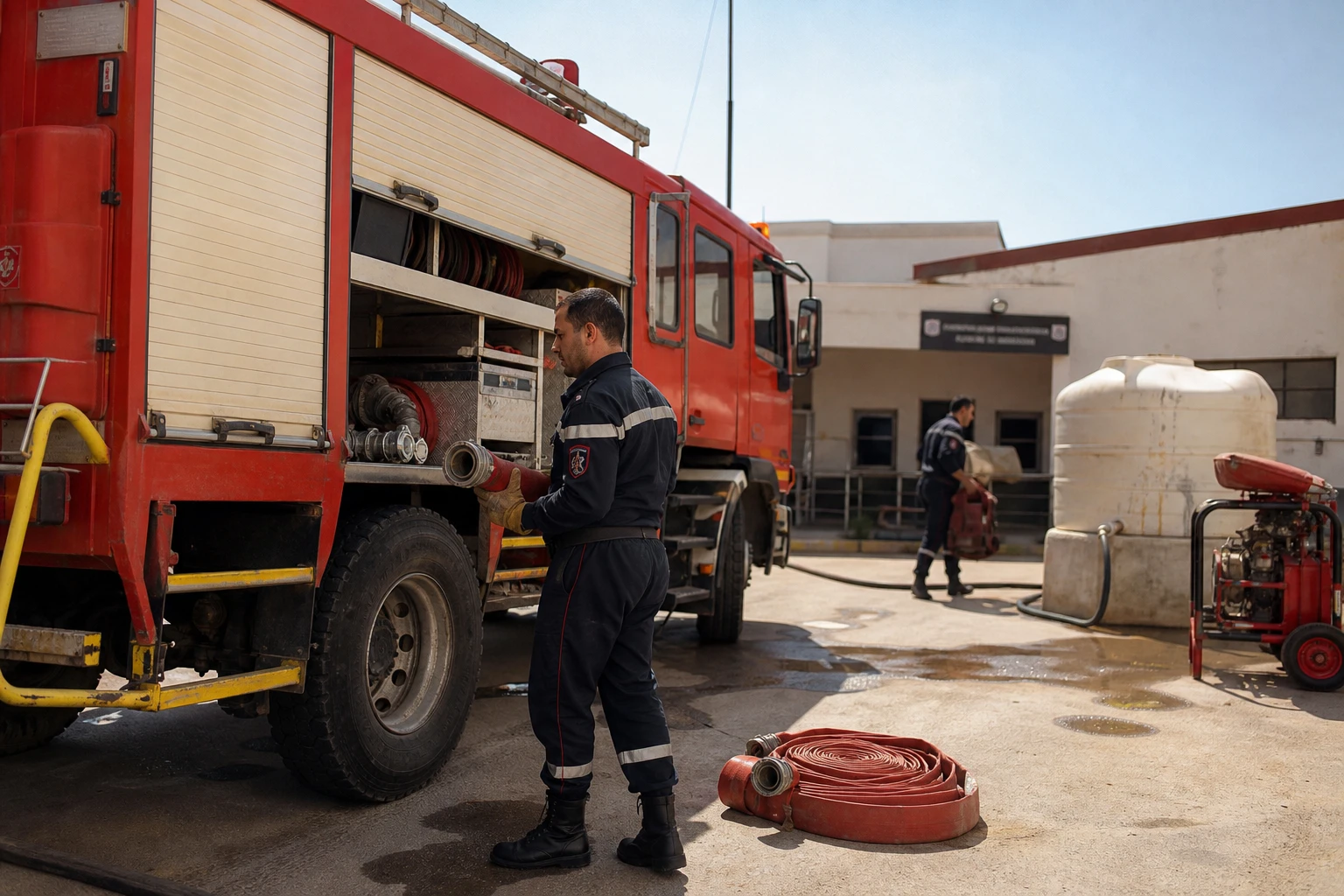
A heatwave turns the north of the country into a frontline
When temperatures climb beyond familiar levels, the risk is no longer limited to discomfort. In Algeria, extreme heat is testing forests, crops, palm groves and the ability of emergency services to respond quickly, everywhere at once. This week, the country has faced a weather alert alongside a proliferation of fires, in a situation where every hour counts.
The issue goes beyond a single day’s episode. For several years, Algeria has been pursuing efforts to prevent fires and strengthen its civil protection service, through early campaigns, mobile units, aerial resources and preparedness exercises. At the beginning of the summer, the Interior Ministry oversaw a firefighting exercise at Chréa, near Blida, and announced the recruitment of an additional 3,000 personnel for 2026.
Multiple fires put provinces under strain
The scale of the episode is clear from the figures. On 15 July 2026, Algeria’s civil protection service said it had put out 913 fires nationwide since 8 July. Two days later, the Interior Ministry reported that firefighting operations were continuing, with significant personnel and equipment deployed. On 18 July, civil protection reported that 138 fires had been extinguished in 24 hours out of 154 recorded.
In the situation report given on Thursday at 5pm, 111 fires were affecting forests, scrubland, farmland and palm groves. Sixty-five fires had been brought under control, while 46 remained active in 18 provinces. Operations were then focused in particular on Béjaïa, Annaba, Skikda, Blida, Tizi Ouzou, Boumerdès, Aïn Defla and Tlemcen.
The heatwave formed the backdrop to this mounting pressure. The National Meteorological Office forecast temperatures of up to 48°C in the centre and east of the country, and 49°C in the south. On 15 July, APS said the heatwave was expected to persist until at least Friday, with temperatures peaking at 48°C in some provinces. On 16 July, a new bulletin even announced a red alert for several northern provinces on Friday and Saturday, with temperatures again expected to reach or exceed 48°C.
Rapid evacuations to prevent disaster
The fires are not only affecting forested areas. They are also reaching villages, farms, animals and crops. In Béjaïa, two villages in the Imarat region, in the municipality of Barbacha, were evacuated as a precaution. Around 100 people were moved to safety. In Blida, about 200 residents temporarily left their homes. In Skikda, several families were evacuated from Kanoua. Further evacuations took place in Oued Zeggar, El Eulma, Oum Toub, Bouira, Boumerdès and Guelma.
These evacuations highlight something essential: during a prolonged heatwave, firefighting does not take place only in the woods. It also happens around homes, access roads, water points and agricultural areas. The aerial resources cited by the authorities — water-bombing aircraft and helicopters — are useful for containing fires in the hardest-to-reach areas. But work on the ground remains decisive. Civil protection mobile units, forestry services, local authorities, the People’s National Army and provincial authorities are all mobilised.
In Aïn Defla, a fire was still threatening homes and property at the time of the reported situation update. Such incidents are a reminder that a vegetation fire can quickly become a civil protection emergency. For families, the first question is when to leave. For farmers, it is the possible loss of a season’s work. For the authorities, it is whether they can prevent loss of life.
A climate challenge, but also an organisational one
Algeria is not alone in facing this kind of episode, but it is responding within a specific institutional framework. Civil protection, the General Directorate of Forests, the Interior Ministry and the National Meteorological Office each play a role in alerting, prevention and response. In 2026, the authorities have also invested in advance measures to protect agricultural harvests, particularly in the south, including firebreaks, farm tracks and water points near production areas.
This strategy matters because summer fires threaten different areas in different ways. In the north, the density of forests and municipalities increases the risk to homes. In the south, palm groves and irrigated crops call for different measures. The country therefore needs a flexible response that can adapt to coastal provinces, wooded terrain and oasis areas.
The regional climate reinforces this picture. The Maghreb, too, is facing harsher summers, with longer heatwaves and more severe periods of drought. In this context, the fight against vegetation fires is becoming a test of public preparedness. It measures the quality of weather alerts, the speed of local decisions and coordination between central authorities and those on the ground. The Arab Maghreb Union, often paralysed politically, currently offers no strong operational mechanism on this issue. Practical cooperation therefore depends mainly on national administrations and, more broadly, on African and international climate frameworks.
What Algeria will be watching in the coming days
This episode is about more than counting fires. It raises a simple question: how long could the heat extend the fire season? Successive weather bulletins show that the risk was not fleeting, but persisted over several days. As long as temperatures remain very high, vigilance must remain at its highest on forested slopes, near agricultural areas and around exposed villages.
Algeria faces a twofold challenge. It must protect residents immediately. It must also preserve natural vegetation already weakened by repeated heat and pressure on rural areas. Across Africa, this issue is a reminder of a reality now shared by many countries in the north of the continent: managing summer fires is no longer a secondary seasonal concern, but a central matter of civil protection and climate adaptation. The rest of the summer will hinge on the ability to anticipate, coordinate and respond.



