Egypt
 Libya
 Morocco
 Sudan
 Tunisia
 Benin
 Burkina Faso
 Cabo Verde
 Côte d'Ivoire
 Ghana
 Guinea
 Guinea-Bissau
 Liberia
 Mali
 Mauritania
 Niger
 Nigeria
 Senegal
 Sierra Leone
 The Gambia
 Togo
 Cameroon
 Central African Republic
 Chad
 DR Congo
 Equatorial Guinea
 Gabon
 Republic of the Congo
 São Tomé and Príncipe
 Burundi
 Comoros
 Djibouti
 Eritrea
 Ethiopia
 Kenya
 Madagascar
 Malawi
 Mauritius
 Mozambique
 Rwanda
 Seychelles
 Somalia
 South Sudan
 Tanzania
 Uganda
 Angola
 Botswana
 Eswatini
 Lesotho
 Namibia
 South Africa
 Zambia
 Zimbabwe
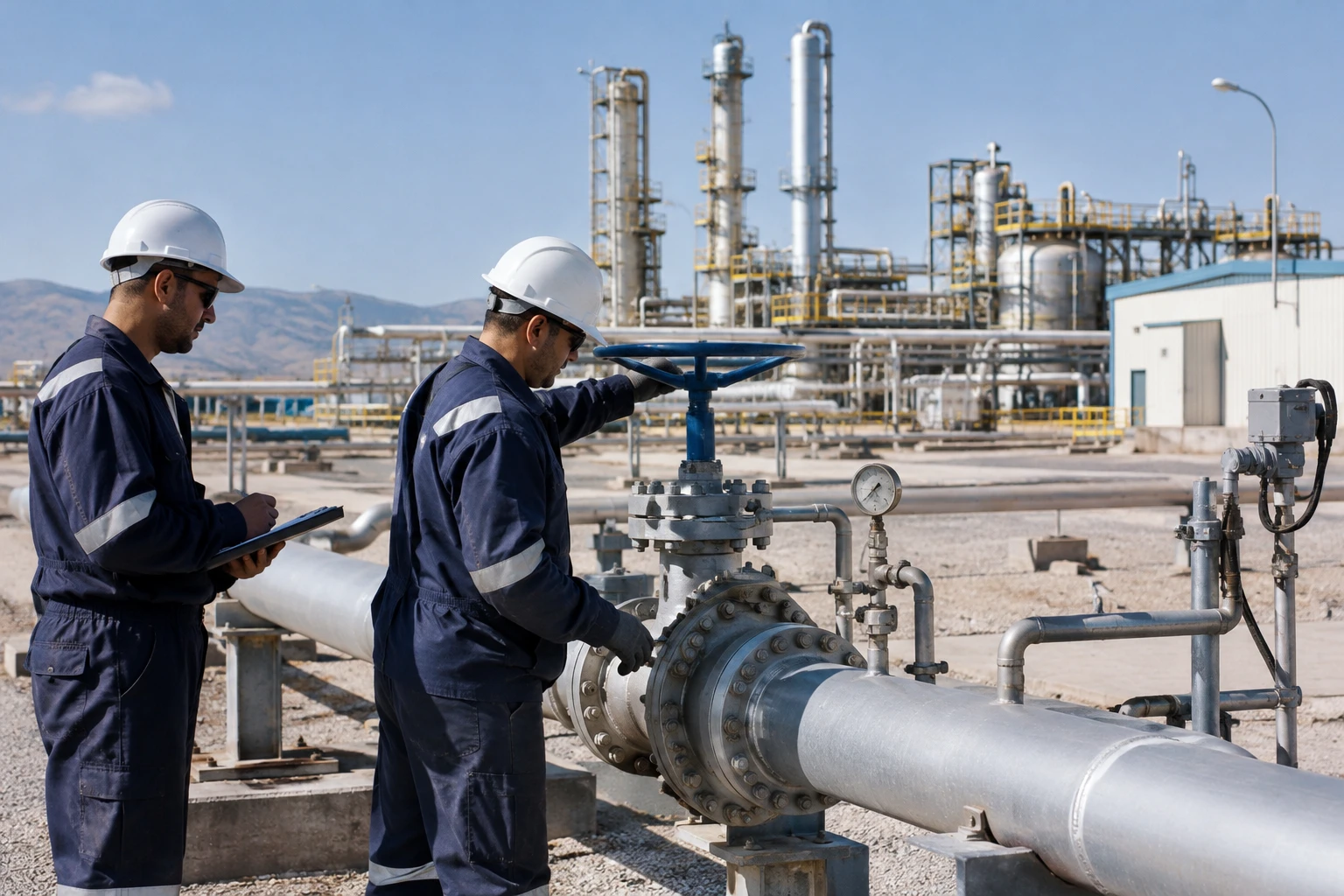
For Algeria, selling more gas to Europe depends on more than buyers’ requests. Exportable volumes must also be available after domestic market needs have been met. Talks with Prague illustrate this balance between commercial opportunities and production capacity.
Czech demand, but no new agreement yet
On 26 and 27 October 2026, Czech Prime Minister Andrej Babiš visited Algeria. He met President Abdelmadjid Tebboune, Prime Minister Sifi Ghrieb and government officials. Discussions included the gas contract between Czech company ČEZ and Algeria’s state-owned company Sonatrach.
Prague wants to extend and double the contract. The stated aim is to increase volumes from about 200 million to 400 million cubic metres a year. The Czech government presented the increase as an interest expressed during discussions, not as a contractual commitment already agreed. The Czech Ministry of Industry also described it as a preliminary prospect. The Czech government’s account of the visit and the volumes under consideration clarifies this distinction.
Information published by the Czech side is consistent with statements reported by Algeria’s APS news agency, which also said discussions had covered an increase in volumes. This convergence confirms that there is political demand. It does not, however, establish that a new volume has been negotiated and signed. APS’s account of the Algerian-Czech talks reports Prague’s interest.
Algerian gas reaches the Czech Republic through the network linking Algeria to Italy. This route shows how existing infrastructure enables Algiers to supply European markets beyond customers connected directly by pipeline. But transport and available volumes remain decisive factors.
European contracts at different stages
Czech demand is part of a series of European initiatives, but they are not all at the same stage. On 16 July 2026, Sonatrach and Germany’s VNG signed a contract providing for increased deliveries to the German market from 1 January 2027. The companies have not made the additional volume public. Sonatrach and APS announced the signing, while VNG separately confirmed the continuation and strengthening of its supply relationship. Sonatrach’s statement on the agreement with VNG and the German company’s confirmation set out the timetable but do not quantify the increase.
In Spain and Italy, announcements raised in discussions relate more to possible cooperation or potential increases. They should not be confused with a contract specifying volumes and a timetable. In Spain, the technical capacity to increase some flows via the Medgaz pipeline has been discussed, but the information available in the material reviewed does not allow this increase to be presented as agreed. Nor does Rome’s stated interest in deepening energy cooperation with Sonatrach, by itself, constitute proof of additional deliveries.
The constraint of volumes and revenues
Gas remains important to Algeria’s economy and foreign-currency revenues. The Bank of Algeria says the value of gas exports fell from $16.4 billion in 2023 to $13.04 billion in 2024. This decline in value does not necessarily mean that export volumes fell by the same proportion: international prices have a strong influence on revenues. The Bank of Algeria’s 2024 report provides balance-of-payments data.
New contracts could bring in revenue and consolidate Sonatrach’s position in the European market. However, gas sold abroad must first be produced, processed and transported. Algeria must also meet domestic demand, particularly for electricity generation and household and business use. This is a concrete economic trade-off: every increase in export commitments must remain compatible with national needs.
The Algerian government has announced an investment programme of $71.6 billion in hydrocarbons by 2030, including $52 billion for exploration and production. The stated aim is to strengthen the sector’s capacity. However, an announced allocation guarantees neither an immediate increase in production nor the availability of new volumes for contracts. Project timelines, transport capacity and changes in domestic consumption will also matter.
An energy relationship to watch in the Maghreb and Europe
For European consumers, diversifying suppliers can reduce dependence on a single source. For Algeria, adding customers can broaden market opportunities, but it also makes revenues more exposed to price fluctuations and delivery commitments. Commercial announcements should therefore be tracked through their concrete stages: signature, duration, volumes, timetable and infrastructure used.
The Czech Republic is not a member of the Arab Maghreb Union, a regional organisation of which Algeria is a member. Energy exchanges with Prague are better understood as part of relations between Algeria and Europe, as well as the gas networks crossing the Mediterranean. Across Africa, the issue also concerns the ability of producer countries to reconcile exports, domestic energy security and long-term investment.
The next step will therefore depend less on the number of expressions of interest than on whether they are translated into verifiable contracts. In the Czech case, the proposed doubling remains to be negotiated. Under the Sonatrach-VNG agreement, increased deliveries are announced from January 2027, but no volume has been made public. These distinctions will help assess what the new discussions actually mean for Algeria’s economy and its partners.