
 Egypt
 Libya
 Morocco
 Sudan
 Tunisia
 Benin
 Burkina Faso
 Cabo Verde
 Côte d'Ivoire
 Ghana
 Guinea
 Guinea-Bissau
 Liberia
 Mali
 Mauritania
 Niger
 Nigeria
 Senegal
 Sierra Leone
 The Gambia
 Togo
 Cameroon
 Central African Republic
 Chad
 DR Congo
 Equatorial Guinea
 Gabon
 Republic of the Congo
 São Tomé and Príncipe
 Burundi
 Comoros
 Djibouti
 Eritrea
 Ethiopia
 Kenya
 Madagascar
 Malawi
 Mauritius
 Mozambique
 Rwanda
 Seychelles
 Somalia
 South Sudan
 Tanzania
 Uganda
 Angola
 Botswana
 Eswatini
 Lesotho
 Namibia
 South Africa
 Zambia
 Zimbabwe
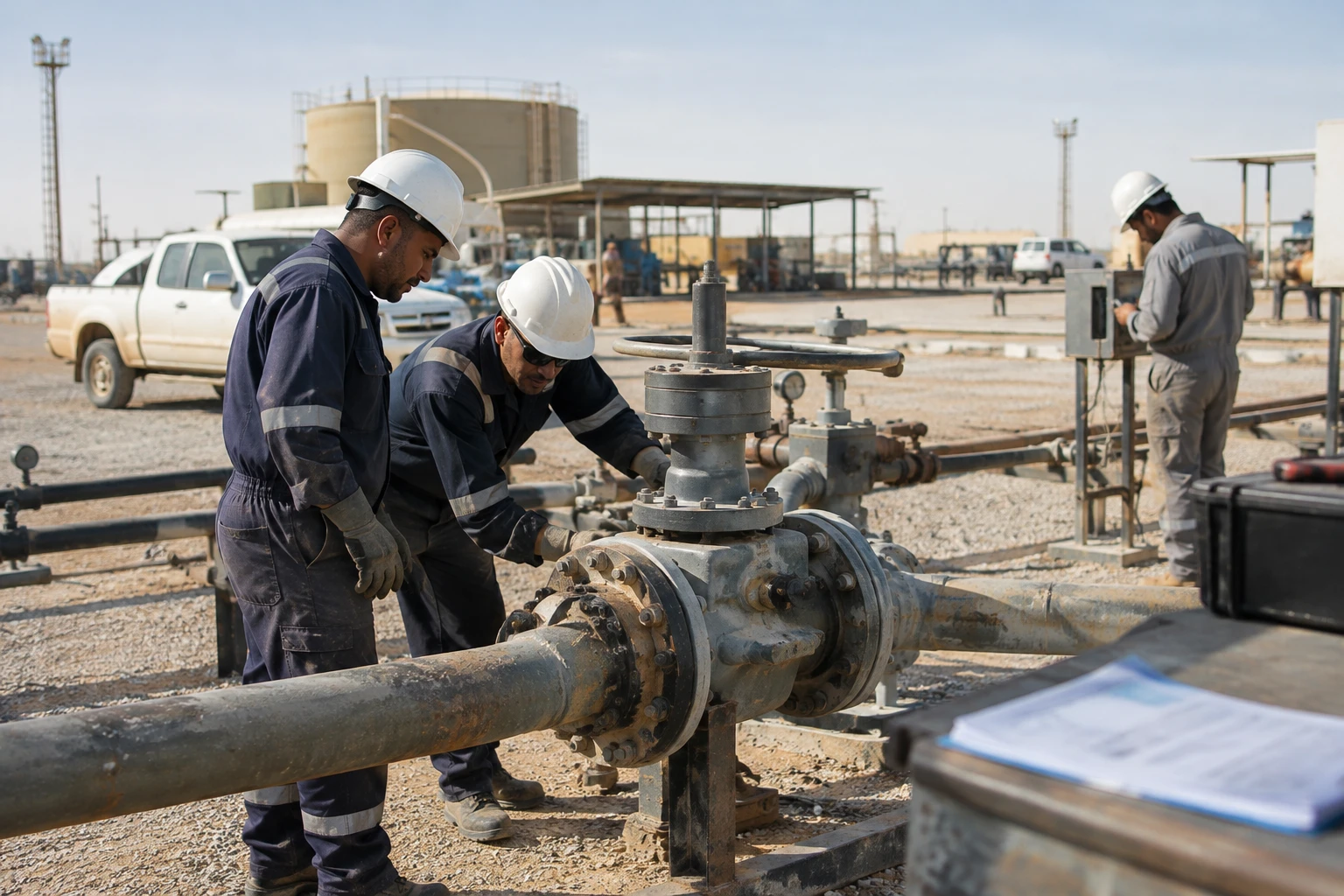
In south-eastern Algeria, the oil challenge is not limited to finding new deposits. It is also about making better use of fields already in production, as reservoirs age and domestic demand rises. Two studies entrusted to a Vietnamese company will examine this approach in Berkine.
Two reservoirs, 12 months of study
On Tuesday 6 October 2026, in Oran, the National Agency for the Valorisation of Hydrocarbon Resources (ALNAFT) and the PetroVietnam Exploration Production Corporation (PVEP) signed two study agreements. They concern the Rhourde El Baguel and Bir El Aïssa fields in the Berkine Basin, in south-eastern Algeria. Algeria’s APS news agency and the Algerian media outlet Algérie 54 reported the same locations and partners.
Each study is expected to last 12 months. Teams will examine the available data and reservoir behaviour to identify ways to improve hydrocarbon recovery. This term refers to the share of oil or gas that can technically be brought to the surface, rather than left in the rock. The agreements therefore cover an assessment: they guarantee neither increased production nor a timetable for works.
The agreements were signed on the sidelines of NAPEC 2026, a trade fair and conference devoted to energy and hydrogen in Africa and the Mediterranean basin. According to Algérie 54, Vietnam’s ambassador to Algeria, Vu Duy Long, described the agreements as a step towards cooperation between Vietnamese companies and Algerian partners. PVEP is already active in Algeria’s oil sector through its participation in the Bir Seba project.
Berkine, between mature fields and new investment
The choice of existing fields sets this initiative apart from exploration campaigns seeking new reserves. Rhourde El Baguel is a deposit discovered in 1962. Its history includes several attempts to increase recovery, notably through gas injection, a technique intended to help move oil through the reservoir. The operator and partners have changed over the years. Historical production figures therefore do not necessarily reflect the current situation.
Bir El Aïssa, also in the Berkine Basin, is the subject of a separate study. No recent production estimate has been given in the information published about the new agreements. It would therefore be premature to quantify what the work might yield, or to treat potential volumes as confirmed reserves.
The initiative is part of a broader national strategy. At the opening of NAPEC 2025, the Minister of Hydrocarbons and Mines, Mohamed Arkab, announced an investment programme of more than $60 billion for 2025-2029. The Algerian media outlet TSA reported that 80% of the announced allocation was intended for “upstream” activities, meaning exploration and production. This announcement provides the political and financial context, but does not mean that the Berkine studies themselves have an announced budget or funding.
In Algiers, the question is also one of balancing exports with the country’s needs. Oil and gas generate revenue and support external sales. At the same time, domestic consumption puts pressure on available volumes. For the authorities, extending production from existing fields could thus complement exploration, although it is not yet known what contribution these two sites could make.
Foreign cooperation without a transfer of decision-making
The partnership with PVEP brings foreign expertise to an assessment conducted with the national agency responsible for valorising hydrocarbon resources. It adds to energy cooperation that extends beyond the European partners usually associated with Algerian exports. However, the announcement concerns neither a production contract nor a transfer of the fields: it covers 12-month technical studies.
Their scope will depend on the findings, followed by any investment choices and authorisations. A study may identify technical options without showing that they are profitable or can be applied on a large scale. Costs, the equipment required, recoverable volumes and effects on the production timetable remain to be established.
The local benefits are not detailed in the available announcements. If development operations follow, they could affect specialised jobs, service providers and infrastructure in producing regions. But a study alone is not enough to conclude that jobs will be created or that the territories concerned will receive additional revenue. The distinction between an assessment announcement and an implemented project therefore matters to residents and businesses in the region too.
An issue extending beyond Algeria’s borders
For North Africa, the initiative illustrates a priority shared by several producers: maintaining existing capacity while seeking new deposits and preparing for the energy system’s evolution. Algeria belongs to the Arab Maghreb Union (AMU), a North African regional organisation. However, the available information does not present these agreements as a joint AMU project: they are primarily Algerian-Vietnamese agreements.
The issue is also of interest to African and Mediterranean markets, since the availability of Algerian hydrocarbons affects regional trade and exports. It forms part of a broader debate: how can energy supply be funded while economies are diversified and other energy sources developed? The Berkine agreements do not resolve this debate. Rather, they show that improving existing fields remains part of Algeria’s energy trajectory.
The next concrete step will be the delivery of the two studies’ findings, expected after 12 months of work. It will then be necessary to distinguish the technical options identified from actual investment and production decisions. For now, the agreement opens a phase of analysis, not a promise of additional barrels.
The dates, partners and two fields were cross-checked against the APS announcement on the ALNAFT-PVEP agreements and Algérie 54’s report on NAPEC 2026. The context of the investments announced in 2025 was reported by TSA Algérie.



