
 Egypt
 Libya
 Morocco
 Sudan
 Tunisia
 Benin
 Burkina Faso
 Cabo Verde
 Côte d'Ivoire
 Ghana
 Guinea
 Guinea-Bissau
 Liberia
 Mali
 Mauritania
 Niger
 Nigeria
 Senegal
 Sierra Leone
 The Gambia
 Togo
 Cameroon
 Central African Republic
 Chad
 DR Congo
 Equatorial Guinea
 Gabon
 Republic of the Congo
 São Tomé and Príncipe
 Burundi
 Comoros
 Djibouti
 Eritrea
 Ethiopia
 Kenya
 Madagascar
 Malawi
 Mauritius
 Mozambique
 Rwanda
 Seychelles
 Somalia
 South Sudan
 Tanzania
 Uganda
 Angola
 Botswana
 Eswatini
 Lesotho
 Namibia
 South Africa
 Zambia
 Zimbabwe
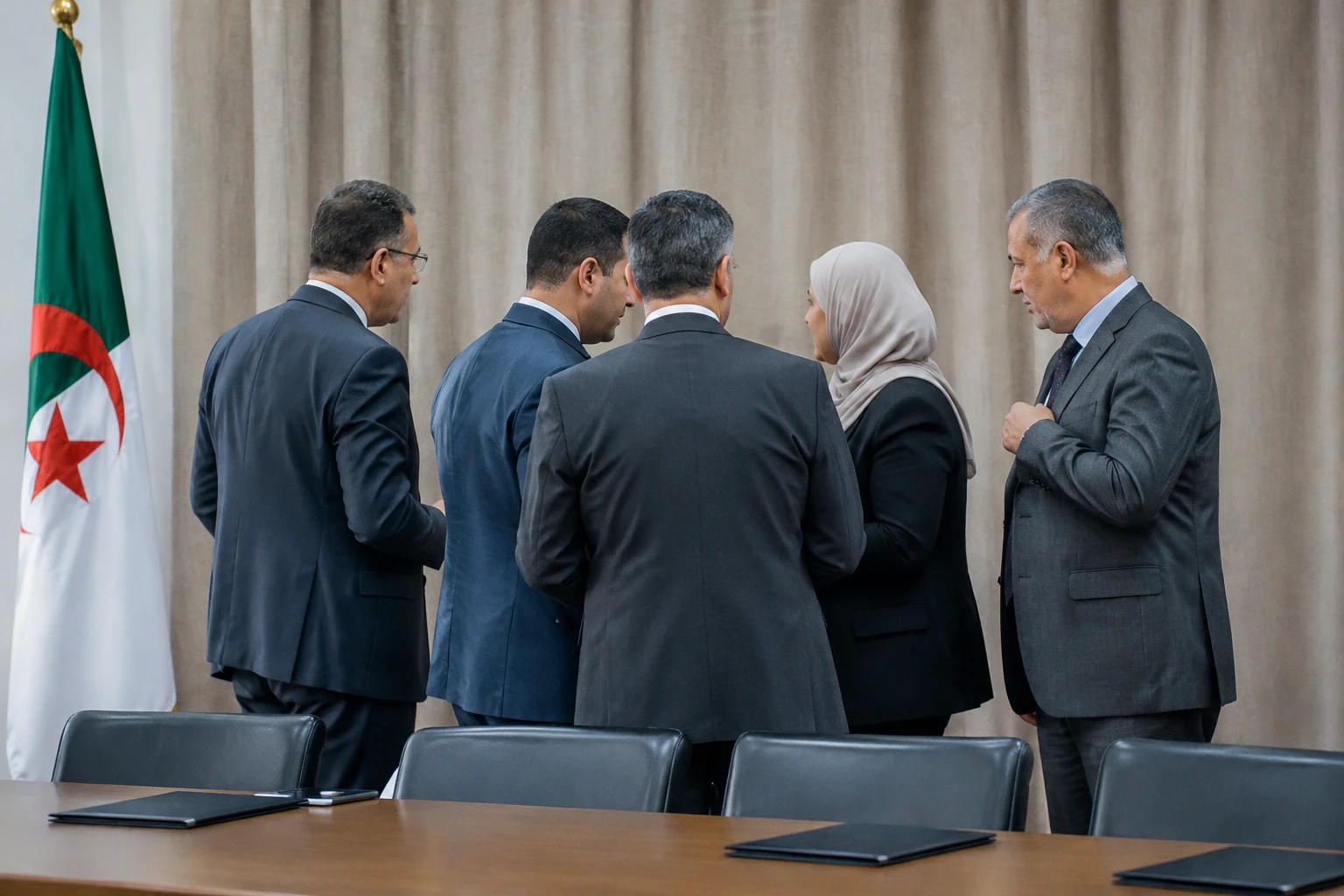
Sixty-one arrests announced, but little public information about the alleged offences: in Algeria, a security case whose contours remain unclear is unfolding amid a regional climate in which mistrust between Algiers and Rabat remains strong. At this stage, the allegation of “sabotage” should be presented as that of the Algerian authorities, not as a fact established by an independent investigation.
Official announcement, details still limited
On Sunday 11 October 2026, the General Directorate of National Security (DGSN) announced the arrest of 61 Moroccan nationals. According to its statement, the arrests took place at the beginning of the month. The suspects are said to have been preparing acts intended, according to police, to threaten security and public order. The DGSN described the group as an “international Moroccan criminal network” and said a former Moroccan serviceman was among those arrested.
The authorities also say the suspects entered Algeria from Tunisia via mountain paths. However, the statement reproduced in available reports gives no details of the planned acts, the physical evidence gathered or the precise role attributed to each person. Nor does it establish whether the suspects have appeared before a magistrate or whether charges have formally been brought.
Algerian and regional media have reported the announcement, but the articles reviewed repeat the DGSN’s statements without independently confirming the allegations. The number of people arrested and the reported circumstances are therefore attributed to the Algerian authorities. The guilt of those accused cannot be inferred from their arrest. Madar’s report and Assahifa’s report relay the announcement without independently verifying the alleged facts.
A border closed for more than 30 years
The case comes amid a long deterioration in bilateral relations. The land border between Algeria and Morocco has been closed since 1994. On 24 August 2021, Algiers announced the severing of diplomatic relations with Rabat. Since then, political channels have remained severely curtailed, while disagreements over Western Sahara continue to shape the rivalry between the neighbours.
Western Sahara, a former Spanish colony, is claimed by Morocco, which controls most of the territory. The Polisario Front advocates independence for the territory, while Algeria supports the Sahrawis’ right to self-determination. The United Nations has maintained a mission in the territory since 1991, as part of a political process that has not produced a final settlement. This dispute fuels diplomatic tensions, but is not, in itself, evidence in the criminal case announced in October. European documents referring to the UN framework recall the role of MINURSO and the unresolved question of self-determination.
The rupture also weighs on a region where cross-border trade, family travel and security cooperation are difficult to organise. Tunisia, cited in the official account as the suspected route of entry, is mentioned in a case that primarily concerns Algerian security and Algerian-Moroccan relations. However, no public evidence establishes any involvement by the Tunisian authorities.
National security and the need for evidence
For the Algerian authorities, the investigation concerns the protection of security and public order. But in a case involving nationals of a neighbouring country, the precision of the information is particularly important. Details such as the planned acts, the locations targeted, the evidence seized and the subsequent legal proceedings would help distinguish a substantiated accusation from a general statement. Their absence from publicly available information calls for caution, without prejudging what the investigation may establish.
This caution also matters for those concerned and their families. A police announcement is no substitute for evidence being presented before a court or for the right to challenge the accusations. Nor does it justify generalising suspicion to all Moroccans living or travelling in Algeria. Conversely, the lack of public detail is not enough to conclude that the alleged events did not occur.
The political context may give the case significance beyond the judicial file. When official relations have been severed, an accusation involving nationals of the other country risks fuelling rhetoric of mistrust. This is why precise attribution of information and the publication of verifiable evidence are essential: they make it possible to report security concerns without turning a legal process into a political verdict.
A test for Maghreb relations
The Arab Maghreb Union (AMU), which brings together Algeria, Morocco, Tunisia, Libya and Mauritania, was established to promote regional cooperation. Tensions between Algiers and Rabat have long limited the organisation’s ability to advance integration. The African Union lists the AMU among the continent’s regional communities.
At the African level, the issue is therefore not only the outcome of this investigation. It also concerns how the states of the continent’s north can manage their disputes while preserving mechanisms for cooperation. For now, the available information establishes that Algiers has announced 61 arrests and made serious accusations. It does not allow independent verification of the alleged plan. The legal proceedings and any further official details will be crucial in assessing the case’s true significance.



