Algeria
 Egypt
 Libya
 Morocco
 Sudan
 Tunisia
 Benin
 Burkina Faso
 Cabo Verde
 Côte d'Ivoire
 Ghana
 Guinea
 Guinea-Bissau
 Liberia
 Mali
 Mauritania
 Niger
 Nigeria
 Senegal
 Sierra Leone
 The Gambia
 Togo
 Cameroon
 Central African Republic
 Chad
 DR Congo
 Equatorial Guinea
 Gabon
 Republic of the Congo
 São Tomé and Príncipe
 Burundi
 Comoros
 Djibouti
 Eritrea
 Ethiopia
 Kenya
 Madagascar
 Malawi
 Mauritius
 Mozambique
 Rwanda
 Seychelles
 Somalia
 South Sudan
 Tanzania
 Uganda
 Angola
 Botswana
 Eswatini
 Lesotho
 Namibia
 South Africa
 Zambia
 Zimbabwe
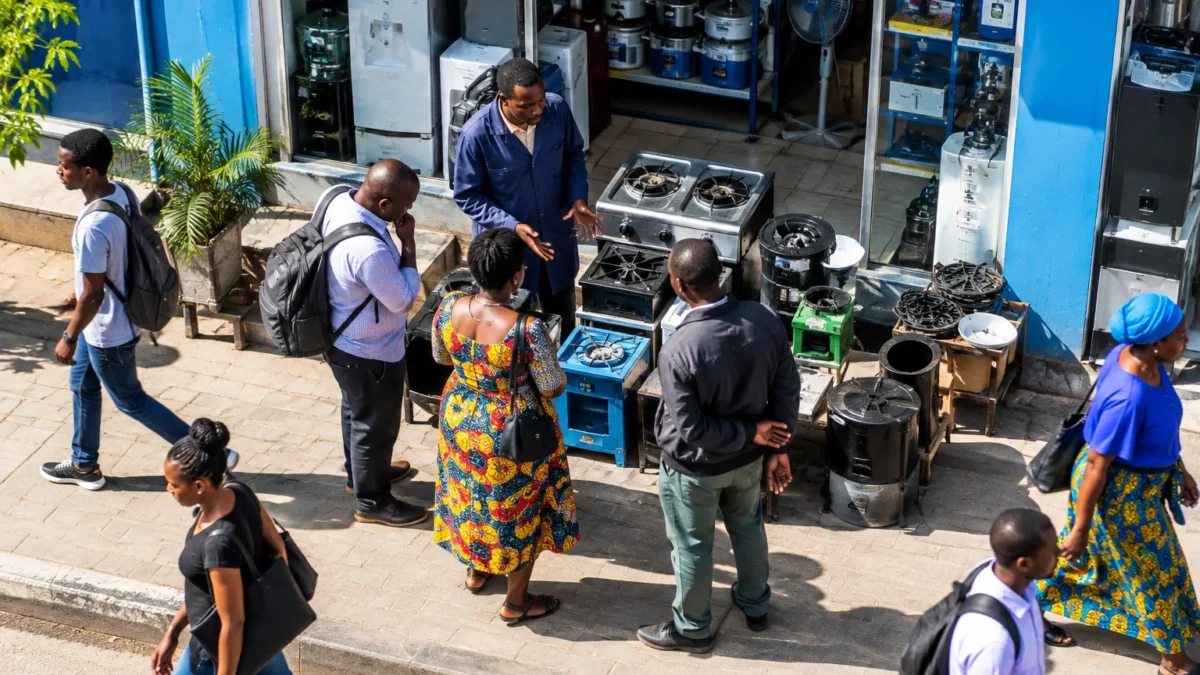
A common standard does not, on its own, reduce smoke in a kitchen. But it can prevent a safe stove in one country from being held up at a neighbouring border because its certification is not recognised. That is the practical issue at stake in a standards initiative launched for clean-cooking equipment in Africa.
Common rules for fragmented markets
On 26 November 2026, an announcement on cooperation between the Saudi initiative Forward7 and the African Organisation for Standardisation (ARSO) reported the implementation of more than 45 standards. They cover three groups of solutions: liquefied petroleum gas (LPG) equipment, bioenergy and biogas, and solar thermal systems. The figure and scope are reported in the announcement; the public information consulted does not make it possible to independently verify the details of all 45 texts or their adoption country by country.
ARSO is an African intergovernmental organisation tasked with aligning national standards. Its aim is to facilitate trade without compromising quality and safety requirements. In practice, however, a regional standard does not automatically replace national rules: each country must adopt it, organise inspections and set out certification procedures.
The cooperation described covers a range of equipment and stages. The requirements mentioned include gas cylinders and their accessories, valves, pressure gauges, periodic inspections and compatibility between components. They also cover the different stages of the chain, from design to household use. ARSO is also working on standards in areas such as bioenergy and biogas, but its public catalogue is not sufficient to confirm the precise status of each text announced here.
A health need, but different energy realities
The need for less polluting solutions is well documented. According to the World Health Organization (WHO), 923 million people in sub-Saharan Africa lacked access to clean cooking in 2022. The WHO’s latest estimates also show that in 2023, only 8% of the rural population in the African Region relied primarily on clean fuels and technologies for cooking, compared with 46% in urban areas. These regional averages conceal wide disparities between countries and households.
Wood, charcoal and other solid fuels remain important in many areas. Their use exposes people to household air pollution, with health risks that particularly affect women and children, who are often present while meals are prepared. But the obstacles are not limited to the availability of a device: fuel prices, irregular incomes, access to electricity, distribution networks and cooking habits also influence household choices.
Solutions are not interchangeable from one context to another. LPG may suit cities served by distribution networks, but it depends on supply, the price of cylinders and the safety of refills. Biogas requires a suitable installation and an available organic resource. Solar thermal energy depends on sunshine, usage patterns and cooking times. A standard improves technical safeguards; it does not resolve these questions of access or affordability.
From compliance on paper to household confidence
For manufacturers and traders, aligned specifications could reduce repeated testing and simplify the movement of equipment between markets. For authorities, they would provide a common basis for checking quality and limiting the sale of dangerous products. This facilitation depends, however, on mutual recognition of certificates, laboratories capable of conducting tests, and inspections that are genuinely enforced both at borders and in domestic markets.
The distinction matters: publishing or harmonising a standard does not mean that the equipment concerned is already certified, available or affordable everywhere. The information available does not detail the full list of texts, the countries that have incorporated them into their regulations, or the planned enforcement mechanisms. Without these details, it is too early to measure the partnership’s effect on prices, trade or exposure to pollution.
The governance of the process also warrants attention. Forward7 is supporting the initiative, while ARSO is leading an African standardisation effort. For the rules to meet the needs of markets across the continent, their implementation will need to involve national standards bodies, safety authorities, local businesses and users. African manufacturers, particularly small businesses, will need accessible procedures and testing capacity; otherwise, compliance could become an additional cost of entering the market.
A trade step, not yet an energy transition
The issue goes beyond the safety of appliances. The African Union has made access to energy a development priority, while regional economic communities are seeking to facilitate trade between neighbouring countries. More compatible standards could support this integration, provided they are aligned with national regulations and regional trade frameworks. They are not, however, a comprehensive energy policy or a financing plan for households.
The next indicator to watch will therefore be less the number of standards announced than their implementation: which countries will adopt them, who will inspect the equipment, which laboratories will be able to test it, and how will certificates be recognised from one border to another? It will also be important to see whether solutions suited to rural areas and lower-income households are genuinely accessible.
Standardisation can make the market easier to navigate and strengthen confidence in equipment. Its health and economic impact will then depend on distribution, fuel costs, maintenance and institutions’ ability to enforce the rules. The agreement’s reach will be measured at this level, from technical text to everyday cooking.
For health context, consult the WHO data on household air pollution. Standards work and references are available in the ARSO catalogue of African standards.