Algeria
 Egypt
 Libya
 Morocco
 Sudan
 Tunisia
 Benin
 Burkina Faso
 Cabo Verde
 Ghana
 Guinea
 Guinea-Bissau
 Liberia
 Mali
 Mauritania
 Niger
 Nigeria
 Senegal
 Sierra Leone
 The Gambia
 Togo
 Cameroon
 Central African Republic
 Chad
 DR Congo
 Equatorial Guinea
 Gabon
 Republic of the Congo
 São Tomé and Príncipe
 Burundi
 Comoros
 Djibouti
 Eritrea
 Ethiopia
 Kenya
 Madagascar
 Malawi
 Mauritius
 Mozambique
 Rwanda
 Seychelles
 Somalia
 South Sudan
 Tanzania
 Uganda
 Angola
 Botswana
 Eswatini
 Lesotho
 Namibia
 South Africa
 Zambia
 Zimbabwe
For Côte d’Ivoire, the energy transition depends both on power stations and on the rules that make their construction financeable. The agreements announced in Antalya open up avenues for cooperation. However, they do not in themselves represent funding already secured or guaranteed electricity capacity.
Partnerships to turn projects into investment
The United Nations Climate Change Conference, COP31, was held in Antalya, Türkiye, from 9 to 20 November 2026. The Ivorian Council of Ministers presented its assessment on 25 November. According to the government, the delegation concluded eight agreements and protocols covering, among other things, carbon markets, conservation, climate finance and agricultural sectors. The official report of the Council of Ministers does not detail the amounts associated with these commitments in its summary.
The partnership most directly linked to energy was signed with Sweden on 13 November. It falls under Article 6.2 of the Paris Agreement, which allows countries to cooperate to reduce emissions and transfer mitigation outcomes between them, subject to monitoring and accounting rules. The agreement covers renewables, biomass, energy efficiency and waste management, among other areas. The Ivorian Carbon Market Office and the Global Green Growth Institute (GGGI), which supports the country, confirm the signing. The Carbon Market Office and GGGI say that two proposals are to be developed: one on low-carbon mobility and the other on bioenergy.
These proposals are still at the development stage. No funding allocation, implementation timetable or emissions reduction volume has been announced in the information available. Cooperation could facilitate access to technologies and finance, but its benefits will depend on projects being sufficiently detailed, approved and monitored. In a carbon market, the quality of measurement also matters: claimed reductions must be verifiable and not counted twice.
Waste, biomass and locally generated energy
Côte d’Ivoire is also seeking solutions beyond the Swedish agreement. On 17 November in Antalya, Ivorian Environment Minister Abou Bamba met his Tunisian counterpart, Habib Abid, to discuss generating energy from waste. The two ministers agreed to prepare a memorandum to be signed in Tunis. The Ivorian ministry confirms the meeting and says the discussions also covered environmental management. The Environment Ministry’s account describes a proposed area of cooperation, not a power station project that has already been approved.
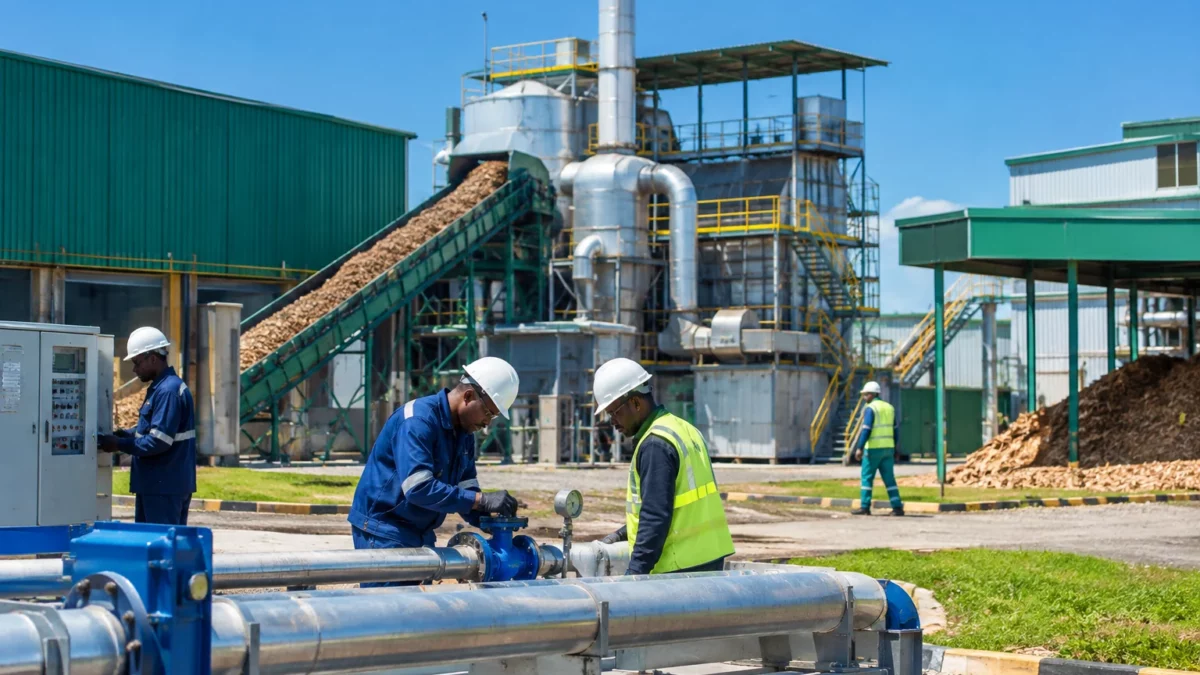
In Côte d’Ivoire, the BIOVEA power station provides a concrete example of agricultural residue being put to use. Commissioned on 5 November in Ayébo, in the department of Aboisso, it has a capacity of 46 megawatts and burns residues from the oil palm sector. The Energy Ministry confirms its capacity and commissioning. The Ivorian Press Agency reports an announced annual output of 348 gigawatt-hours, while earlier project communications cited 336 GWh. This discrepancy should be clarified before a definitive annual figure is adopted. The Energy Ministry and the Ivorian Press Agency document the commissioning and the published figures.
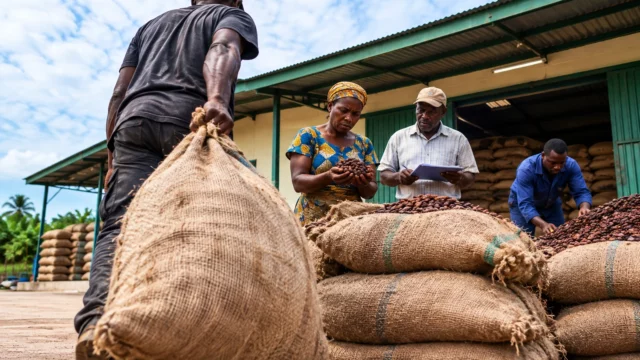
The project brings together SIFCA, EDF and Meridiam. The authorities announced an investment of about 150 billion CFA francs and more than 1,000 direct and indirect jobs. The biomass used comes from agricultural residues, so its regular supply depends on logistics, seasonality and the needs of other users of these materials. The government has also referred to power stations in Divo, fuelled by cocoa residues, and Boundiali, using cotton stalks. Their capacities and timelines have not been specified.
A national target, benefits to be verified
These initiatives form part of Côte d’Ivoire’s ambition to reach 45% renewables in its electricity mix by 2030. The government has also announced a solar power station programme totalling 1,262 MW. The solar and energy targets announced by the authorities illustrate the scale of the challenge: turning announcements into grid-connected installations while ensuring a reliable supply and diversifying sources of generation.
The benefits will not automatically be shared equally. Electricity producers and investors need stable rules and predictable contracts. Farmers and communities near installations are affected by biomass collection, employment and local impacts. Households and businesses, meanwhile, need a grid capable of delivering electricity, whatever the source of generation. The announced benefits should therefore be monitored beyond installed capacity alone.
At regional level, Côte d’Ivoire is a member of ECOWAS, the West African community that co-ordinates, among other things, energy exchanges and projects between states. A more diverse renewable energy supply could strengthen the national system and contribute to regional trade, provided infrastructure and commercial rules allow it. The next step will be less about multiplying announcements than publishing details of funding, timelines and monitoring safeguards for carbon and energy projects. The eight commitments made in Antalya provide a framework for cooperation; their impact will be measured by their implementation.