Algeria
 Egypt
 Libya
 Morocco
 Sudan
 Tunisia
 Benin
 Burkina Faso
 Cabo Verde
 Côte d'Ivoire
 Ghana
 Guinea
 Guinea-Bissau
 Liberia
 Mauritania
 Niger
 Nigeria
 Senegal
 Sierra Leone
 The Gambia
 Togo
 Cameroon
 Central African Republic
 Chad
 DR Congo
 Equatorial Guinea
 Gabon
 Republic of the Congo
 São Tomé and Príncipe
 Burundi
 Comoros
 Djibouti
 Eritrea
 Ethiopia
 Kenya
 Madagascar
 Malawi
 Mauritius
 Mozambique
 Rwanda
 Seychelles
 Somalia
 South Sudan
 Tanzania
 Uganda
 Angola
 Botswana
 Eswatini
 Lesotho
 Namibia
 South Africa
 Zambia
 Zimbabwe
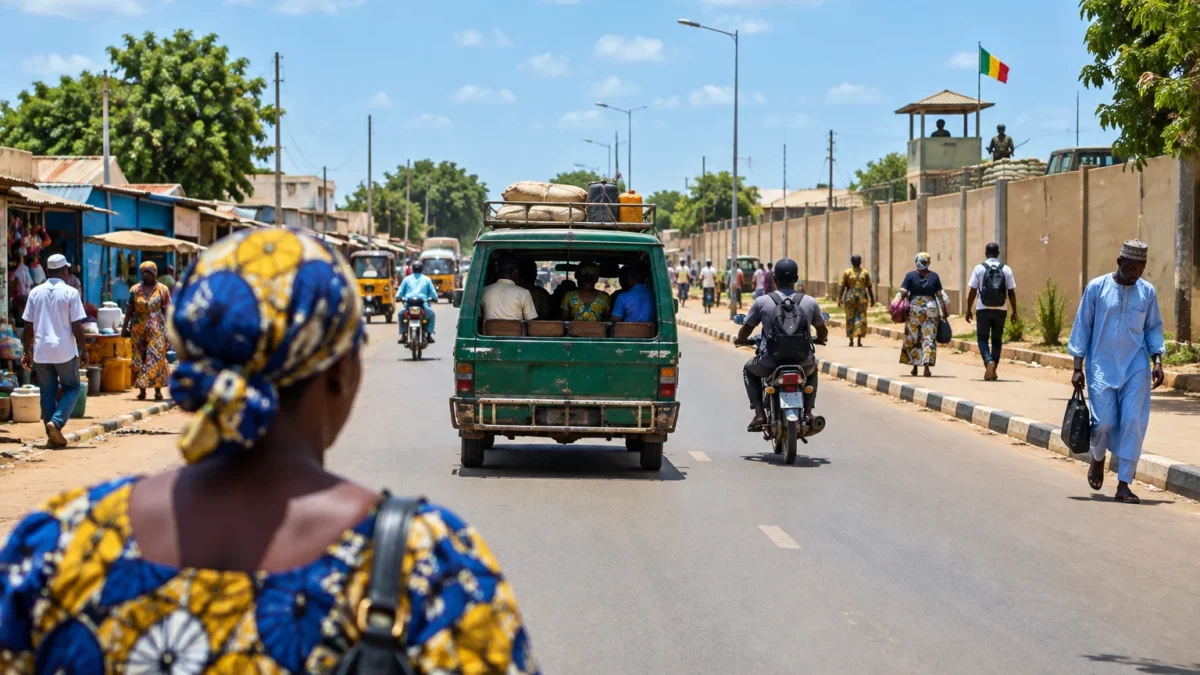
In Niono, in central Mali, security pressure is also measured by the ability to protect roads, camps and residents. On 21 November 2026, attacks claimed by the JNIM brought this question to the fore, as available accounts differ over their consequences.
Niono, a sensitive point in central Mali
The Ségou region links several agricultural areas and transport routes in the centre of the country. Niono occupies an important place in this area. The security of military positions and travel concerns the armed forces, traders, farmers and people in nearby communities alike.
Mali is going through a period of intense armed pressure. The JNIM, affiliated with Al-Qaeda, operates in several Sahel regions and carries out attacks against public forces. Since the political changes in Bamako and the country’s realignment of military partnerships, the authorities have placed particular emphasis on cooperation with Russia’s Africa Corps.
At regional level, Mali is part of the Confederation of Sahel States with Burkina Faso and Niger. The three countries left ECOWAS, the West African economic and political organisation, in January 2025. Security coordination and relations with neighbouring countries therefore remain major issues, particularly in the face of cross-border movements of fighters and weapons.
Attacks claimed, toll not established
According to information available on the events of Saturday 21 November, at least two positions were reportedly targeted in the Ségou region: Malian army installations near Niono and a position associated with Africa Corps. The JNIM claimed the attacks.
Witnesses cited in initial reports describe attackers arriving on foot, by motorbike and in vehicles. Heavy gunfire was reportedly heard and vehicles were said to have burned in a camp. These details should be distinguished from an independently confirmed toll.
The armed group described the losses as significant. The Malian army disputes the toll claimed by the group. No casualty figure can therefore be treated here as established. In conflicts, statements by the parties also serve to shape perceptions of an operation; they should be examined with caution.
Another attack reportedly targeted an Africa Corps armoured vehicle with an improvised explosive device. Here too, the available information does not allow the human toll or extent of the damage to be independently confirmed. Malian air strikes reported in the vicinity of Niono did not prevent claims of further operations.
Beyond military positions
Repeated attacks around Niono may complicate travel and increase uncertainty for residents and local economic activity. The effects are not the same for everyone: a road closure directly affects transport operators and markets, while insecurity near villages weighs on daily travel and access to services.
For Bamako, the issue is also political. The presence of Russian partners is central to the security strategy chosen by the authorities. An attack targeting them raises questions about the protection of installations and the ability of this cooperation to contain mobile armed groups. However, on its own, it is not enough to measure the overall effectiveness of the military system.
Information about weapons being transported from Libya to the Sahel calls for the same caution. United Nations and research organisations’ work documents regional trafficking routes, but this does not confirm that the equipment used in the attacks of 21 November came from Libya. The available evidence establishes no direct link to these events.
A test for the regional response
The situation around Niono is part of a dynamic that extends beyond Mali alone. Armed groups exploit border areas and transport networks, while Sahelian states seek to coordinate their responses within a political framework distinct from ECOWAS. Regional cooperation will also depend on information-sharing and the ability to protect civilians.
The immediate priority remains to establish the facts: which positions were hit, what damage is confirmed and what toll can be verified. In the absence of independent confirmation, the JNIM’s claims and the army’s denial must remain attributed. For the people of Ségou and the authorities in Bamako, the real impact of these attacks will be judged by their consequences for road security and local life.