Algeria
 Egypt
 Libya
 Morocco
 Sudan
 Tunisia
 Benin
 Burkina Faso
 Cabo Verde
 Côte d'Ivoire
 Ghana
 Guinea
 Guinea-Bissau
 Liberia
 Mali
 Mauritania
 Niger
 Nigeria
 Senegal
 Sierra Leone
 The Gambia
 Togo
 Cameroon
 Central African Republic
 Chad
 Equatorial Guinea
 Gabon
 Republic of the Congo
 São Tomé and Príncipe
 Burundi
 Comoros
 Djibouti
 Eritrea
 Ethiopia
 Kenya
 Madagascar
 Malawi
 Mauritius
 Mozambique
 Rwanda
 Seychelles
 Somalia
 South Sudan
 Tanzania
 Uganda
 Angola
 Botswana
 Eswatini
 Lesotho
 Namibia
 South Africa
 Zambia
 Zimbabwe
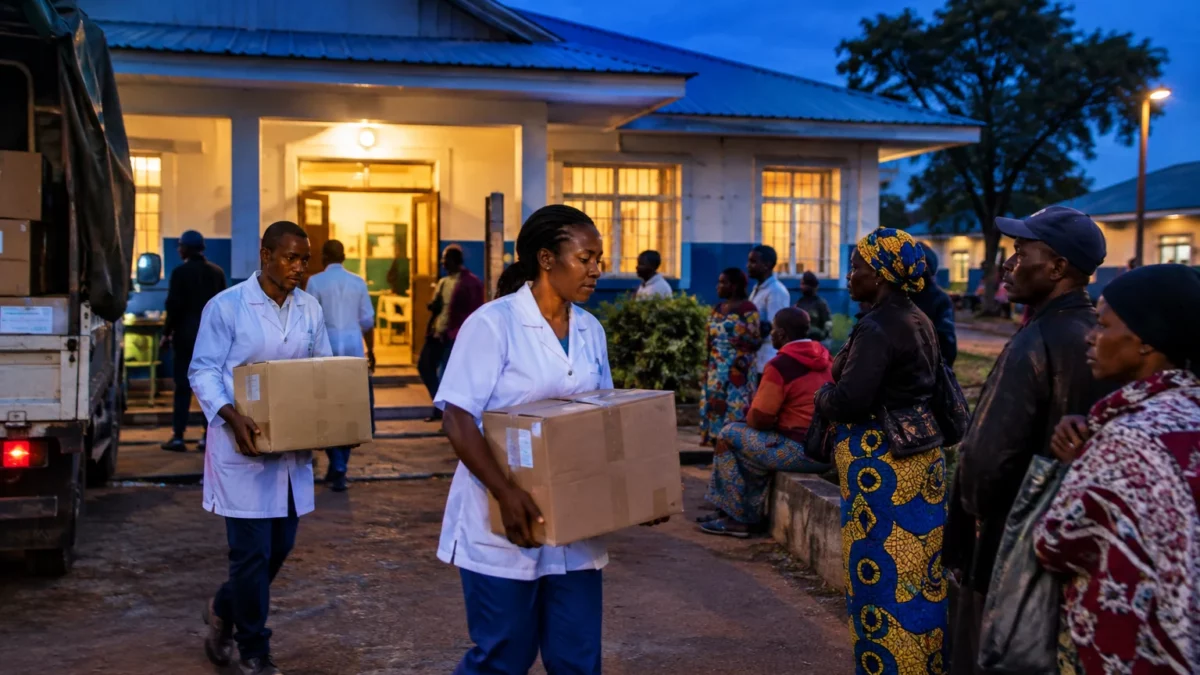
When roads close under fire, the Ebola response loses far more than access to villages. It risks losing track of contacts, care and safe burials. In Ituri, insecurity is threatening a health response already under considerable pressure.
In Ituri, fighting cuts off response routes
Ituri province, in the north-east of the Democratic Republic of the Congo, is both a major outbreak hotspot and an area where armed groups remain active. Bunia, its provincial capital, is a hub for some of the health operations. But clashes north of the city are complicating the movement of teams and the supply of health facilities.
On 25 November, workers involved in the Ebola response had to be evacuated from Akwe, a locality north-east of Bunia, after being caught in crossfire. About 12 people, including two members of the World Health Organization (WHO) and Congolese health workers, had spent three days trapped in a hospital. The WHO also temporarily relocated its team from Mongbwalu, where the outbreak was detected in May, after road access was disrupted.
These events were reported by health and humanitarian officials quoted by the Associated Press. In its situation report of 15 November, the Congolese health ministry confirmed that Ituri remained one of the worst-affected provinces. However, it gave no specific figures for evacuations. Details of teams caught up in the fighting should therefore be attributed to the officials quoted by the news agency.
Heavy outbreak toll, figures changing
Tallies published within a few days of each other show the scale of the outbreak, but also why every figure must be dated. As of 15 November, the Congolese Presidential Task Force report recorded 11,432 confirmed cases and 5,593 confirmed deaths. The National Institute of Public Health report for 16 November gave figures of 11,504 cases and 5,630 deaths.
As of 23 November, the WHO had recorded 11,955 confirmed cases and 5,867 confirmed deaths in the DRC. These totals are not interchangeable: they relate to different data-collection dates and may be revised. The WHO identifies the outbreak as being caused by Bundibugyo virus disease. This is an Ebola strain distinct from the one associated with previous major outbreaks in the DRC.
By mid-November, the Congolese health ministry had already reported that 271 frontline health workers had been affected by the disease since the start of the outbreak. This does not mean that all of them were infected at work. It nevertheless highlights the exposure of health workers, while payment delays and staff shortages are also complicating efforts to mobilise them.
Why access to communities is crucial
Ebola is transmitted through direct contact with the blood or other bodily fluids of a sick or deceased person. The response therefore depends on a closely linked set of measures: rapidly detecting cases, isolating and treating patients, tracing those exposed and organising safe burials. If teams cannot move around, each of these steps slows down.
Blocked roads can also prevent the delivery of supplies and the transfer of patients between facilities. They make safe burials more difficult, even though these help reduce the risk of transmission while taking families’ needs into account. Incomplete contact tracing, in turn, gives the virus more opportunities to spread undetected.
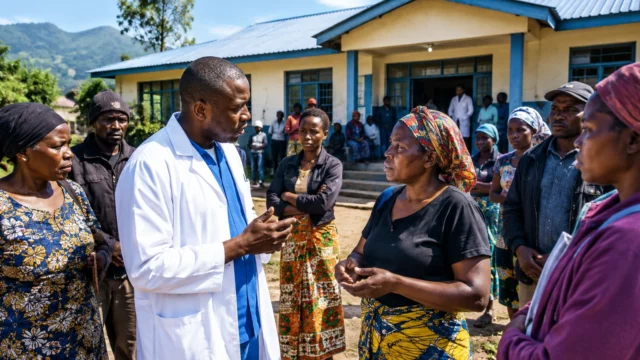
The response is not confined to urban centres. People in isolated localities may have to wait longer to access care. Community health workers, meanwhile, must operate in conditions where security risks compound health risks. And when teams temporarily leave an area, services for patients with other illnesses may also be weakened.
Official data show that fighting is not the only obstacle. As of 16 November, the National Institute of Public Health (INSP) said that 29,015 of the 35,570 recorded contacts had been visited, a follow-up rate of 81.6%. Its report also cited payment delays, community refusals fuelled by rumours and the closure of some checkpoints for security reasons. These problems call for different responses: securing access is not enough if teams lack resources or trust is absent.
Local conflict with regional repercussions
The fighting reported north of Bunia pits government forces against the armed group Convention for the Popular Revolution, or CRP, according to information reported by the Associated Press. The eastern DRC has long been home to numerous armed groups and has seen repeated population displacement. In neighbouring North Kivu, the WHO also reported that recent attacks had displaced more than 20,000 people and complicated Ebola contact tracing. These distinct situations weigh on the same health response, but the armed groups involved should not be conflated.
The crisis also concerns neighbouring countries. The WHO has confirmed cases linked to the outbreak in Uganda and Kenya, as well as imported cases elsewhere. Border surveillance and the rapid exchange of information are therefore important, but they cannot replace access to care in affected areas. For people in the DRC, the immediate priority is being able to reach a health facility and receive care without the response being interrupted by fighting.
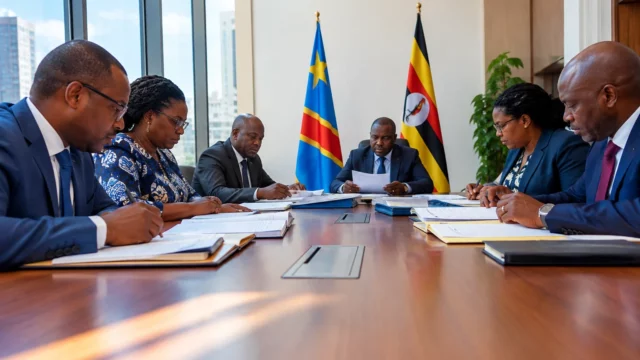
The DRC is a member of the East African Community and the Southern African Development Community, two regional organisations that bring together neighbouring states. But the health implications of the outbreak extend beyond these frameworks: the movement of people and cross-border ties require coordination between health authorities, particularly on surveillance and the referral of travellers. The WHO has also classified the outbreak as a public health emergency of international concern.
Protecting teams without isolating communities
The temporary evacuation of workers in Akwe illustrates the dilemma facing the authorities: protecting staff while maintaining essential services for communities. Local ceasefires or guarantees of safe passage could facilitate operations. However, their implementation depends on the parties present on the ground and cannot be assumed based on the information available alone.
In the short term, the indicators to watch are concrete: renewed access to localities, the presence of teams, changes in contact tracing and continuity of care at health centres. It will also be necessary to check whether daily data are being harmonised across provinces. The Congolese authorities acknowledge that this reconciliation work is under way. The next phase of the response will depend as much on this ability to coordinate as on whether health workers and residents can move around without being caught up in the fighting.