Egypt
 Libya
 Morocco
 Sudan
 Tunisia
 Benin
 Burkina Faso
 Cabo Verde
 Côte d'Ivoire
 Ghana
 Guinea
 Guinea-Bissau
 Liberia
 Mali
 Mauritania
 Niger
 Nigeria
 Senegal
 Sierra Leone
 The Gambia
 Togo
 Cameroon
 Central African Republic
 Chad
 DR Congo
 Equatorial Guinea
 Gabon
 Republic of the Congo
 São Tomé and Príncipe
 Burundi
 Comoros
 Djibouti
 Eritrea
 Ethiopia
 Kenya
 Madagascar
 Malawi
 Mauritius
 Mozambique
 Rwanda
 Seychelles
 Somalia
 South Sudan
 Tanzania
 Uganda
 Angola
 Botswana
 Eswatini
 Lesotho
 Namibia
 South Africa
 Zambia
 Zimbabwe
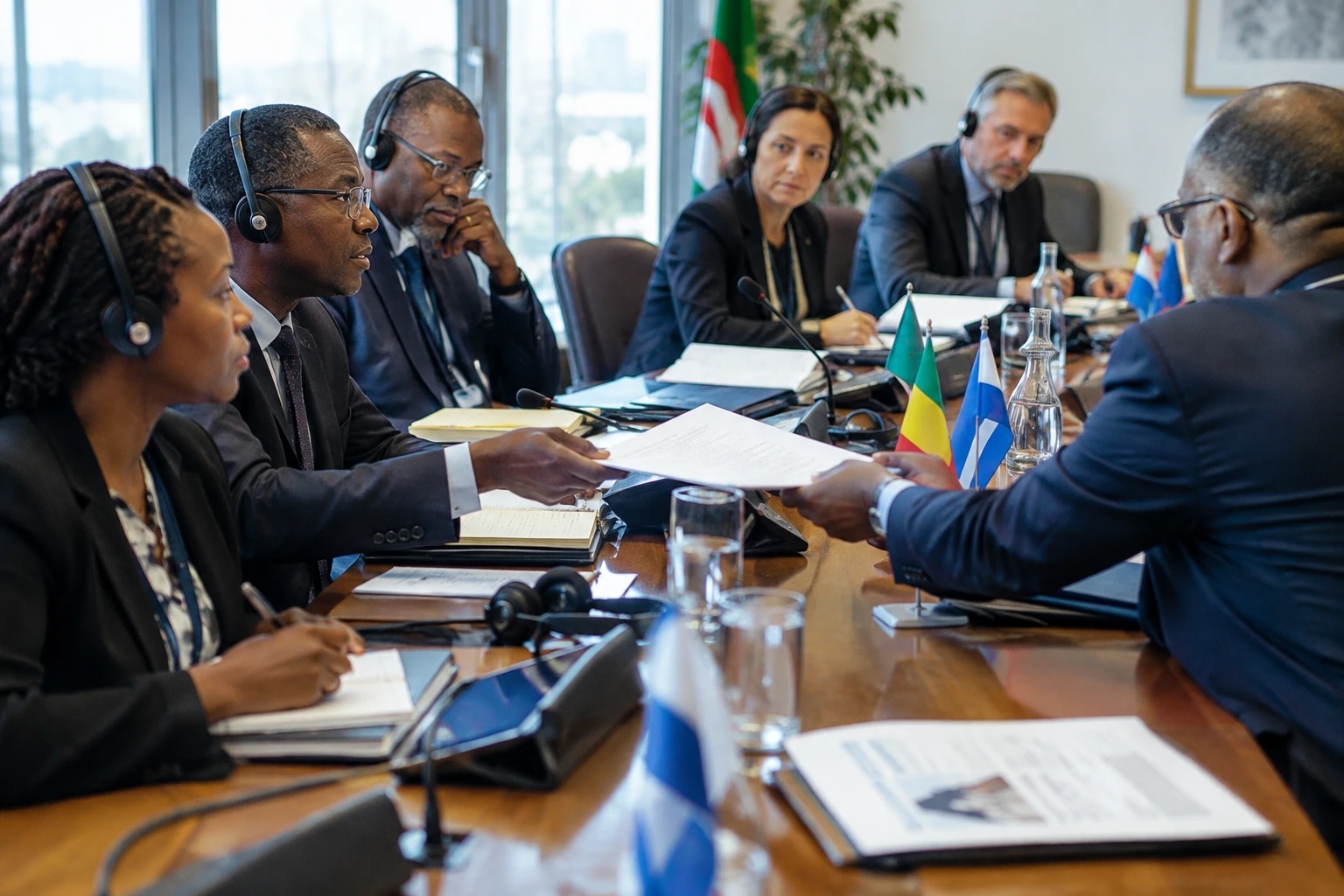
At In Ekker, in southern Algeria, cleaning up a former nuclear site involves more than removing materials. It also requires knowing precisely where the waste is, assessing the risks and protecting people who live or work nearby. It is on this ground, as much as that of memory, that the new operation announced on 1 November is being conducted.
A Saharan site at the heart of a longstanding issue
The Béryl site is in In Ekker, in the province of Tamanrasset, at the heart of the Hoggar region. This area of the Algerian Sahara hosted French nuclear tests during the colonial period and after independence. France conducted a total of 17 tests in the Sahara between 1960 and 1966: four atmospheric tests near Reggane and 13 underground tests at In Ekker, according to figures cited in a French parliamentary report. The National Assembly report on tests in the Sahara notes, in particular, containment failures during some tests.
Béryl is also the name of the underground test carried out on 1 May 1962 in a tunnel in the Hoggar massif. A containment accident caused radioactive material to escape from the tunnel. The long-term health and environmental consequences remain a subject of research and controversy. It is therefore important to distinguish established historical facts from estimates of current exposure: the available data do not allow a precise toll to be established for the people concerned.
The date chosen to launch the new campaign refers to another major moment in Algerian history. 1 November 1954 marks the start of the National Liberation Front’s uprising against French rule. This commemoration gives the operation political and commemorative significance, but does not replace the technical information needed to assess the results of the work.
A second campaign, with results yet to be documented
Algeria’s defence ministry announced the launch, on Sunday 1 November 2026, of a second clean-up operation at the E2 Béryl site. The Algerian public news agency APS reports that national personnel and equipment are being deployed. The announcement confirms the start of a new phase, but gives no details of the volumes of waste involved, the radioactivity measurements taken or the arrangements for storing the materials removed. The statement carried by APS provides no technical assessment in the published material to measure the scale of the work.
Algeria’s defence ministry says France refuses to accept responsibility and hand over maps of buried waste. This accusation should be reported as Algiers’s position. However, it does not resolve the issue: a response published by the French National Assembly in September 2026 says that a dossier containing maps and information held by France was handed to the Algerian authorities during the French president’s visit in August 2022. Neither account specifies whether the documents provided meet the current needs of Algerian teams, or whether further information is still being sought. The French government’s response to Parliament reports that the documents were handed over.
This disagreement shows that the issue is not limited to whether maps exist. It also concerns their accuracy, completeness and sharing with the experts tasked with carrying out the work. Without accessible, location-specific data, it is difficult to compile a complete inventory, set priorities for making the site safe and monitor risks over time. At this stage, no reliable, corroborated figure confirms how many people are currently exposed around the site.
Local protection and Franco-Algerian relations
For residents of Tamanrasset and neighbouring communities, the practical priority is to obtain clear information about monitored areas, safety instructions and environmental checks. Announcing an operation is not enough to demonstrate that the site has been decontaminated. The methods used, the substances removed, the measurements taken before and after the work, and the destination of the recovered waste will all need to be made known.
Practical responsibility is also shared among several institutions. The Algerian authorities are leading the announced campaign and have national expertise deployed on the ground. France holds historical archives and information relating to its test programme. Independent experts and researchers can help verify measurements, provided they have access to the relevant data and sites. The French Senate report on the consequences of the tests had already documented the issues of contamination and monitoring, but did not provide a complete current assessment of the site.
This issue is part of a bilateral relationship regularly marked by disputes over memory, archives and responsibility for the colonial period. But its significance extends beyond diplomatic exchanges between Algiers and Paris: it concerns environmental protection and the needs of populations affected by past military activities. In the African context, the African Union and regional environmental co-operation mechanisms can inform discussions on monitoring transboundary risks. This does not mean that the effects of the Béryl site have been established beyond Algeria; rather, it underscores the value of transparent data when a radioactive legacy concerns an area as vast as the Sahara.
The next step will therefore be to assess what this second campaign actually achieves. Publishing measurable results — areas treated, waste removed, radioactivity levels and population monitoring — would make it possible to distinguish an institutional announcement from verifiable progress. For residents, as for relations between the two countries, the quality of the information shared will matter as much as the start of the work.