Algeria
 Egypt
 Libya
 Morocco
 Sudan
 Tunisia
 Benin
 Burkina Faso
 Cabo Verde
 Côte d'Ivoire
 Ghana
 Guinea
 Guinea-Bissau
 Liberia
 Mali
 Mauritania
 Niger
 Nigeria
 Senegal
 Sierra Leone
 The Gambia
 Togo
 Cameroon
 Central African Republic
 Chad
 DR Congo
 Equatorial Guinea
 Gabon
 Republic of the Congo
 São Tomé and Príncipe
 Burundi
 Comoros
 Djibouti
 Eritrea
 Ethiopia
 Kenya
 Madagascar
 Malawi
 Mauritius
 Mozambique
 Rwanda
 Seychelles
 Somalia
 South Sudan
 Tanzania
 Angola
 Botswana
 Eswatini
 Lesotho
 Namibia
 South Africa
 Zambia
 Zimbabwe
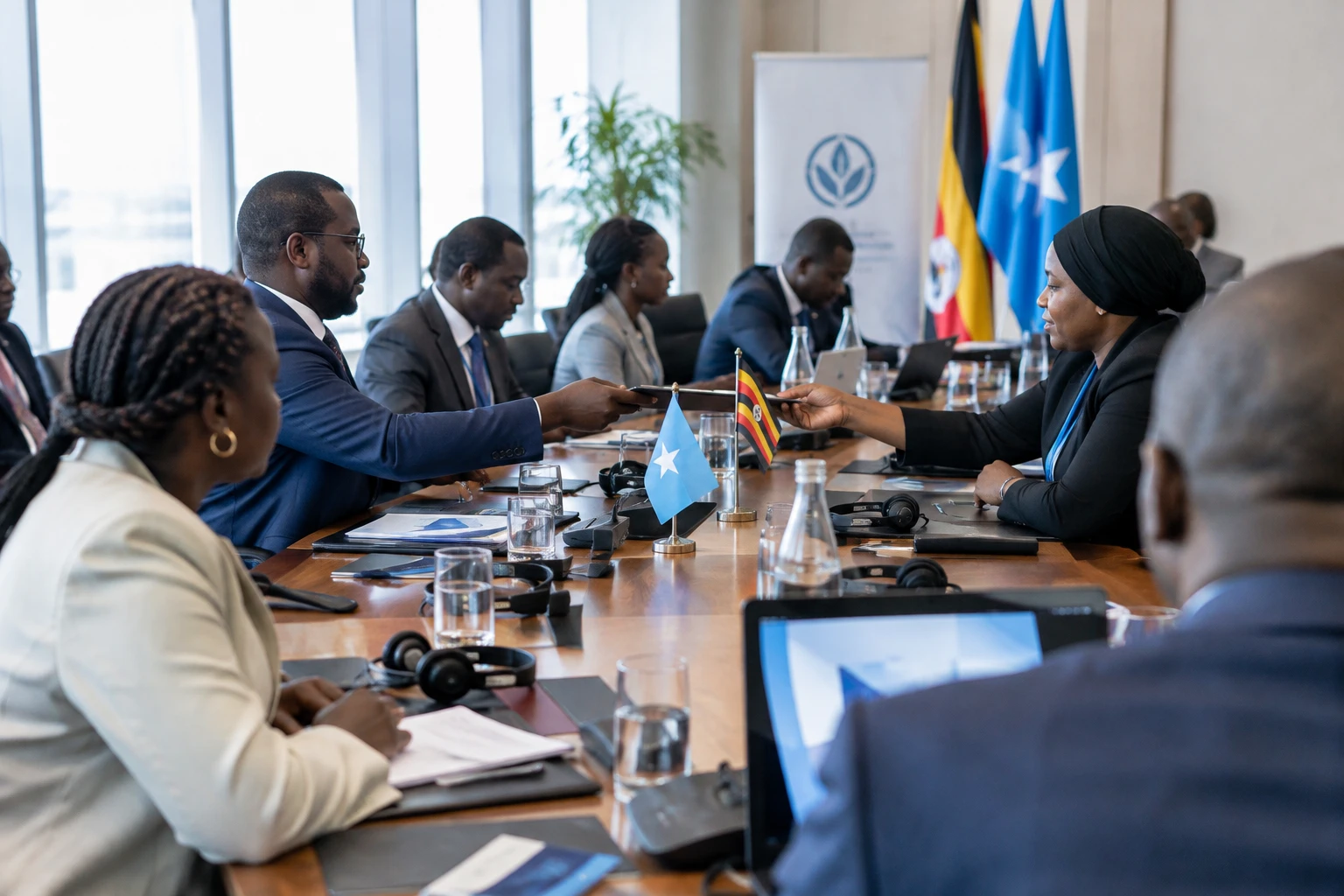
For Mogadishu, the announced departure of Ugandan soldiers raises an immediate question: who will take over on the ground, while the armed group al-Shabaab remains active and Somali forces still need to strengthen their capacity to provide security on their own? For Kampala, the decision marks the start of a gradual disengagement after nearly 20 years of military involvement.
An African mission at a new turning point
Uganda, an East African country whose capital is Kampala, has been a central player in the African Union’s military presence in Somalia since 2007. African contingents have supported Somali forces against al-Shabaab, particularly in Mogadishu. Their presence now comes under AUSSOM, the African Union Support and Stabilisation Mission in Somalia.
The mission is being carried out amid a delicate transition. The stated aim is for Somali forces to take greater responsibility for security. But previous withdrawals of African Union troops have raised concerns about the areas and positions they left behind. In April 2025, contributing countries even called for troop numbers to be increased in response to difficulties on the ground.
The issue also affects the balance of power in the Horn of Africa. Somalia, Uganda, Kenya, Ethiopia and Djibouti are linked by security and regional cooperation concerns. A change in military presence could therefore affect cross-border operations and coordination between states, beyond relations between Kampala and Mogadishu.
A two-stage withdrawal through to the end of 2027
On 2 November 2026, the Ugandan army announced that it had begun bringing home its soldiers deployed in Somalia under bilateral agreements with the Somali federal government. Military spokesman Colonel Chris Magezi said that an initial group had already returned to Uganda. According to the statement, the withdrawal of these bilateral units is due to be completed in the coming days.
The second stage concerns Ugandan military personnel serving with AUSSOM. Their departure is to be gradual and continue until the end of 2027. The announced date therefore does not mean that all troops will leave the country in the coming days: it sets the timeline for the complete withdrawal, while the detailed schedule for successive returns has not been made public.
Available estimates do not all give the same total. The Associated Press refers to thousands of soldiers still deployed, without specifying their number. An AFP dispatch puts the number within the African mission at between 4,500 and 6,000 military personnel, with a further 2,000 to 2,500 soldiers serving under a bilateral agreement. In the absence of a consolidated official figure independently confirmed, it is preferable not to present a single total as established.
For Somalia, the challenge is the handover
A planned withdrawal gives the Somali authorities and the African Union time to organise the handover. It does not, on its own, guarantee that national forces will be able to replace Ugandan units everywhere. The transition will depend in particular on available personnel, their coordination and the continuation of logistical support. The African Union plans to ensure that its force reductions take account of the security situation and joint assessments.
The consequences may vary by region. In cities and areas where African soldiers protect strategic positions, a departure without sufficient replacements could make it harder to secure routes and facilities. For residents, the practical concern is continuity of protection and services in a country where al-Shabaab retains the ability to act. The Somali authorities will therefore have to reconcile the desire for greater national responsibility with immediate security needs.
The timetable also comes as the United Nations’ political transition mission in Somalia closed on 31 October 2026, according to the Associated Press. The African Union forces and UN logistical support are not disappearing as a result: a separate UN mission is to continue providing some assistance. But the closure of the political mission removes a channel for mediation at a time when internal political disagreements remain unresolved.
Kampala asserts its decision, but interdependence remains
For Uganda’s leaders, the withdrawal ends a long-running operation and brings soldiers back to their country. It is part of a wider debate about the duration, funding and sharing of responsibility for African missions. Contributing states have regularly raised the question of the resources needed to continue AUSSOM. In April 2025, a ministerial meeting held in Kampala had, among other things, examined its funding and exit plan.
Kampala’s decision does not, however, eliminate shared security interests. Uganda belongs to the East African Community (EAC), a regional organisation that promotes cooperation among its members. Somalia’s stability directly affects neighbouring states, even though the announced withdrawal primarily concerns agreements between Uganda and Somalia, as well as Uganda’s commitment within the African Union.
The key concern now is implementation: the order of departures, continuity at positions held by Ugandans and the ability of Somali forces to take them over. Through to the end of 2027, the regional impact of this decision will depend less on its announcement than on how responsibilities are transferred, without leaving a vacuum that al-Shabaab could exploit.