Egypt
 Libya
 Morocco
 Sudan
 Tunisia
 Benin
 Burkina Faso
 Cabo Verde
 Côte d'Ivoire
 Ghana
 Guinea
 Guinea-Bissau
 Liberia
 Mali
 Mauritania
 Niger
 Nigeria
 Senegal
 Sierra Leone
 The Gambia
 Togo
 Cameroon
 Central African Republic
 Chad
 DR Congo
 Equatorial Guinea
 Gabon
 Republic of the Congo
 São Tomé and Príncipe
 Burundi
 Comoros
 Djibouti
 Eritrea
 Ethiopia
 Kenya
 Madagascar
 Malawi
 Mauritius
 Mozambique
 Rwanda
 Seychelles
 Somalia
 South Sudan
 Tanzania
 Uganda
 Angola
 Botswana
 Eswatini
 Lesotho
 Namibia
 South Africa
 Zambia
 Zimbabwe
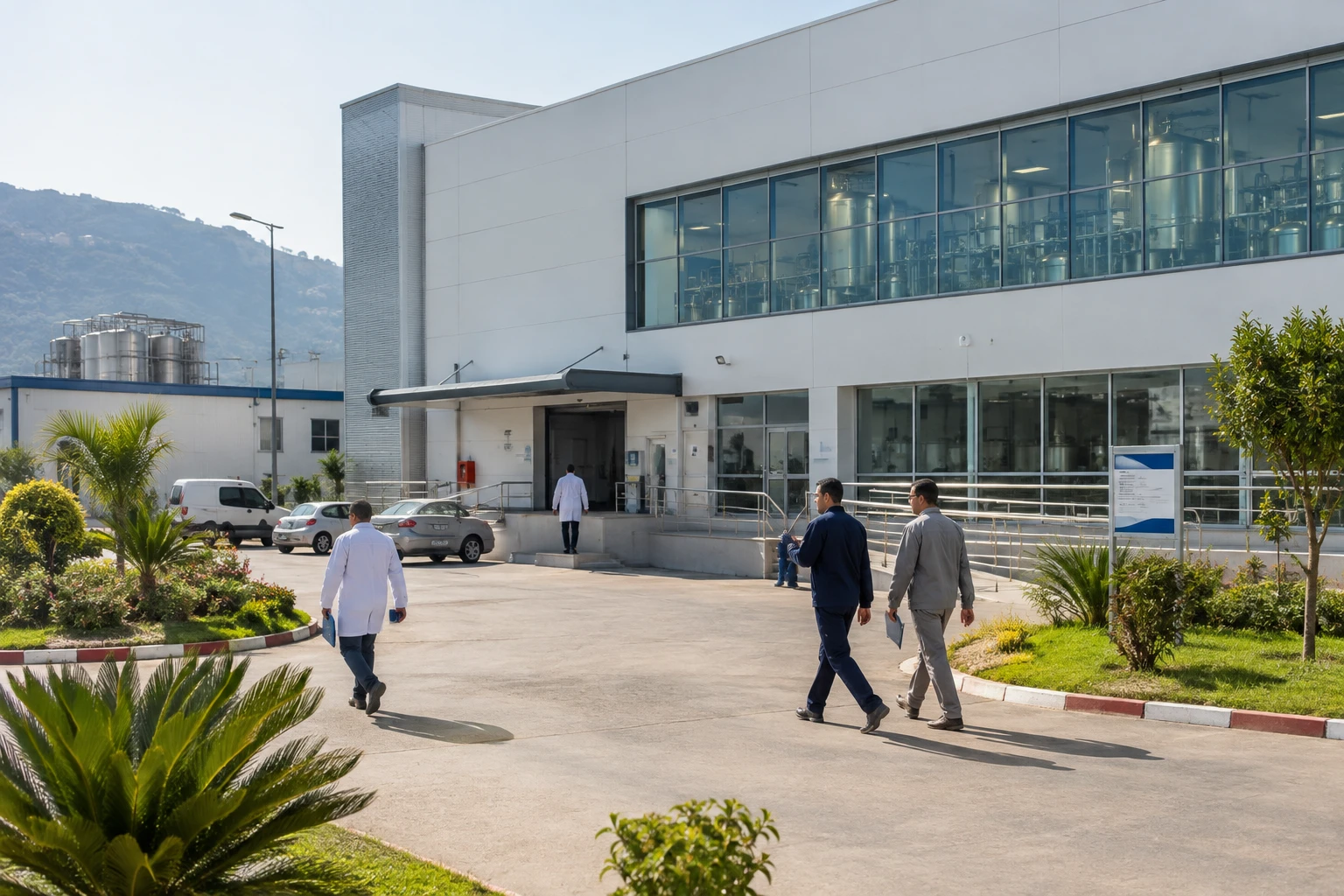
Making a vaccine involves more than installing a machine. Processes must be mastered, the quality of every batch guaranteed and the necessary authorisations obtained. It is at this demanding stage that Algeria’s ambition to develop local production will be put to the test.
Building industrial capacity, not just buying it
On 28 October 2026, during a working visit to Germany, Algeria’s Minister of Pharmaceutical Industry, Ouacim Kouidri, met Syntegon officials. The discussions concern the acquisition, for the state-owned Saidal group, of a vaccine production line. Delivery schedules and industrial capacity were discussed, but neither the cost, the expected volumes nor the vaccines concerned were specified. The negotiations therefore do not yet mean that the equipment has been purchased or commissioned. Algeria Press Service reports on the ministerial discussions; the Algerian press has also covered them.
The planned line is intended to support cooperation agreements with international manufacturers, particularly for technology transfer. But a filling or packaging line alone does not guarantee the complete manufacture of a vaccine. The key questions will be which stages are carried out in Algeria, what expertise is transferred and what proportion of raw materials remains imported.
This initiative adds to several separate projects. On 26 February 2026, Saidal signed a memorandum of understanding with Sanofi’s Vaccines division to develop and produce vaccines for human use. On 23 April, the group reached an agreement with Indian companies ONCOSIMIS and Fabtech Technologies, presented as a technology transfer for innovative vaccines for human and veterinary use. The announcements point to a partnership strategy, but their timelines and industrial coordination remain to be clarified. The agreement with Sanofi was announced by APS; the Indian agreements were reported by Algerian public television.
Reducing a still substantial import bill
Trade data highlight the economic stakes. In 2024, Algeria imported about $168.8m-worth of vaccines for human use. France accounted for nearly $83.9m of those purchases, Ireland for $49.5m and India for $18.6m. The figures come from UN Comtrade data reproduced by the World Bank. They measure the value of trade, not the doses available or the immediate scope for substitution by domestic production. The World Bank’s WITS database sets out Algeria’s vaccine imports.
Another project is under way at El Bouni, in Annaba province. On 29 September 2025, Saidal began construction of a production unit on a 22,267-square-metre site. The project initially plans to produce vaccines included in the national schedule, with a possible later expansion to other products. At the time, the company estimated a construction period of 24 months. This facility and the line under discussion with Syntegon should not be confused: available public information does not yet explain how the two projects will fit together. Saidal has published details of the El Bouni project; APS also covered its launch.
The authorities have cited annual savings of $150m, potentially rising to $200m as production ramps up. These are projections, not achieved results. Whether they are realised will depend on the vaccines actually produced, demand under the national schedule, industrial costs and the ability to supply health facilities regularly.
Different effects for different stakeholders and regions
For the state, greater domestic production could reduce exposure to supply disruptions and limit some foreign-currency spending. For medical teams and families, the tangible outcome will be measured instead by vaccine availability at health centres, the reliability of supply and price. Domestic production does not automatically guarantee equitable access: supplies must also reach remote provinces and meet the needs of the vaccination schedule.
In Annaba, the El Bouni construction project could support local industrial activity and create demand for skilled jobs. However, most of the value added will depend on how much production takes place locally: research, manufacture of active substances, quality control, filling and packaging. If the most sensitive stages remain outsourced, dependence will shift rather than disappear.
African exports will depend on standards and markets
Saidal also aims to export to other African countries, notably through UNICEF procurement programmes. This ambition forms part of a wider continental effort to strengthen local manufacturing and diversify suppliers. It does not, however, amount to a promise of contracts: vaccines destined for these purchases must meet strict quality and prequalification requirements, while markets are based on tenders and defined needs. UNICEF outlines vaccine quality-control and prequalification requirements.
For Algeria, a North African country and member of the African Union, the regional question is how to turn cooperation into lasting capacity. Agreements with foreign groups can bring equipment and expertise; their impact will depend on the effective transfer of skills, sustained investment and compliance with deadlines. The next step to watch is the practical implementation of the projects: finalised contracts, delivery schedules, the start-up of the El Bouni unit and initial production that meets standards. Saidal’s contribution to Algerian and African supply will be measured by these results, rather than by the number of announcements.