Egypt
 Libya
 Morocco
 Sudan
 Tunisia
 Benin
 Burkina Faso
 Cabo Verde
 Côte d'Ivoire
 Ghana
 Guinea
 Guinea-Bissau
 Liberia
 Mali
 Mauritania
 Niger
 Nigeria
 Senegal
 Sierra Leone
 The Gambia
 Togo
 Cameroon
 Central African Republic
 Chad
 DR Congo
 Equatorial Guinea
 Gabon
 Republic of the Congo
 São Tomé and Príncipe
 Burundi
 Comoros
 Djibouti
 Eritrea
 Ethiopia
 Kenya
 Madagascar
 Malawi
 Mauritius
 Mozambique
 Rwanda
 Seychelles
 Somalia
 South Sudan
 Tanzania
 Uganda
 Angola
 Botswana
 Eswatini
 Lesotho
 Namibia
 South Africa
 Zambia
 Zimbabwe
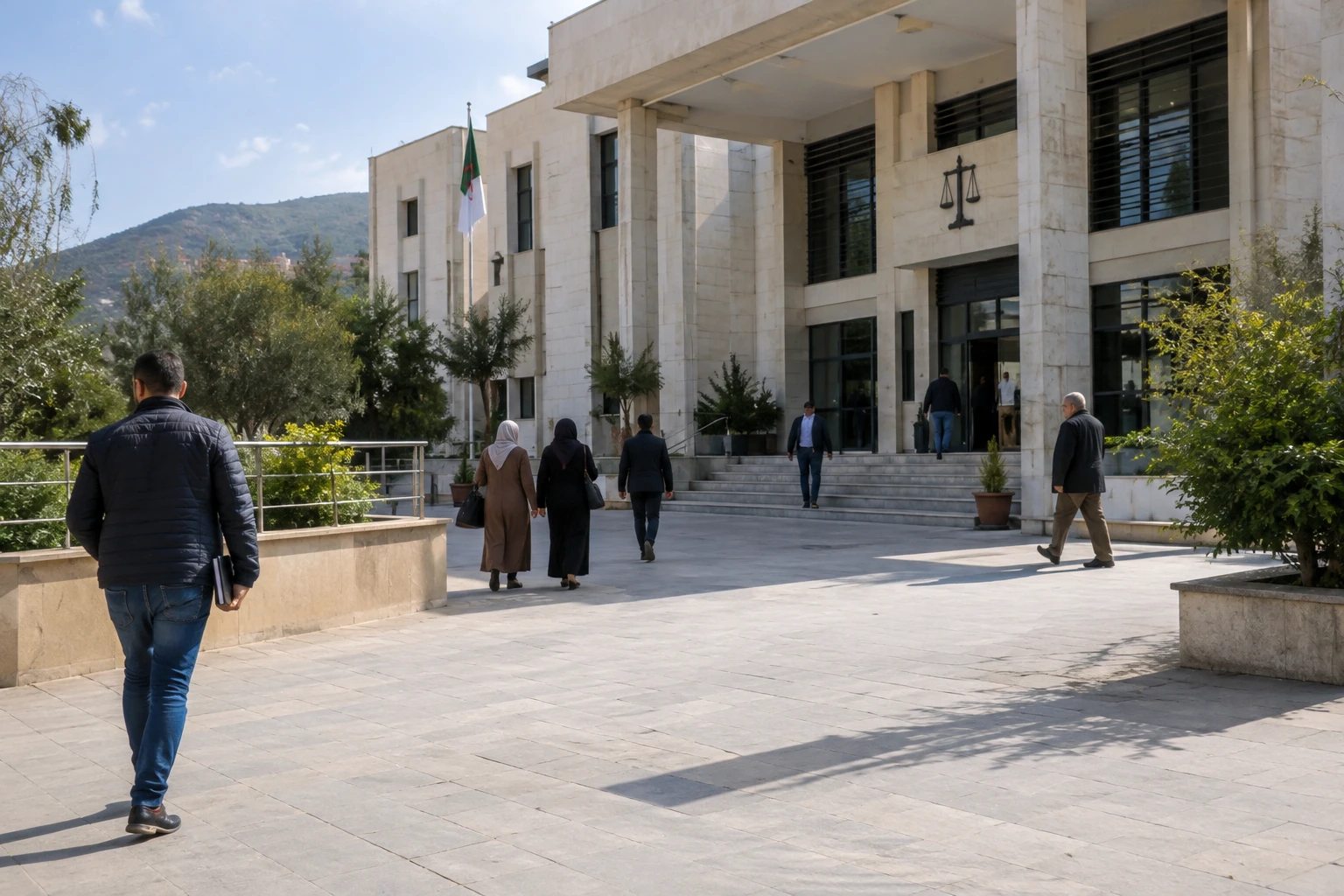
For Christophe Gleizes, the wait is now measured in hundreds of days. As he approaches 500 days behind bars, his family is asking Paris to step up its efforts. In Algeria, his case remains dependent on a decision on clemency that only President Abdelmadjid Tebboune can grant.
A legal case with diplomatic implications
Relations between Algiers and Paris have experienced periods of tension for several years, notably over questions of memory, migration and consular affairs. In this climate, the fate of a French national detained in Algeria can quickly take on a diplomatic dimension. It does not, however, sum up either relations between the two countries or the workings of the Algerian justice system.
The case also touches on press freedom and how national authorities handle information related to politically sensitive issues. Kabylia, a mountainous region in northern Algeria, is at the heart of the case: this is where Christophe Gleizes was reporting on Jeunesse sportive de Kabylie (JSK), one of Algerian football’s major clubs.
From reporting on JSK to conviction
The French sports journalist was arrested in Tizi Ouzou in May 2024. He was preparing a report on the Kabyle club and had met sports officials. The authorities accuse him, among other things, of links with people associated with the Movement for the Self-Determination of Kabylia (MAK), which Algeria classified as a terrorist organisation in 2021. Gleizes and his supporters dispute that his journalistic work could justify the prosecution.
On 29 June 2025, the Tizi Ouzou court sentenced him to seven years in prison. The reported grounds for conviction include “glorifying terrorism” and possessing publications deemed to be intended to harm the national interest. The court of appeal upheld the sentence on 3 December 2025. These judicial decisions are established; their defenders and Reporters Without Borders (RSF) continue to dispute the interpretation of his journalistic activities and their significance.
After his sentence was upheld, Gleizes withdrew his appeal to the Court of Cassation in the hope of making a presidential pardon possible. In May 2026, the Supreme Court noted his withdrawal and dismissed the prosecution’s appeal, according to accounts of the decision. This step opens the way to clemency but does not guarantee it. As of 15 October, his family and RSF are still calling on the French authorities to act swiftly.
A pardon: possible, but uncertain
A presidential pardon is a power separate from that of the courts: it can reduce or remit a sentence, but does not constitute a review of the judgment. For Gleizes, this possibility became central after his conviction was upheld and he withdrew his appeal. Requests for a pardon have been submitted to Abdelmadjid Tebboune, but no decision had been publicly announced by the time his relatives made their appeal.
The precedent of French-Algerian writer Boualem Sansal, released in November 2025 after a presidential pardon, has raised the family’s hopes. But the two cases are distinct: a decision in one does not determine the outcome of the other. The comparison mainly serves as a reminder that presidential clemency can be granted in Algeria’s system, without creating a predictable timetable.
On 15 October, the journalist’s parents and RSF urged France to “act quickly”. They fear the case will become bogged down and describe a “mountain of indifference” on the part of the authorities in Algiers. These are the words of his supporters, not an independent assessment of the Algerian government’s official position. His relatives also say they were recently able to visit him; their appeal highlights the long wait and its impact on the family.
A test for Paris, Algiers and press freedom
For the French authorities, the balance is delicate. They can continue consular and diplomatic efforts without turning an individual case into a tool of public confrontation. A war of words could complicate exchanges; conversely, the family believes that prolonged discretion risks allowing attention to fade. Paris must therefore support its national while avoiding presenting its own requests as a general challenge to Algeria.
In Algeria, the case raises questions about the boundary between journalistic activity, national security and the application of counter-terrorism laws. The Algerian authorities have brought serious criminal charges. RSF and Gleizes’s relatives, for their part, believe the journalist was punished for his work. Reporting these positions without conflating them makes it possible to distinguish judicial decisions, the parties’ arguments and broader questions about press freedom.
The case first and foremost concerns a man, his relatives and Algerian institutions. Its significance nevertheless extends beyond Franco-Algerian relations: it is a reminder that foreign and local journalists sometimes work on subjects where sport, regional identity and politics intersect. The next decisive step would be a possible pardon. Until one is announced, the sentence remains in force and the outcome is uncertain.