
 Egypt
 Libya
 Morocco
 Sudan
 Tunisia
 Benin
 Burkina Faso
 Cabo Verde
 Côte d'Ivoire
 Ghana
 Guinea
 Guinea-Bissau
 Liberia
 Mali
 Mauritania
 Niger
 Nigeria
 Senegal
 Sierra Leone
 The Gambia
 Togo
 Cameroon
 Central African Republic
 Chad
 DR Congo
 Equatorial Guinea
 Gabon
 Republic of the Congo
 São Tomé and Príncipe
 Burundi
 Comoros
 Djibouti
 Eritrea
 Ethiopia
 Kenya
 Madagascar
 Malawi
 Mauritius
 Mozambique
 Rwanda
 Seychelles
 Somalia
 South Sudan
 Tanzania
 Uganda
 Angola
 Botswana
 Eswatini
 Lesotho
 Namibia
 South Africa
 Zambia
 Zimbabwe
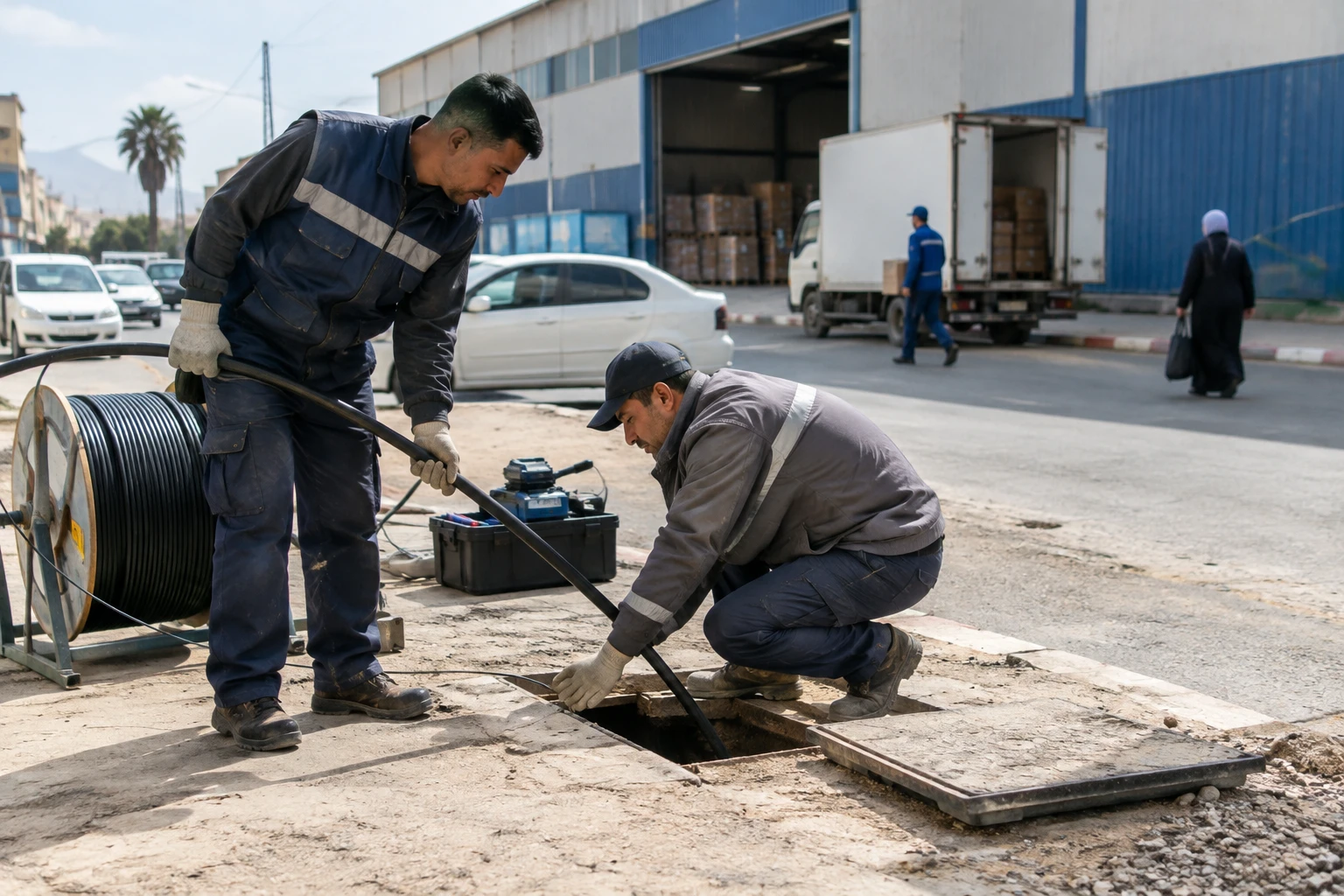
For an Algerian household, switching to fibre is about more than seeing a new cable arrive in the street. It must also be possible to connect, pay for a subscription and get a stable connection. Passing the threshold of four million FTTH subscriptions marks significant progress, but is not, on its own, enough to measure real access to very high-speed broadband.
A fixed market still divided among several technologies
Fixed internet in Algeria still relies on several networks. ADSL uses copper telephone lines. Fixed 4G LTE connects households to the internet through the mobile network. FTTH, or fibre to the home, brings optical fibre directly to the dwelling.
These technologies coexist as the gradual migration from copper to fibre continues. It is part of a national telecommunications modernisation programme, with expected benefits for public administrations, businesses and individuals. The issue is also geographical: growth in the number of customers does not show whether neighbourhoods far from major cities are seeing the same pace of connection.
Data from the Postal and Electronic Communications Regulatory Authority (ARPCE) provide a point of comparison. In the third quarter of 2025, Algeria had 2,565,347 FTTH subscriptions, compared with 2,204,319 for ADSL and 2,045,253 for fixed 4G LTE. Fibre was then the largest individual fixed technology, without accounting for a majority of the market. The country had a total of 6,819,233 fixed subscriptions across all technologies. ARPCE indicators on the Algerian internet market thus make it possible to distinguish the growth of fibre from the expansion of all internet access.
Rapid growth driven by connections
The minister of posts and telecommunications, Sid Ali Zerrouki, announced on 11 October 2026 that the threshold of four million fibre-to-the-home subscriptions had been reached at the beginning of the month. He traced growth from 53,000 subscriptions in June 2020 to about 1.08 million at the end of 2023, then 1.7 million at the end of 2024 and 2.6 million in December 2025. These figures were reported by Algeria’s state news agency, APS.
According to the minister, an additional 1.4 million households were connected in the first nine months of 2026. The authorities are targeting more than 4.4 million subscriptions before the end of the year, followed by 300,000 connections in the first quarter of 2027. These are announced targets, not results already achieved. APS’s report on reaching the four-million mark attributes the figures to the minister.
The fall in prices is the other indicator highlighted by the authorities. According to Sid Ali Zerrouki, the monthly offer of at least 100 megabits per second fell from 9,999 dinars in 2020 to 2,400 dinars in October 2026, a reported decrease of 76%. This comparison concerns the stated price of that offer. It does not, on its own, provide information about the total cost of digital services for households or any connection fees and conditions.
Subscription numbers do not capture the full quality of access
Growth in FTTH expands connection options for households that are connected. A faster fixed connection can make remote working, online learning, the use of digital public services and small-business activities easier. But these benefits also depend on service reliability, response times when faults occur and households’ ability to pay for their subscription.
It is also important to distinguish a subscription from universal coverage. The announced national figure does not specify how connections are distributed between Algiers and other cities, or between urban centres and less densely populated areas. Nor does it measure households that could access the service but have not subscribed. These limitations point to the need to track coverage, quality and usage indicators alongside subscription figures.
The quarterly series published by ARPCE helps put the announcement in context. At the end of the third quarter of 2025, it counted nearly 6.82 million fixed subscriptions, including about 2.57 million for fibre. The figure of four million announced for October 2026 therefore signals a change of scale, but the periods and sources differ: the first is a quarterly regulatory count, while the second is a ministerial announcement. They should not be confused with a measure of the quality experienced by users.
Next step: complete the migration without leaving areas behind
The announced programme combines continued connections with the transition away from copper networks and the development of national access capacity and international connectivity. Achieving this will require turning numerical targets into reliable service, including beyond the easiest neighbourhoods to reach. For businesses, connection stability matters as much as advertised speed; for households, affordability and continuity of service remain decisive.
At regional level, Algeria is seeking to strengthen its digital infrastructure and links with the outside world. Increased capacity can support data exchange and online services, but the available announcements do not yet specify the expected effects on cross-border usage. The next concrete milestone is the government’s target of exceeding 4.4 million subscriptions before 31 December 2026. ARPCE data will then make it possible to verify growth in the subscriber base, while geographical distribution and actual service quality will remain essential to assessing the programme’s reach.



