Algeria
 Egypt
 Libya
 Morocco
 Sudan
 Tunisia
 Benin
 Burkina Faso
 Cabo Verde
 Côte d'Ivoire
 Ghana
 Guinea
 Guinea-Bissau
 Liberia
 Mali
 Mauritania
 Niger
 Nigeria
 Sierra Leone
 The Gambia
 Togo
 Cameroon
 Central African Republic
 Chad
 DR Congo
 Equatorial Guinea
 Gabon
 Republic of the Congo
 São Tomé and Príncipe
 Burundi
 Comoros
 Djibouti
 Eritrea
 Ethiopia
 Kenya
 Madagascar
 Malawi
 Mauritius
 Mozambique
 Rwanda
 Seychelles
 Somalia
 South Sudan
 Tanzania
 Uganda
 Angola
 Botswana
 Eswatini
 Lesotho
 Namibia
 South Africa
 Zambia
 Zimbabwe
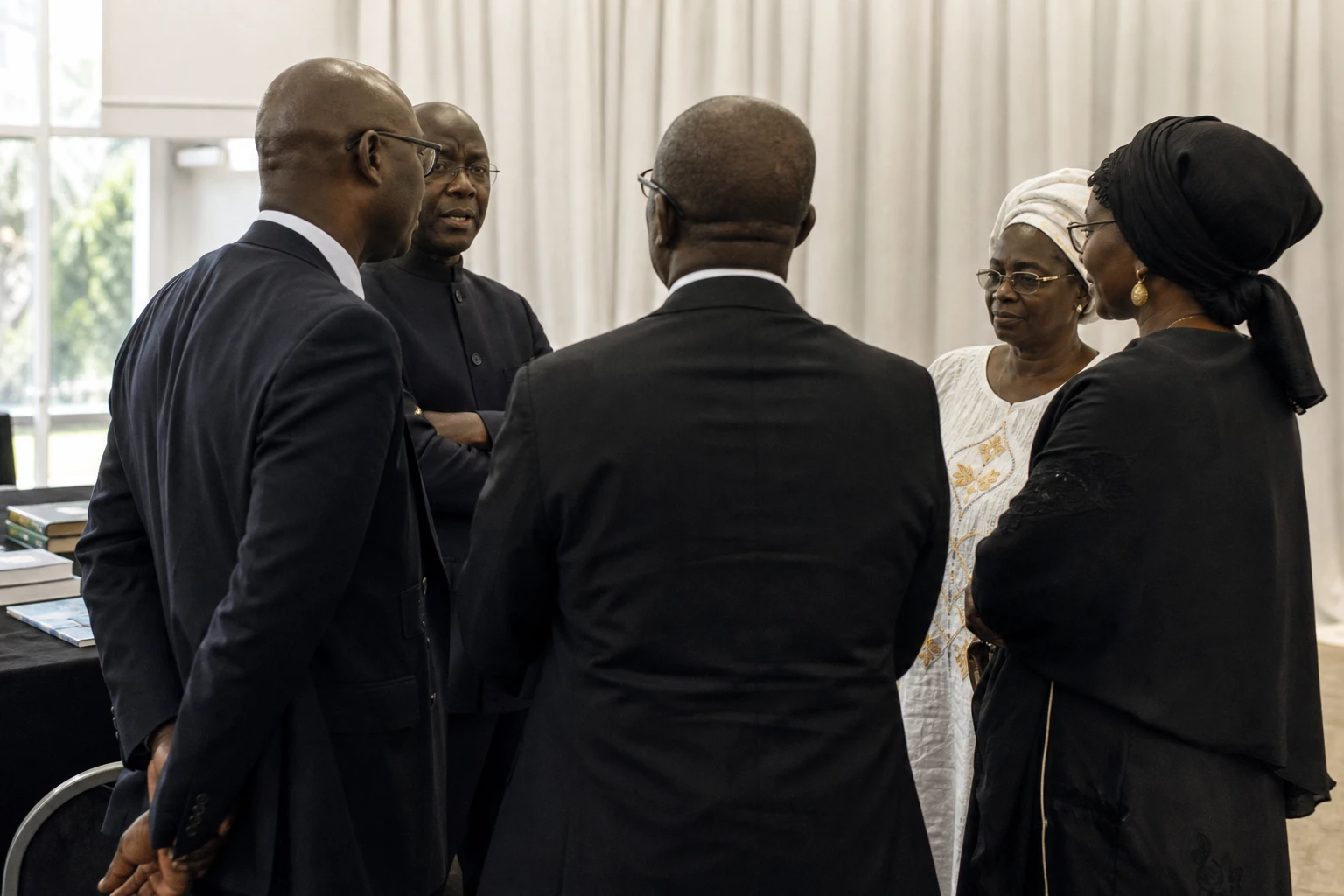
In Dakar, tributes to Cheikh Hamidou Kane brought a generation together around a question that still runs through African societies: how can they enter modernity without renouncing who they are? The Senegalese writer, who died aged 98, was buried on Sunday 4 October at Yoff Muslim Cemetery.
A modest ceremony in Dakar
The body was taken from the mortuary at Fann Hospital in the presence of relatives, public figures and several members of the Senegalese government. The ceremony was brief. The family nevertheless wanted to reflect the reserve and simplicity that characterised the writer.
Abdoulaye Elimane, described as the eldest member of the family, paid tribute to a man who remained true to three qualities: modesty, discretion and generosity. These words summed up the way his relatives viewed a figure who had long occupied a singular place in Senegal’s intellectual and public life.
Members of the government also conveyed the nation’s condolences. President Bassirou Diomaye Faye, who was away at the time of the ceremony, was expected to pay his respects to the family on his return. In a message published after the death was announced, the Senegalese president described Cheikh Hamidou Kane as a “giant of African literature” and a committed servant of his country.
The Senegalese Press Agency confirmed the burial at Yoff Muslim Cemetery in Dakar, in the presence of family, friends, public officials and religious representatives.
A writer at the heart of African debates
Born in 1928 in Matam, in northern Senegal, Cheikh Hamidou Kane belonged to a generation of African intellectuals educated during the colonial period who later took part in building independent states. His life brought together literature, public administration and reflection on the future of African societies.
His best-known work, L’Aventure ambiguë, was published in 1961. The novel follows Samba Diallo, a young man torn between traditional teaching and Western schooling. Through this character, the author explores the effects of the encounter between two systems of knowledge, two world views and two conceptions of the future.
The book is not simply a story about colonialism. It poses a question that remains relevant: how can new knowledge be acquired without turning openness to the world into cultural erasure? This question helps explain the novel’s longevity in school curricula, universities and African literary debates.
Published by Julliard and Présence Africaine, the text has been translated into several languages. It also received the Grand Prix littéraire d’Afrique noire in 1962. The APS notes that the novel is among the most widely circulated and studied African works internationally.
From literature to public service
Cheikh Hamidou Kane did not confine his commitment to writing. A senior civil servant, he helped govern Senegal after independence. He held ministerial responsibilities under President Abdou Diouf, including in the areas of industrial development, crafts, planning and co-operation.
This trajectory gives his work particular weight. The writer did not observe the continent’s transformations from the outside. He took part in the administrative and economic decisions that accompanied the birth of sovereign states, as they sought to strengthen their institutions, train their officials and set their priorities.
His second novel, Les Gardiens du temple, published in 1995, develops this reflection further. The book examines the political and social tensions of an African country confronted by ambitions for power, internal divisions and historical legacies. It serves as a reminder that political independence does not automatically resolve conflicts over justice, representation and transmission.
Cheikh Hamidou Kane’s life is thus part of a Senegalese history shaped by dialogue between culture, public administration and public debate. Senegal has often presented its writers as participants in civic life. His death revives this tradition at a time when the country is seeking to strengthen its institutions and redefine its national project.
A legacy beyond Senegal’s borders
Reactions from Senegal and other French-speaking communities show that his influence extends beyond the national arena. In several West African countries, L’Aventure ambiguë has shaped generations of pupils, students, teachers and researchers.
This regional reach also stems from the nature of the question he raised. The societies that belong to the Economic Community of West African States, ECOWAS, share debates about education, languages, the place of traditions and development models. National trajectories differ, but questions about cultural sovereignty and relations with external knowledge remain common to them.
In this context, Cheikh Hamidou Kane’s work retains particular relevance. It offers no simplistic answer. Instead, it invites readers to consider the contradictions of openness, the risks of isolation and the need to build a modernity rooted in African realities.
His death therefore marks the loss of a writer, but also of a direct witness to the continent’s great transformations: the end of colonial rule, independence, the consolidation of national administrations and debates about development. In Dakar, tributes celebrated a long life. In African schools and universities, above all, his books will continue to pose an essential question: what must be preserved when learning to become someone else without ceasing to be oneself?