Egypt
 Libya
 Morocco
 Sudan
 Tunisia
 Benin
 Burkina Faso
 Cabo Verde
 Côte d'Ivoire
 Ghana
 Guinea
 Guinea-Bissau
 Liberia
 Mali
 Mauritania
 Niger
 Nigeria
 Senegal
 Sierra Leone
 The Gambia
 Togo
 Cameroon
 Central African Republic
 Chad
 DR Congo
 Equatorial Guinea
 Gabon
 Republic of the Congo
 São Tomé and Príncipe
 Burundi
 Comoros
 Djibouti
 Eritrea
 Ethiopia
 Kenya
 Madagascar
 Malawi
 Mauritius
 Mozambique
 Rwanda
 Seychelles
 Somalia
 South Sudan
 Tanzania
 Uganda
 Angola
 Botswana
 Eswatini
 Lesotho
 Namibia
 South Africa
 Zambia
 Zimbabwe
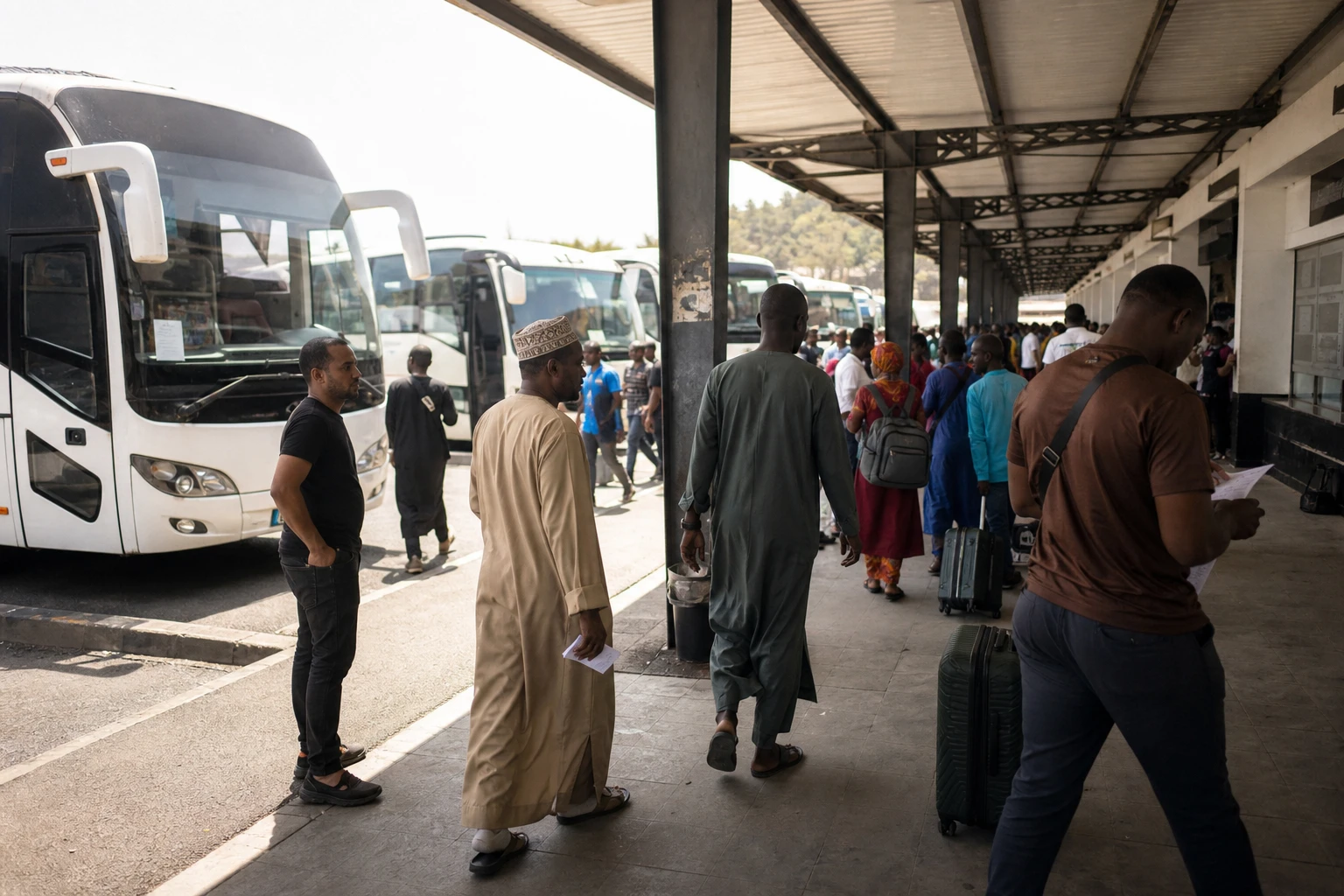
As 31 October 2026 approaches, the Western Sahara issue is once again at the centre of African diplomatic calculations. For Algeria and the Polisario Front, the stakes go beyond simply renewing a UN mission: they are seeking to prevent the question of self-determination from disappearing from the official framework for negotiations.
A deadline that could redefine MINURSO’s role
The mandate of the United Nations Mission for the Referendum in Western Sahara, MINURSO, expires on 31 October 2026. Established in 1991 after the ceasefire between Morocco and the Polisario Front, it was intended to help organise a referendum allowing the Sahrawi people to choose their future.
More than three decades later, the vote has never taken place. The mission continues, however, to monitor the military situation and support the efforts of the UN secretary-general’s personal envoy, Staffan de Mistura. It operates in a context marked by the resumption of hostilities since November 2020.
Resolution 2797, adopted by the Security Council on 31 October 2025, extended MINURSO’s mandate until 31 October 2026. The text also provided for a strategic review of the mission’s future. That provision gives particular significance to the next meeting in New York.
Contrary to some interpretations, the resolution did not legally establish Moroccan sovereignty over Western Sahara. It reaffirmed the search for a just, lasting and mutually acceptable political solution, based on compromise and consistent with the principle of self-determination. The Council also maintained its support for consultations with Morocco, the Polisario Front, Algeria and Mauritania.
The UN text therefore leaves room for several political interpretations. Rabat sees it as encouragement for its autonomy initiative. Algeria and the Polisario Front, meanwhile, point to the continued reference to self-determination and the unresolved status of the territory.
Algiers argues for a decolonisation-based approach
Algerian diplomacy is seeking to frame the issue in terms of the right of peoples to self-determination. This position reflects Algiers’ official doctrine, which regards Western Sahara as an unfinished decolonisation process.
Algerian Minister of State for Foreign Affairs and the National Community Abroad Ahmed Attaf held a series of diplomatic consultations during the high-level week of the United Nations General Assembly. On 21 September 2026, he held talks with African Union Commission Chairperson Mahmoud Ali Youssouf on several crises on the continent, including Western Sahara.
These efforts build on Algeria’s work within the African Union. The Sahrawi Arab Democratic Republic, proclaimed in 1976 by the Polisario Front, has been a member of the continental organisation since 1982. Its presence sets the African framework apart from the UN one: at the UN, the territory’s final status remains to be determined; within the African Union, the SADR takes part in proceedings as a member state.
Algiers thus insists on a straightforward position. Diplomatic support for the Moroccan autonomy plan does not, in itself, change Western Sahara’s status in United Nations documents. MINURSO also retains its historic name, which explicitly refers to organising a referendum.
Polisario seeks to prevent a predetermined outcome
The Polisario Front says it remains willing to take part in the political process led under UN auspices. It rejects, however, negotiations whose outcome would be set before discussions even begin.
This position rests on a key distinction. For the Sahrawi movement, autonomy presented from the outset as the only option would not constitute a free exercise of self-determination. The Polisario therefore calls for the parties to be able to put forward proposals without any precondition on the territory’s final status.
The United Nations itself uses wording that leaves room for discussion. Resolution 2797 refers to a mutually acceptable solution and reaffirms the principle of self-determination. It does not turn the Moroccan autonomy plan into a binding Security Council decision.
This legal distinction matters. It does not resolve the conflict, but it prevents shifts in diplomatic relations from being confused with a definitive international settlement. On the ground, the absence of an agreement continues to affect the people of Western Sahara and the Sahrawi refugees living around Tindouf, in south-western Algeria.
A diplomatic contest that extends beyond Algiers and Rabat
Morocco now has a growing network of supporters for its autonomy initiative. Several states have described the plan as a credible or realistic basis for negotiations. Rabat also wants MINURSO to adapt its role to the priorities of the political process and the monitoring of the security situation.
Algeria, for its part, is mobilising its African partners who are committed to the principle of self-determination. South Africa and Namibia are among the most consistent voices calling for a settlement that allows the Sahrawis to decide their future. These positions draw on the history of liberation struggles and the African Union’s role in decolonisation issues.
Mauritania occupies a particular position. It takes part in UN consultations while seeking to maintain a balance with its two neighbours. The issue directly affects its security interests, cross-border trade and place in the Sahel-Saharan region.
For Algeria, the issue also has a regional dimension. Rivalry with Morocco already complicates cooperation in the Maghreb, particularly in a region where security, energy and trade challenges require mechanisms for dialogue. The Arab Maghreb Union remains paralysed by these tensions, while the African Union remains one of the few forums where the two positions can be put to the test.
The next vote will be watched beyond the mission’s mandate
The Security Council will first have to decide whether to extend MINURSO’s mandate. Above all, it will have to consider the implications of the strategic review requested in 2025. The question will be whether the mission remains primarily a tool for observation and political support, or whether its role will evolve further under the influence of new diplomatic realities.
For Algiers and the Polisario Front, the key point will be to retain clear language on self-determination. Rabat’s aim will be to secure greater recognition of its autonomy plan as the basis for a settlement. Between these two approaches, Staffan de Mistura will have to preserve a space for negotiations involving the parties directly concerned and neighbouring countries.
The issue will continue to resonate in Addis Ababa, too. Any shift in the balance at the Security Council will affect debates at the African Union, where the SADR’s presence remains a sensitive subject. The 31 October 2026 deadline is therefore unlikely to bring the conflict to a close. It may instead clarify the place the UN still intends to give self-determination in its search for a compromise.