Algeria
 Egypt
 Libya
 Sudan
 Tunisia
 Benin
 Burkina Faso
 Cabo Verde
 Côte d'Ivoire
 Ghana
 Guinea
 Guinea-Bissau
 Liberia
 Mali
 Mauritania
 Niger
 Nigeria
 Senegal
 Sierra Leone
 The Gambia
 Togo
 Cameroon
 Central African Republic
 Chad
 DR Congo
 Equatorial Guinea
 Gabon
 Republic of the Congo
 São Tomé and Príncipe
 Burundi
 Comoros
 Djibouti
 Eritrea
 Ethiopia
 Kenya
 Madagascar
 Malawi
 Mauritius
 Mozambique
 Rwanda
 Seychelles
 Somalia
 South Sudan
 Tanzania
 Uganda
 Angola
 Botswana
 Eswatini
 Lesotho
 Namibia
 South Africa
 Zambia
 Zimbabwe
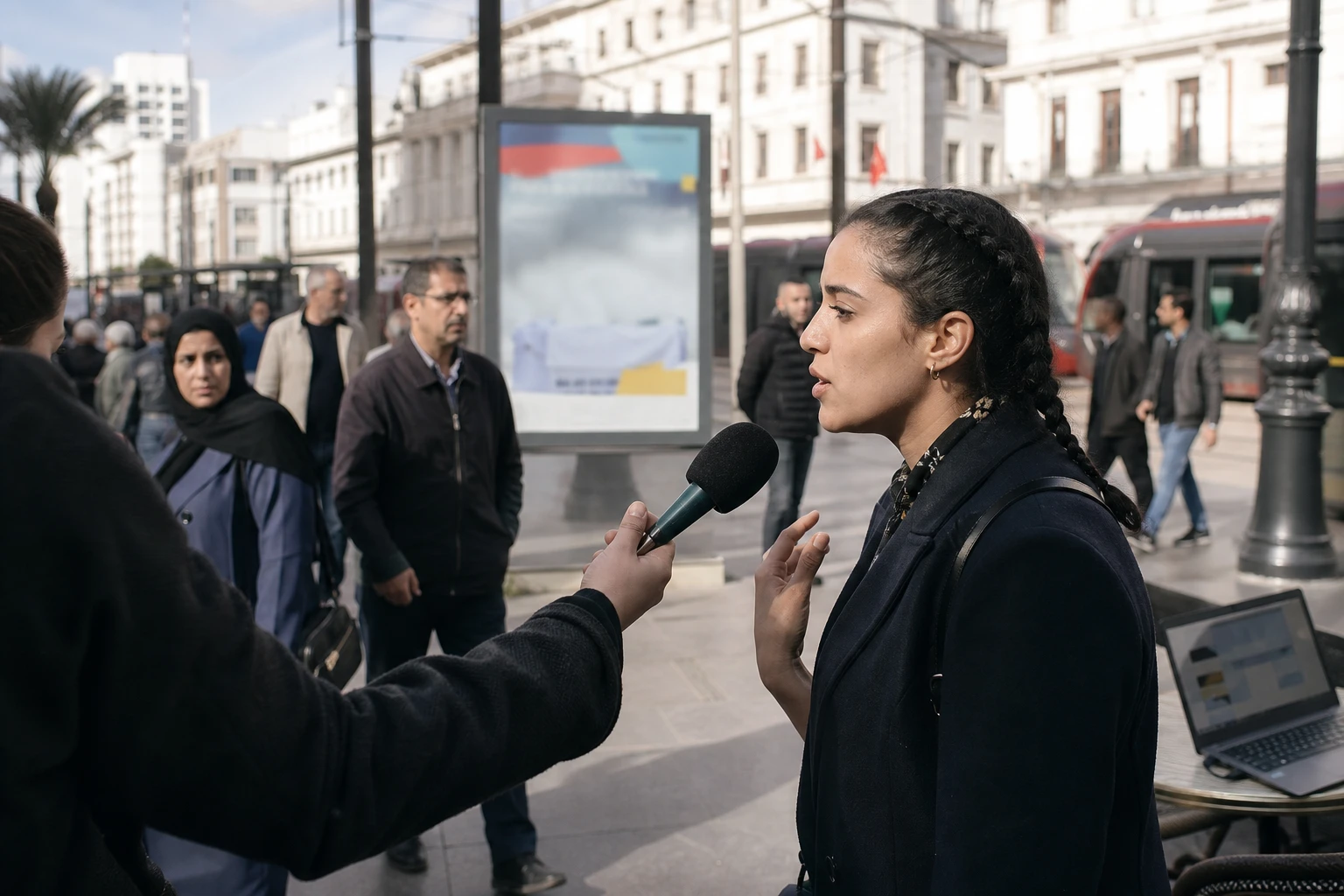
In companies that promise to measure everything, success can sometimes seem to rest on a simple formula: work harder, learn faster and never show your weaknesses. Sarah Tadlaoui’s debut novel challenges this belief through a brilliant heroine from an immigrant background, who discovers that the rules of performance are never as neutral as they claim to be.
A journey between Morocco, Europe and Silicon Valley
Sarah Tadlaoui is French-Moroccan. She grew up between Bergerac, Toulouse and California. Her path spans several worlds rarely brought together in a single biography: a United Nations humanitarian mission in Colombia, studies at Columbia University in New York, and then a decade in Silicon Valley.
She worked in particular as a product manager at Google, on teams focused on artificial intelligence. There, she witnessed the rapid development of technologies capable of producing text, images or code. Now 39, she lives in Paris and has turned to literature to examine what digital tools cannot automate: doubt, desire and contradiction.
This journey gives the novel a particular resonance in Morocco. For many Moroccans in the diaspora, social mobility involves switching between several languages. They must understand the expectations of their family, those of school and the workplace, and then those of international companies where social codes are almost never made explicit.
A heroine programmed to succeed
Published on 27 August 2026 by Héloïse d’Ormesson, Croire au code follows a PhD in artificial intelligence recruited by a fast-growing start-up. The young woman has no first name. She is defined by her skills, her social background and her constant effort to prove her worth.
At the beginning of the story, everything seems to confirm the promise of meritocracy. She leaves a modest background. She lands a prestigious job. She moves close to the company’s headquarters. Her degree and experience seem finally to guarantee her a place commensurate with her ambitions.
Yet the first cracks appear quickly. In meetings, men speak more loudly and more readily claim collective ideas as their own. Women are not always openly sidelined. Rather, they are interrupted, moved around, listened to less or steered towards less visible tasks.
The heroine then realises that competence is not enough. Degrees open a door, but they do not determine who will be believed, promoted or considered legitimate. The system does not proclaim its exclusions. It organises them through everyday gestures, silences and decisions presented as rational.
“Code” as a metaphor for invisible rules
The novel’s title refers to a belief. Computer code has written rules. They must be learned to produce a result. This logic feeds the hope of a world in which anyone can get ahead through hard work and technical expertise.
Sarah Tadlaoui shifts this idea to social relations. The protagonist gradually learns that companies also operate according to unwritten rules. Some concern gender. Others relate to social background, the way one speaks, cultural references or the ability to conform to the expectations of a privileged milieu.
The start-up thus becomes a laboratory for social mobility. It promises openness, innovation and freedom. But it also demands total availability. The narrator works at weekends. She sleeps less. She cuts back on her personal life. Eventually, she treats her own body like a machine that needs optimising.
The novel is not, however, limited to a critique of Silicon Valley. It examines a broader idea: that everyone is responsible for their success as well as their failure. In this logic, fatigue becomes a failure of organisation. Discouragement looks like a breakdown. Vulnerability, meanwhile, appears to be a design flaw.
A language that comes apart with its character
The book’s strength also lies in its form. Sarah Tadlaoui brings together the vocabulary of business presentations, tech Anglicisms and computer syntax with more intimate and poetic passages.
Short paragraphs give the story a jerky rhythm. The phrasing sometimes seems to come from a dashboard or a strategy meeting. Then the language opens up. It becomes sensory, uneasy and unpredictable. This alternation follows the heroine’s journey.
The harder she tries to remain productive, the more the text fractures. Form does not merely describe a crisis; it makes the reader feel it. Humour also plays an important part. It helps dismantle the empty language of companies, built around promises of agility, impact and constant excellence.
This writing sets the novel apart from a simple account of working in tech. The author’s professional experience provides material, but does not replace fiction. The world of artificial intelligence becomes a setting for writing about loneliness, relationships, family and the need to be recognised.
A particular resonance in Morocco
In Morocco, the book received an early boost from TelQuel’s cultural pages, which highlighted the distinctiveness of its language and the author’s experience in artificial intelligence.
This reception is significant, even though the novel does not make Sarah Tadlaoui’s dual heritage its main subject. Its heroine is not portrayed as a representative of Morocco or the diaspora. Rather, she embodies a transnational experience: that of someone who must constantly decode the expectations of the worlds she moves through.
This shift avoids a common trap. Literature from the diaspora need not be confined to identity, exile or family memory. It can also address technology, economic power and management. It can enter research laboratories, glass offices and start-ups without abandoning the complexity of individual lives.
A debut novel at the heart of the autumn literary season
Croire au code runs to 304 pages and is priced at 20 euros. The book has attracted the attention of several juries during the 2026 autumn literary season. It is among the titles selected for the Prix Médicis and is also in the running for the Prix Wepler-Fondation La Poste, according to information available in September.
These selections place the novel within a broader literary debate. How can contemporary work be described without reproducing its vocabulary? How can artificial intelligence be depicted without being dazzled by its technical power? And how can mechanisms of domination be shown when they appear in the guise of neutrality, measurement and efficiency?
Sarah Tadlaoui responds with a taut work of fiction at the intersection of literature and digital culture. Above all, her novel reminds us that no system is written entirely in code. The most consequential rules are sometimes those no one articulates, but everyone learns to live under.