Egypt
 Libya
 Morocco
 Sudan
 Tunisia
 Benin
 Burkina Faso
 Cabo Verde
 Côte d'Ivoire
 Ghana
 Guinea
 Guinea-Bissau
 Liberia
 Mali
 Mauritania
 Niger
 Nigeria
 Senegal
 Sierra Leone
 The Gambia
 Togo
 Cameroon
 Central African Republic
 Chad
 DR Congo
 Equatorial Guinea
 Gabon
 Republic of the Congo
 São Tomé and Príncipe
 Burundi
 Comoros
 Djibouti
 Eritrea
 Ethiopia
 Kenya
 Madagascar
 Malawi
 Mauritius
 Mozambique
 Rwanda
 Seychelles
 Somalia
 South Sudan
 Tanzania
 Uganda
 Angola
 Botswana
 Eswatini
 Lesotho
 Namibia
 South Africa
 Zambia
 Zimbabwe
Between Bamako and Algiers, diplomacy gets back on the road after a long rift
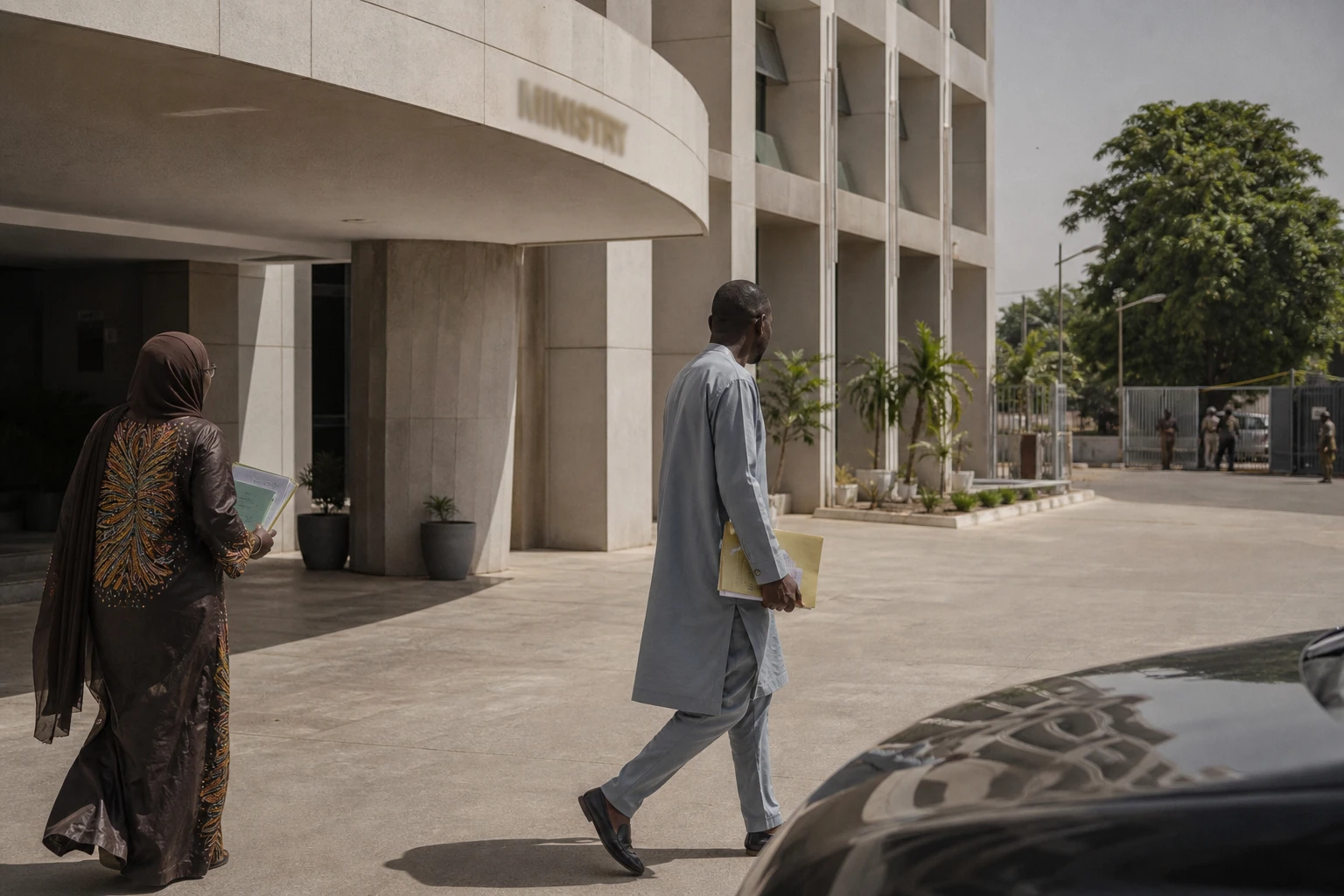
In the Sahel, borders do not merely separate states. They also dictate trade routes, air corridors and security balances. That is why Algerian Prime Minister Sifi Ghrieb’s visit to Bamako this Monday, 14 September 2026, goes beyond a simple protocol ritual. Above all, it sends a clear message: Malians and Algerians are seeking to put behind them a crisis that has weighed on security, trade and political dialogue on both sides of the border.
The visit is part of a process already set in motion this summer. On 24 August 2026, Malian Prime Minister Abdoulaye Maïga was in Algiers. He was received by President Abdelmadjid Tebboune, following a telephone conversation between the two prime ministers on 9 August. The two capitals had then expressed their desire to relaunch direct dialogue, after more than a year of tensions.
A neighbourhood weighed down by history and recent disputes
Relations between Bamako and Algiers cannot be understood solely through the lens of current events. Algeria long played a central role in the so-called Algiers process, which led to the peace and reconciliation agreement signed in 2015 under Algerian mediation and with the support of African and UN partners. But this framework was weakened when Bamako denounced the agreement stemming from the process in January 2024. The United Nations duly recorded the breakdown, which marked a turning point in bilateral relations.
The crisis escalated in 2025, after a Malian drone was destroyed in northern Mali in an incident over which the two countries gave opposing accounts. Ambassadors were recalled and Algerian airspace was closed to flights to and from Mali. A gradual restoration began in July 2026: ambassadors returned and airspace was reopened reciprocally. Sifi Ghrieb’s visit to Bamako therefore helps consolidate a thaw that is still recent.
This rapprochement is also taking place in a broader institutional context. Mali left ECOWAS, the Economic Community of West African States, effective 29 January 2025, alongside Burkina Faso and Niger. This departure has reduced the traditional frameworks for West African consultation available to Bamako and, in effect, increases the importance of bilateral agreements such as the one it is seeking with Algiers.
What the two capitals are really seeking to revive
According to the Malian authorities, the Algerian visit on 14 September 2026 aims to strengthen direct dialogue, consolidate cooperation and safeguard each state’s interests. The Algerian head of government is expected to deliver a message from President Tebboune to Mali’s head of state, General Assimi Goïta. The working session planned with Abdoulaye Maïga should also help turn political signals into practical mechanisms.
In practical terms, the most sensitive areas remain security, cross-border movement and economic exchanges. The Mali-Algeria corridor runs through areas where trafficking, weapons, fuel, migrants and intelligence circulate. In this Sahel-Saharan belt, bilateral cooperation matters as much as declarations of intent. It is also a region where stability benefits border communities, traders, transport operators and security services first, long before the grand diplomatic speeches.
For Bamako, the stakes are clear: to regain room for manoeuvre in the north of the country, as the Malian state says it is taking the initiative on security and diplomacy. For Algiers, the Mali file remains tied to its doctrine of engagement with its Sahelian neighbours, the stability of its southern border and its ambition to present itself as an African integration player, at a time when it is also promoting its vision of economic diversification and its role on the continent.
A regional significance that goes beyond bilateral relations
The warming of ties between Algiers and Bamako says something broader about the Sahel. Since the regional reshaping prompted by breaks with ECOWAS and tensions with some Western partners, Sahelian capitals have been seeking support that is more direct, more flexible and less exposed to institutional deadlock. In this landscape, Algeria has a distinctive card to play: that of a northern neighbour, a historic mediator and an actor seeking to remain involved in security and diplomacy.
Algeria’s recent engagement with Niger illustrates the point. In recent months, Algiers has stepped up signals of cooperation with Niamey, alongside its exchanges with Bamako. This reflects a regional reading: Algeria wants to preserve its influence in the Sahel-Saharan region as alliances shift, sanctions give way to case-by-case arrangements and border stability becomes a central concern for states and markets alike.
For Malians, what happens next will depend on the two governments’ ability to go beyond gestures of conciliation. If high-level exchanges lead to lasting mechanisms, they could facilitate transport, ease some commercial activity and reduce uncertainty in the north. If, on the other hand, dialogue remains symbolic, reconciliation will remain fragile. At this stage, Sifi Ghrieb’s visit to Bamako is therefore a political test, but also a test of credibility for two neighbours that know no lasting stability in the Sahel can be built by ignoring the border that connects them.