Egypt
 Libya
 Morocco
 Sudan
 Tunisia
 Benin
 Burkina Faso
 Cabo Verde
 Côte d'Ivoire
 Ghana
 Guinea
 Guinea-Bissau
 Liberia
 Mali
 Mauritania
 Niger
 Nigeria
 Senegal
 Sierra Leone
 The Gambia
 Togo
 Cameroon
 Central African Republic
 Chad
 DR Congo
 Equatorial Guinea
 Gabon
 Republic of the Congo
 São Tomé and Príncipe
 Burundi
 Comoros
 Djibouti
 Eritrea
 Ethiopia
 Kenya
 Madagascar
 Malawi
 Mauritius
 Mozambique
 Rwanda
 Seychelles
 Somalia
 South Sudan
 Tanzania
 Uganda
 Angola
 Botswana
 Eswatini
 Lesotho
 Namibia
 South Africa
 Zambia
 Zimbabwe
A long-awaited reform in a fragmented landscape
In Algeria, debate on the audiovisual sector is no longer simply a matter of public versus private. It is above all about a sector seeking greater coherence in an environment where information now circulates on television screens, phones and social platforms. Against this backdrop, a meeting held in Algiers at the Presidency of the Republic sent a clear signal: the issue is back at the heart of political decision-making.
The stakes go beyond the organisation of broadcasters. They touch on media sovereignty, programme quality, funding, advertising and the place of national content in the face of digital competition. Algeria is part of a broader trend across North Africa, where states are seeking to adapt their audiovisual frameworks to audiences that are more mobile, more connected and more demanding.
What the Presidency put on the table
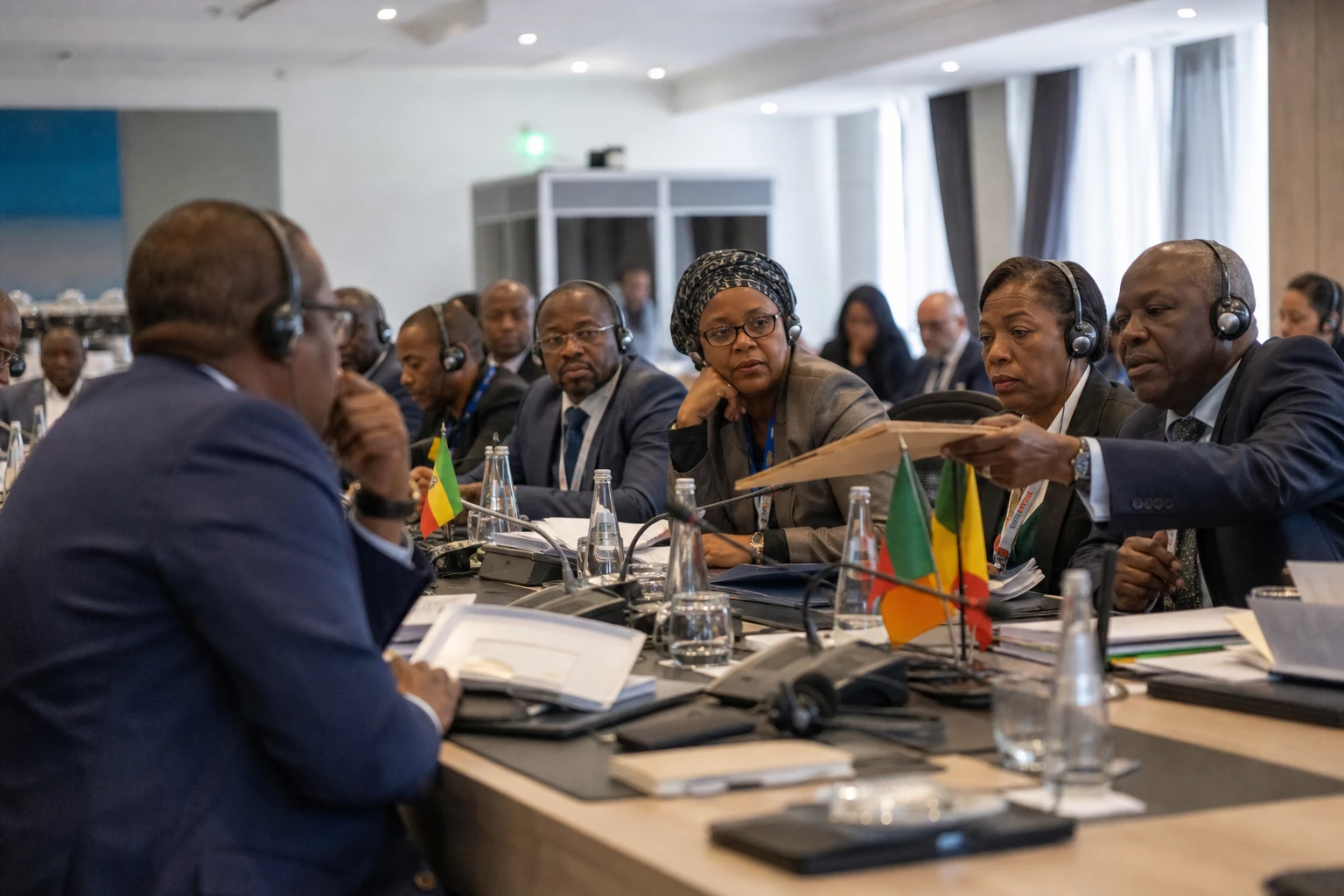
On Thursday 10 September 2026, Kamel Sidi Saïd, adviser to President Abdelmadjid Tebboune in charge of communications at the Presidency, and Communications Minister Mohamed Bouslimani co-chaired a meeting on the audiovisual sector. Officials from the Presidency, the Ministry of Communication, the Prime Minister’s Office communications directorate and television channel directors took part. The meeting was part of a series of preparatory discussions with sector operators.
The political message was twofold. On the one hand, the executive promised swift decisions. On the other, it presented a more open approach, based on hearing from operators before making a final decision. Kamel Sidi Saïd said decisions would be taken “quickly”, while stressing that the reform was in line with the head of state’s policy priorities. Algerian media present at the meeting also reported his vision of a single “Algerian audiovisual sector”, with public and private broadcasters brought together in the same mission of serving the country.
This is more than a slogan. It means private broadcasters are no longer treated as peripheral players, but as potential partners in a national ecosystem. If this approach is confirmed, it could pave the way for better editorial co-ordination, co-productions, skills exchanges and a more visible presence for Algerian productions beyond the country’s borders.
A legal framework already strengthened
The September meeting comes amid a regulatory environment that has already been substantially overhauled. Law No. 23-20 of 2 December 2023 established the general framework for audiovisual activity. The legislation is intended to organise the sector and set out the rules governing its operation. It also enshrined several key principles, including the regulation of licences, the role of the National Independent Audiovisual Regulatory Authority and the requirement to comply with a set of specifications.
In April 2026, the government further clarified the sector’s economic rules with a decree on the terms for paying the financial consideration associated with the granting of television and radio broadcasting licences. Radio Algérienne said the text was intended to ensure transparency and equal treatment, and to combat illegal practices. The stated objective is therefore clear: to move from a sector often described as fragmented towards a more structured and transparent market.
This regulatory sequence matters. In Algeria, audiovisual law is not limited to the freedom to broadcast. It also governs broadcasting, production, content regulation and the conditions for entering the market. In March 2026, the National Independent Audiovisual Regulatory Authority also stressed that channel rankings and claims about the “most-watched” programmes had to be based on approved measurement tools. Here, too, the guiding principle is to professionalise the sector.
What the reform could change in practice
For public broadcasters, the challenge is efficiency. They need to fulfil their public service mission more effectively while becoming more attractive in the face of international platforms. For private broadcasters, the challenge is twofold: to secure the framework in which they operate and strengthen their editorial and economic credibility. For viewers, especially younger ones, the question is simple: how to find credible, useful, locally produced content in a world where YouTube, TikTok and online services are capturing an increasing share of attention.
According to published accounts, the Communications Minister called on broadcasters to better showcase the state’s achievements in the economic and social spheres, while putting citizens’ concerns at the centre of media work. This demand may sound institutional, but it also reflects a market reality: without strong programmes, verified information and formats suited to new habits, Algerian audiovisual media will lose further ground to digital content.
This shift must also be viewed through the lens of the cultural economy. Audiovisual reform concerns more than newsrooms. It affects producers, technicians, production facilities, advertising, training and the circulation of works. In short, it could support a denser local value chain, provided that licences, funding and broadcasting rules do not remain theoretical.
Regional and continental reach
Across the Maghreb, Algeria is moving within a space where regional co-operation remains incomplete, particularly within the Arab Maghreb Union, which is largely paralysed. But the audiovisual question goes beyond this institutional inertia. It is part of a broader continental debate about sovereignty over narratives, the circulation of African content and the ability of states to foster competitive media industries in a market dominated by major platforms.
The African significance of this development is therefore real. If Algiers can bring together regulation, funding and domestic production, it could offer a model of restructuring that may prove useful to other countries on the continent facing the same tensions between public service, private enterprise and the dominance of digital media. What is at stake now is not merely an administrative reform. It is Algeria’s ability to turn a sensitive sector into a vehicle for cultural, economic and diplomatic influence, in North Africa and beyond.