Egypt
 Libya
 Morocco
 Sudan
 Tunisia
 Benin
 Burkina Faso
 Cabo Verde
 Côte d'Ivoire
 Ghana
 Guinea
 Guinea-Bissau
 Liberia
 Mali
 Mauritania
 Niger
 Nigeria
 Senegal
 Sierra Leone
 The Gambia
 Togo
 Cameroon
 Central African Republic
 Chad
 DR Congo
 Equatorial Guinea
 Gabon
 Republic of the Congo
 São Tomé and Príncipe
 Burundi
 Comoros
 Djibouti
 Eritrea
 Ethiopia
 Kenya
 Madagascar
 Malawi
 Mauritius
 Mozambique
 Rwanda
 Seychelles
 Somalia
 South Sudan
 Tanzania
 Uganda
 Angola
 Botswana
 Eswatini
 Lesotho
 Namibia
 South Africa
 Zambia
 Zimbabwe
As oil loses ground, the vulnerability of producer states returns to the fore
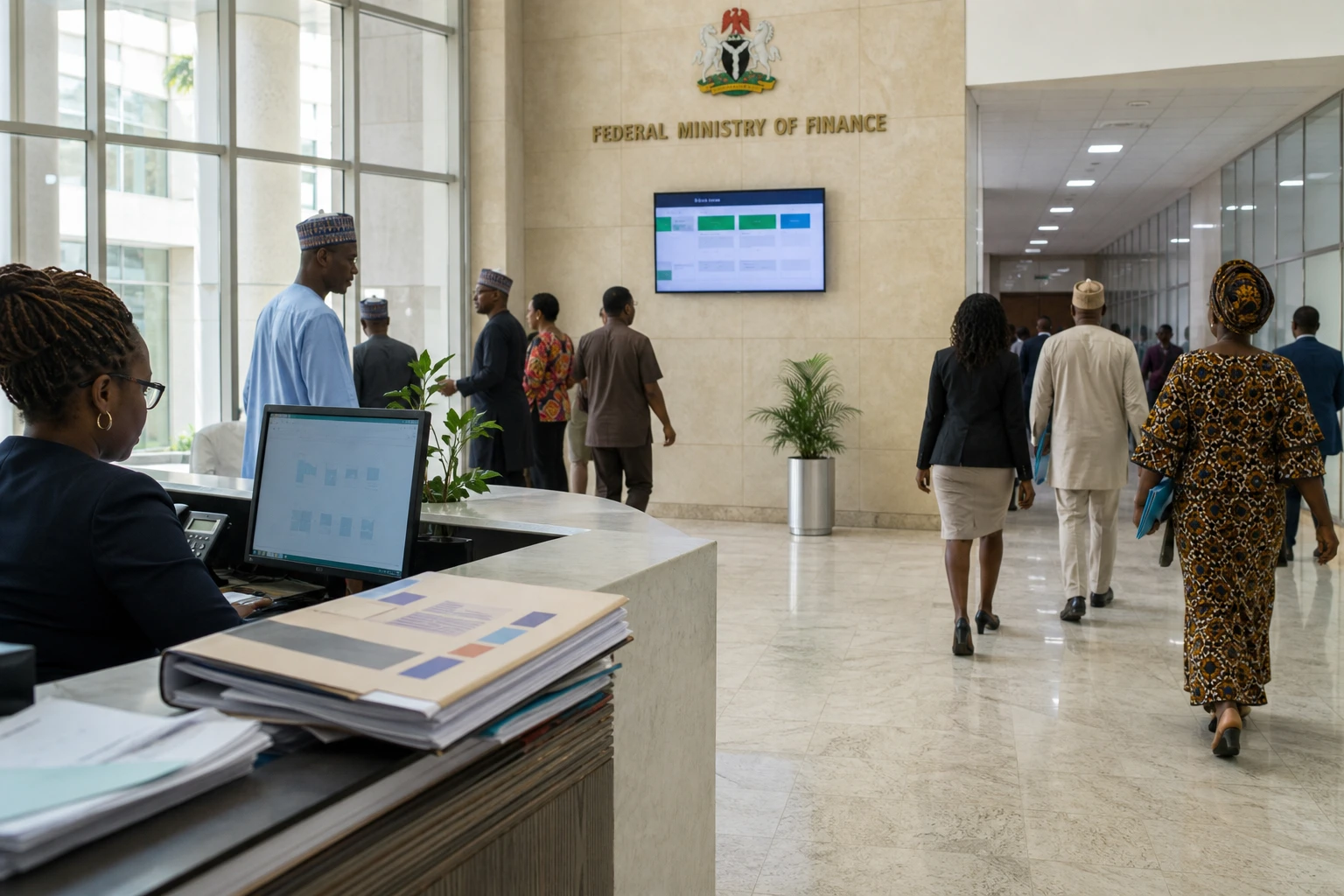
The energy transition is not playing out only in the salons of major capitals or on carbon markets. It is also measured in public budgets, subsidies, civil service salaries and a state’s ability to keep its promises. For several African oil-producing countries, the real question is therefore not merely who will still sell crude, but how to fund the post-oil era without upsetting the social balance. The warning is all the more serious because projections by the International Energy Agency point to a plateau in global demand around 2030, with consumption no longer growing as it did before.
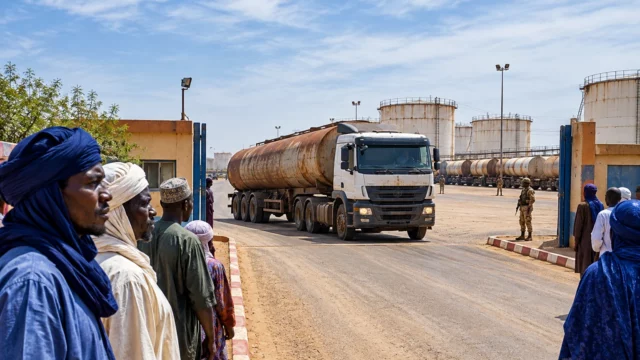
In this context, the debate is no longer theoretical. It affects very different economies, linked by the same dependence on hydrocarbons. Algeria, Nigeria, Angola and Libya remain exposed to a revenue shock if global demand slows for the long term. Algeria has some room for manoeuvre thanks to its reserves, but its budget deficit had already widened in 2024 as a result of lower hydrocarbon revenues. Nigeria, meanwhile, remains highly sensitive to international prices, with oil revenues still accounting for a significant share of public income. In Angola, oil continues to account for a very large share of exports. In Libya, hydrocarbons remain the backbone of the economy.
What the study says and why it speaks directly to the continent
The report published by E3G is based on a simple scenario: global oil demand will not disappear overnight, but it will lose momentum at a time when producers will have to compete for a less buoyant market. According to this analysis, states whose public finances rely heavily on hydrocarbons risk seeing their revenues fall sharply, with particularly pronounced effects in Algeria and Nigeria. E3G also emphasises a political point: when rents contract, domestic stability becomes more fragile, as governments have less room to distribute benefits, ease social tensions and fund public services.
This idea reflects a trend already visible in recent data. The IEA expects global oil demand growth to slow markedly by 2030, while electric vehicles and other substitutes reduce some transport needs. At the same time, global production continues to rise, increasing competitive pressure among exporters. In other words, producers face not only a climate challenge. They also face a market problem: more potential supply, less demand growth, and therefore less easy rent to capture.
Public finances under pressure, country by country
In Algeria, the warning sign is clear. The IMF notes that the budget deficit widened in 2024 to 13.9% of GDP, owing to lower hydrocarbon revenues and higher wage and investment spending. Foreign exchange reserves remain strong, but they are not enough to conceal the country’s structural dependence on energy exports. If global demand falls faster than expected, Algiers will have to broaden its tax base, cut some rigid spending and speed up productive diversification, or risk prolonged pressure on the budget.
In Nigeria, the vulnerability is different in nature, but just as serious. The IMF notes that oil revenues still accounted for 30% of public revenue in 2024. The country has embarked on reforms, notably to petrol subsidies and revenue mobilisation, but the equation remains delicate. A sustained decline in oil revenues would make it harder to fund infrastructure, electricity, agriculture and social protection. In a country of more than 220 million people, the issue is not only fiscal. It is also social, as even a modest contraction of the state is quickly felt in prices, employment and the capacity to absorb shocks.
Angola, for its part, illustrates another African reality: diversification is under way, but remains incomplete. The African Development Bank points out that oil still accounts for around 95% of exports, even as non-oil sectors grow. The country has already experienced a fall in oil revenues in 2025, widening the budget deficit and increasing reliance on borrowing. Here, the post-oil shock would not simply be a revenue crisis. It would also test the depth of reforms, the quality of debt and Luanda’s ability to turn recent gains into a broader industrial base.
Libya presents an even more sensitive case. The World Bank notes that dependence on hydrocarbons remains a defining feature of its economy, while the Central Bank of Libya continues to report revenues dominated by oil. In a country already weakened by institutional tensions, lower oil rents could intensify rivalries over revenue sharing and complicate financial governance. Here again, the issue is not only production. It is how the resource is managed, distributed and controlled.
What African governments should be watching now
The continental challenge is twofold. On the one hand, the energy transition creates development opportunities for countries that invest early in electricity, light industry, transport, agro-processing and regional value chains. On the other, it exposes oil states to an unstable transition if revenues fall faster than alternatives can gain ground. This is precisely where African institutions, from the African Union to the African Development Bank, have a role to play: helping to finance diversification, strengthening social safety nets and preventing falling rents from translating into a sudden, blunt squeeze on public spending.
This issue must also be viewed at a regional level. In North Africa, energy rents remain linked to trade relations with Europe, security of supply and domestic balances. In West Africa, Nigeria’s choices matter for the entire sub-region, particularly for markets, currencies and energy integration projects. In Central and Southern Africa, Angola shows that an exporter can reduce its dependence, but rarely within a few budget cycles. The real test will begin with the next round of public decisions: budgets, tax reforms, social trade-offs and investment choices. That is where the post-oil era will be shaped, long before the slogans about the transition.