Algeria
 Egypt
 Libya
 Morocco
 Sudan
 Tunisia
 Benin
 Burkina Faso
 Cabo Verde
 Côte d'Ivoire
 Ghana
 Guinea
 Guinea-Bissau
 Liberia
 Mali
 Mauritania
 Niger
 Nigeria
 Sierra Leone
 The Gambia
 Togo
 Cameroon
 Central African Republic
 Chad
 DR Congo
 Equatorial Guinea
 Gabon
 Republic of the Congo
 São Tomé and Príncipe
 Burundi
 Comoros
 Djibouti
 Eritrea
 Ethiopia
 Kenya
 Madagascar
 Malawi
 Mauritius
 Mozambique
 Rwanda
 Seychelles
 Somalia
 South Sudan
 Tanzania
 Uganda
 Angola
 Botswana
 Eswatini
 Lesotho
 Namibia
 South Africa
 Zambia
 Zimbabwe
A medicine, but above all a question of health sovereignty
For families living with sickle cell disease, the real problem is not limited to the pain of crises. They also have to find the right medicine, pay for it and then find it again when they need it. In Senegal, this reality weighs heavily, especially far from major centres. The disease remains widespread in sub-Saharan Africa, which accounts for nearly 80% of cases worldwide, according to the World Health Organization.
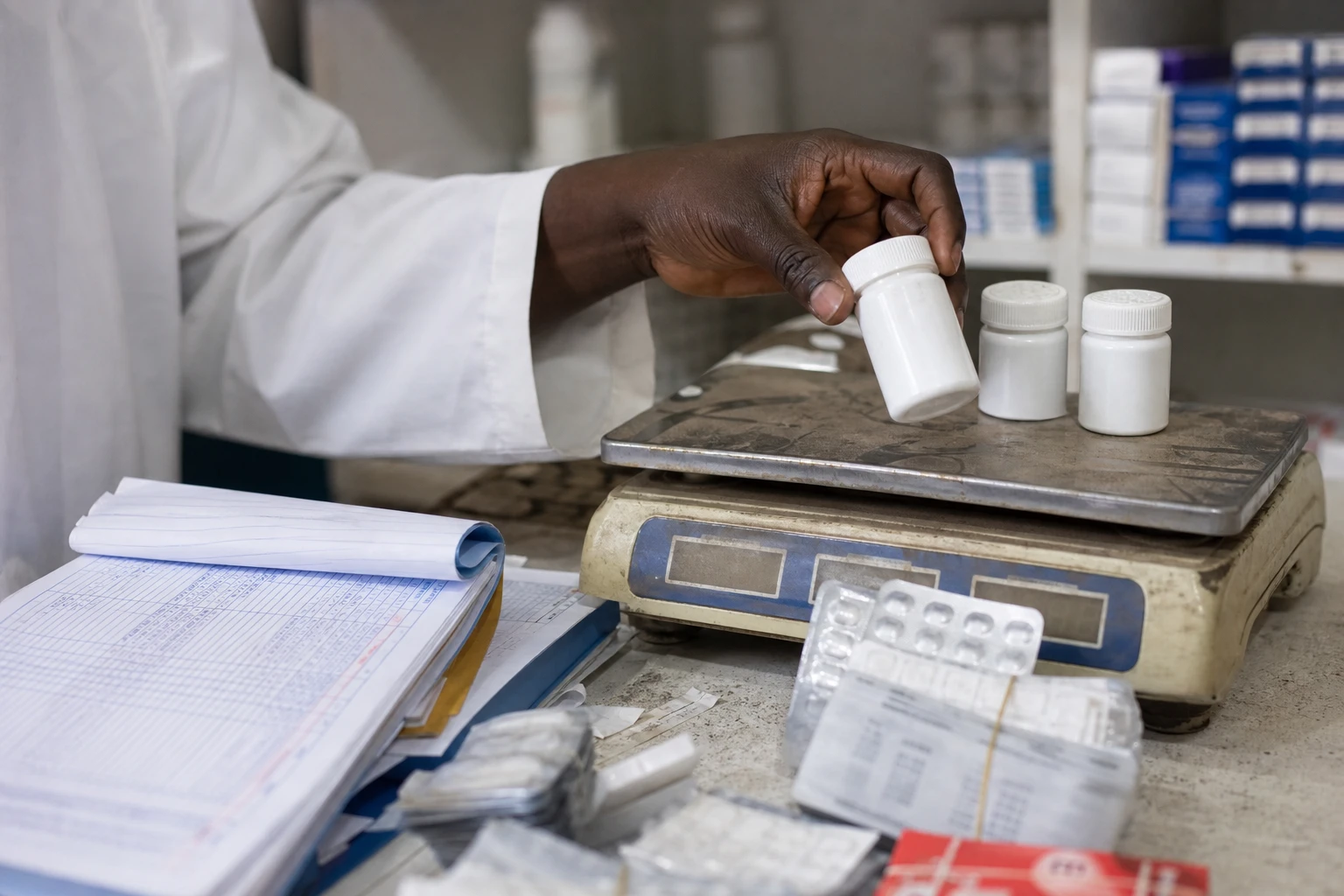
In this context, local production of a hydroxyurea-based generic has significance that goes beyond the laboratory. The product, marketed under the name Drepaf, is made in Mbao, on the outskirts of Dakar, by Teranga Pharma, in partnership with Drep.Afrique. Its promoters present it as a local solution designed to reduce dependence on imports and improve access to a preventive treatment recommended for sickle cell disease.
The issue directly affects patients, but it also says something broader about public health in Senegal. The country has included sickle cell disease among the non-communicable diseases monitored by its health services, and medical authorities stress that treatment depends on regular follow-up, not just a one-off prescription. In a context where imported medicines are vulnerable to logistical disruptions, the ability to manufacture locally is becoming an issue of continuity of care as well as an industrial benchmark.
What production in Mbao changes
Drepaf is available in two strengths. The adult version is listed at 500 milligrams. The paediatric version is offered at 100 milligrams, and can be used in young children from nine months of age, according to information published by the project’s promoters. The stated aim is simple: to adapt the dosage form to clinical needs, particularly for children, and make treatment easier to manage along the care pathway.
The difference matters economically. The announced wholesale price is 3,000 CFA francs for the adult strength and 1,500 CFA francs for the paediatric version. The product’s promoters say that some imported versions of the same molecule cost up to three times as much. This is no minor consideration in a country where households often pay healthcare costs directly. For a family, a few thousand CFA francs can make the difference between taking treatment regularly and stopping it.
The stakes are all the more concrete because hydroxyurea is no ordinary medicine. It reduces the frequency of painful crises, hospitalisations and the need for blood transfusions. In other words, it can ease patients’ day-to-day lives while also relieving pressure on health facilities. Yet a study published in 2023 found that, in 13 French-speaking sub-Saharan African countries, 78% of professionals surveyed faced frequent shortages of hydroxyurea. This finding confirms a structural weakness in the regional pharmaceutical market.
The Senegalese case therefore illustrates a familiar tension in West Africa: on the one hand, the growing capabilities of local private and civil society players; on the other, supply chains that remain too dependent on imports. The announced funding of four billion CFA francs, or about $7.1 million, and the support of an Indian technical partner show that industrial ambitions remain linked to external partnerships. That does not detract from the project. But it is a reminder that pharmaceutical sovereignty is built in stages, through technology transfers, quality controls and gradual increases in capacity.
A test for Dakar, and for West Africa
The project extends beyond Senegal. The medicine’s promoters say they are already working with Burkina Faso, Guinea and Côte d’Ivoire. They have also reportedly received enquiries from the Democratic Republic of the Congo, Gabon and Cameroon. This regional reach makes sense. Sickle cell disease does not stop at borders, while medicine procurement systems often remain fragmented. If production in Mbao delivers on its promise, it could serve as a model for other West African markets and, eventually, beyond.
The continental significance is clear. The World Health Organization says Africa bears most of the global burden of the disease, and its regional office has emphasised the need to guide countries towards comprehensive care policies. Senegal cannot solve Africa’s treatment-access problem on its own. But it shows that a country can produce a strategic generic locally, formulate it for children and seek to secure supplies through its own industrial base.
The decisive question remains: real access. A treatment available in a city does not solve everything if diagnosis comes late, medical follow-up is uneven and families in remote regions struggle to reach specialist centres. In Senegal, public health data and reports from the field show that sickle cell disease affects patients receiving care in several regions, from Dakar to Kolda, with particularly heavy costs for low-income households. The next step will therefore not be solely industrial. It will also be public health, territorial and social.