Egypt
 Libya
 Morocco
 Sudan
 Tunisia
 Benin
 Burkina Faso
 Cabo Verde
 Côte d'Ivoire
 Ghana
 Guinea
 Guinea-Bissau
 Liberia
 Mali
 Mauritania
 Niger
 Nigeria
 Senegal
 Sierra Leone
 The Gambia
 Togo
 Cameroon
 Central African Republic
 Chad
 DR Congo
 Equatorial Guinea
 Gabon
 Republic of the Congo
 São Tomé and Príncipe
 Burundi
 Comoros
 Djibouti
 Eritrea
 Ethiopia
 Kenya
 Madagascar
 Malawi
 Mauritius
 Mozambique
 Rwanda
 Seychelles
 Somalia
 South Sudan
 Tanzania
 Uganda
 Angola
 Botswana
 Eswatini
 Lesotho
 Namibia
 South Africa
 Zambia
 Zimbabwe
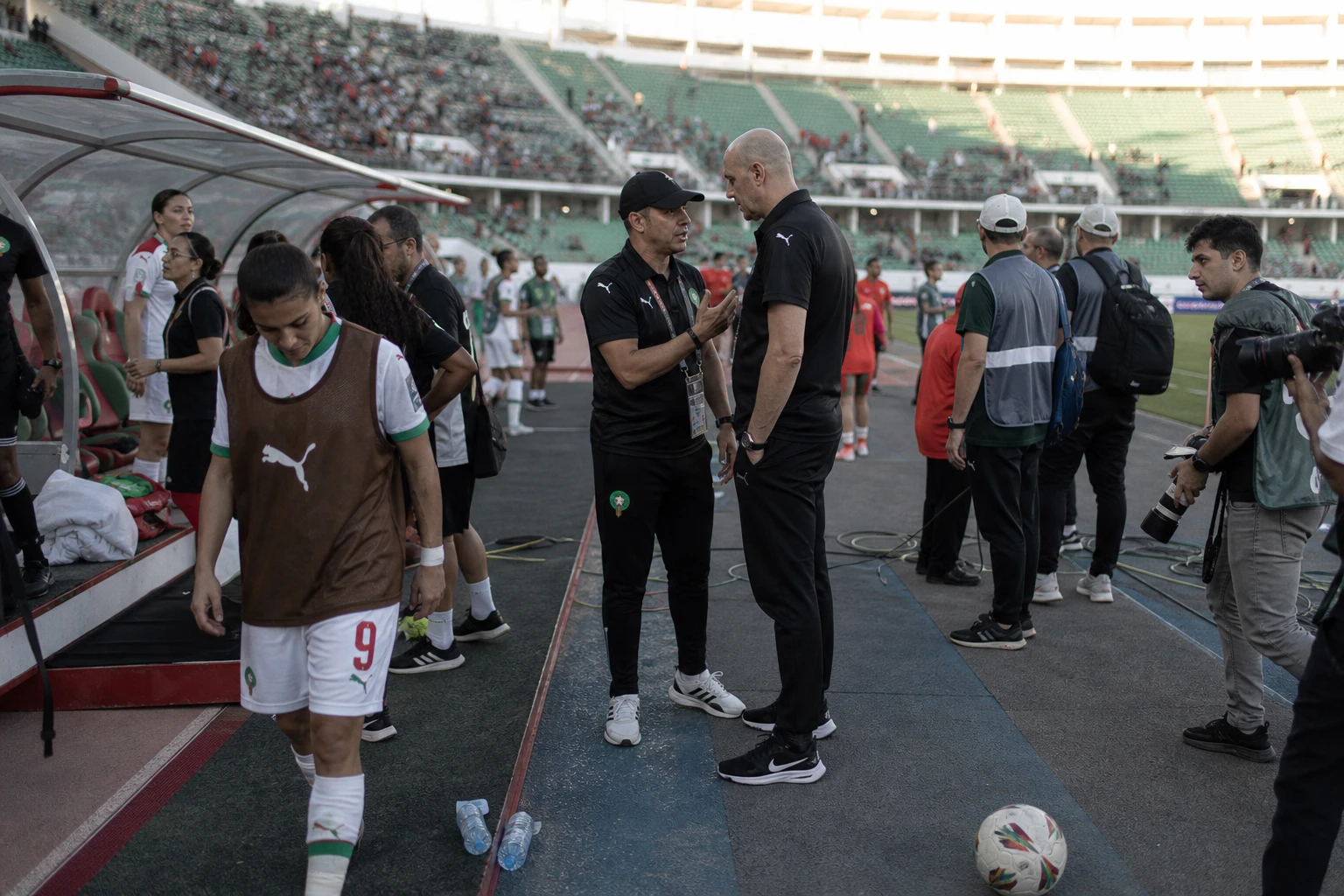
A third-place match that meant far more than a medal
In Rabat, the third-place play-off was anything but a footnote. For Algeria and Morocco alike, the fixture on 15 August 2026 served as a test of maturity in a Women’s Africa Cup of Nations that also carries weight in the African race to qualify for the 2027 FIFA Women’s World Cup. The tournament is being held in Morocco from 26 July to 16 August 2026, with Rabat as the hub for the decisive matches.
In this context, third place looks like more than a consolation prize. It measures how far a team has come. It shows the strength of its structures, the depth of its squad and its ability to withstand pressure. For Algeria, it confirms progress already visible since their historic quarter-final run in 2024. For Morocco, it is a reminder that a host nation can dominate without always converting its control into a medal.
Rabat, a sporting showcase and a stage for regional rivalries
The setting matters. The tournament was staged across Rabat and Casablanca, but Rabat Olympic Stadium played a central role in the competition. CAF had already announced that the stadium would host the opening match, the third-place play-off and the final. The choice shows Morocco’s determination to make its capital a leading stage for African women’s football.
Morocco entered this Women’s Africa Cup of Nations with clear ambitions. As hosts, they were in Group A with Algeria, Senegal and Kenya. Algeria arrived with a different but solid status, backed by a side that had already taken a step forward by qualifying for the finals again. In both cases, the match had a clear North African dimension, while being about more than simple geographical proximity.
A tense match turned around at the right moment
On the pitch, Morocco controlled the tempo for much of the match. The Atlas Lionesses took the lead in the 37th minute through Kautar Azraf, after a move built in the space between the lines. The tournament context suggested that the host nation’s dominance was logical: they had considerably more attacking impetus and created more chances.
But Algeria held firm. And that is often where a team’s rise to a higher level is decided. Late in the match, Lina Boussaha equalised in the 83rd minute, reviving a contest Morocco had thought they had under control. Stoppage time then brought another twist, as a Moroccan penalty was ultimately kept out by the post before the decisive shoot-out. The outcome was settled on penalties, where Algeria eventually won 3-2 after a 1-1 draw in regulation time.
The victory has particular significance for the Algerians. The previous evening, they had not merely stood up to a host nation riding the support of its home crowd. Above all, they had stuck to their game plan to the end, undeterred by the atmosphere or their opponents’ possession. At this level, emotional control counts for almost as much as technique.
What the medal says about women’s football in Algeria and Morocco
For Algeria, bronze marks another step forward. Before the tournament, CAF had noted that the Fennecs’ best run remained their quarter-final appearance in 2024. Reaching the podium in 2026 therefore means crossing a symbolic threshold, while adding to the experience of a squad beginning to establish itself among Africa’s leading teams. This kind of progress does not come from a single match. It is part of a broader pattern of qualification, coaching and consistency.
Morocco, meanwhile, leave frustrated after a match they had done more to shape. Possession, the number of shots and territorial control were not enough. In women’s football, as in the men’s game, hosting a tournament guarantees nothing. It can even bring additional pressure, especially when the national team is expected to showcase a wider sporting project. The country has invested in organisation and infrastructure; it now expects that foundation to produce clearer results on the pitch.
The contest also speaks to sport in the Maghreb. Algeria and Morocco are each moving forward with their own methods, pace and resources. The former are developing a more compact team, often comfortable in tight matches. The latter rely on a more ambitious set-up, greater visibility and a stimulating domestic environment. The third-place play-off brought these two models face to face. It did more than determine the final standings. It showed that regional competition is driving progress on both sides.
A continental significance beyond third place
The match was part of an expanded Women’s Africa Cup of Nations, contested by 16 teams and conceived as a step towards the 2027 World Cup. In other words, every match for a final placing offers insight into the true pecking order in African women’s football. Algeria’s place on the podium therefore matters well beyond the final photograph. It adds to the ranks of teams capable of standing up to hosts who look stronger on paper.
It is also a reminder that African women’s football can no longer be understood solely through a handful of established powers. Teams such as Algeria, Morocco, Senegal and Kenya are now helping to reshape regional balances. What happens next will depend on upcoming international windows, national technical reviews and federations’ ability to turn promising campaigns into lasting progress. In Rabat, Algeria won more than a medal. They earned a place in the conversation.