
 Algeria
 Egypt
 Libya
 Sudan
 Tunisia
 Benin
 Burkina Faso
 Cabo Verde
 Côte d'Ivoire
 Ghana
 Guinea
 Guinea-Bissau
 Liberia
 Mali
 Mauritania
 Niger
 Nigeria
 Senegal
 Sierra Leone
 The Gambia
 Togo
 Cameroon
 Central African Republic
 Chad
 DR Congo
 Equatorial Guinea
 Gabon
 Republic of the Congo
 São Tomé and Príncipe
 Burundi
 Comoros
 Djibouti
 Eritrea
 Ethiopia
 Kenya
 Madagascar
 Malawi
 Mauritius
 Mozambique
 Rwanda
 Seychelles
 Somalia
 South Sudan
 Tanzania
 Uganda
 Angola
 Botswana
 Eswatini
 Lesotho
 Namibia
 South Africa
 Zambia
 Zimbabwe
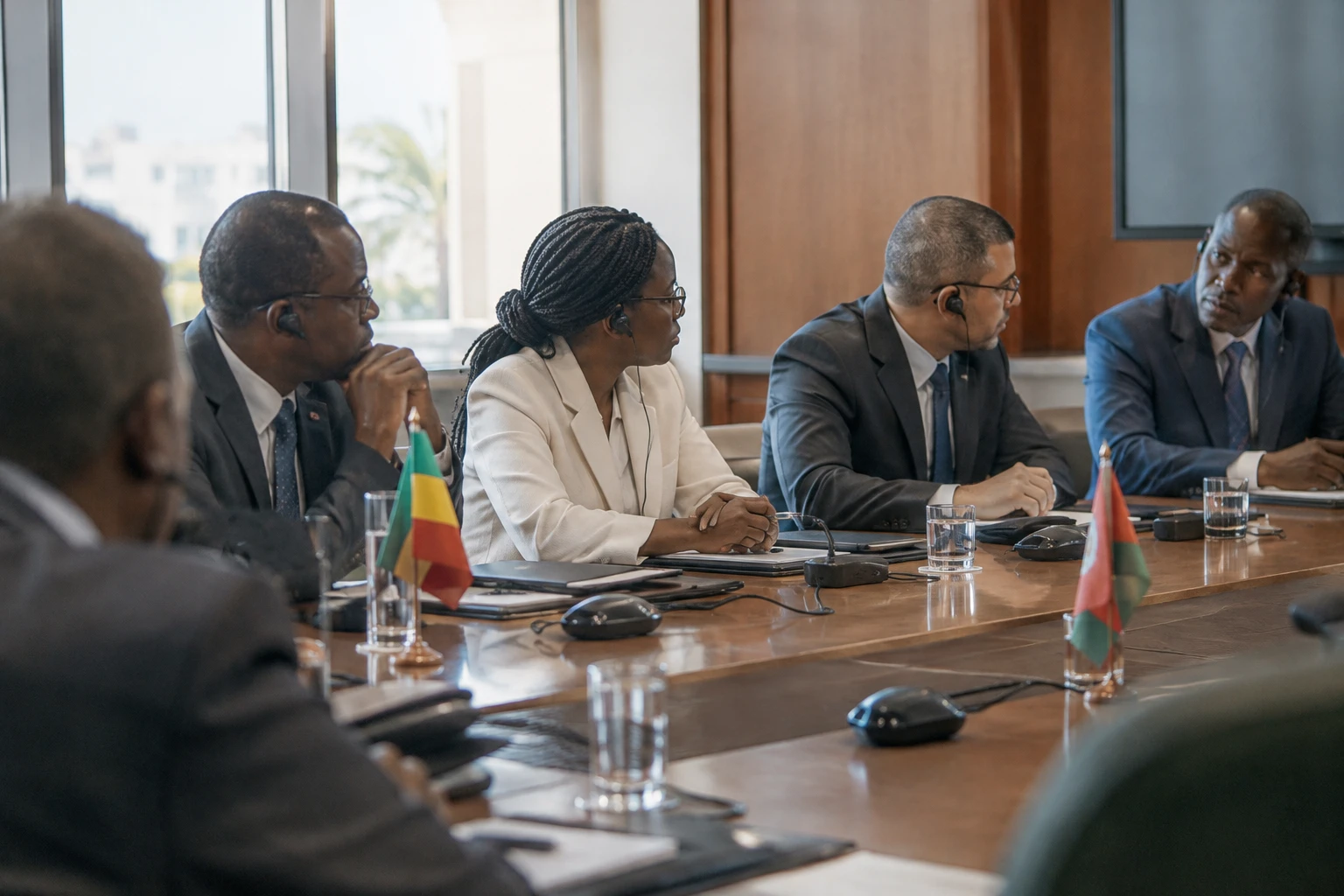
In Western Sahara, talking about autonomy is not enough to settle the essential question: who decides, on whose behalf, and with what guarantees? As Morocco’s plan becomes the framework for discussions, these questions will determine whether an agreement could be accepted and implemented, beyond diplomatic announcements.
A new framework, but no agreement yet
The dispute remains marked by rivalry between Morocco, which defends its sovereignty over the territory and proposes autonomy under its authority, and the Polisario Front, which claims independence. Algeria supports the principle of self-determination and hosts Sahrawi refugee camps near Tindouf. Mauritania also takes part in the discussions.
The Security Council adopted Resolution 2797 on 31 October 2025. It takes Morocco’s autonomy proposal as the basis for negotiations, while calling for a mutually acceptable solution in line with the United Nations Charter, including the principle of self-determination. It therefore does not, in itself, establish the territory’s final status. The mandate of MINURSO, the UN mission established in 1991, has been extended until 31 October 2026. The text of Resolution 2797 sets out this framework.
The UN secretary-general’s report, dated 1 October 2026, records three rounds of direct negotiations between Morocco, the Polisario, Algeria and Mauritania in the first quarter of the year. It also notes continued military activity and a lack of trust. The closed-door briefing by Staffan de Mistura, the secretary-general’s personal envoy, to the Security Council on 8 October confirmed that these two obstacles continued to weigh on the process, according to a Moroccan press report attributing the information to a UN source. The UN reports register lists document S/2026/781.
Seven questions that would give autonomy substance
The UN report refers to the pursuit of “genuine autonomy” and meaningful consultation with the population. It does not publish an official list of seven conditions. The points below are analytical criteria for assessing what such a status would mean in practice, not requirements formally adopted by the UN.
First, the people concerned should be able to express their views on the proposed status. The form of this consultation — a vote, an elected assembly or another mechanism — remains to be negotiated. Its freedom, inclusiveness and verifiability would be decisive, particularly to ensure that the right to self-determination is not reduced to a formula with no bearing on the final choice.
Second, the powers transferred should be clearly defined and protected. Morocco’s 2007 plan provided for regional institutions, including a parliament and an executive. But their actual scope would depend on their powers: setting the budget, legislating in agreed areas and administering public services, without those prerogatives being subject to unilateral withdrawal.
Third, the allocation of powers should be accompanied by financial resources. Local taxation, public spending and revenues from economic activities should be governed by transparent rules. Phosphates, fisheries, infrastructure and energy projects are central to the material stakes. The precise arrangements for sharing and oversight will need to be established in the agreement, rather than assumed.
Fourth, the process should include safeguards for political rights and civil liberties. Fifth, the Polisario should be able to take part in the negotiations and transition, and then in the political process provided for under the status. This participation alone would not settle the question of representativeness: that should also be tested through credible and open elections.
Sixth, Sahrawi refugees living in the camps near Tindouf should be able to take part in decisions that will shape their future. The UN report notes proposals for voluntary visits to Laayoune and Dakhla, with support from the Office of the United Nations High Commissioner for Refugees. Such measures can help restore links, but do not replace a political decision on status.
Finally, an independent transition and monitoring process would be needed to make the agreement enforceable. The report says the personal envoy is working on a draft transitional framework agreement, which could pave the way for a detailed model of self-government and a consultation. Credible international guarantees could help verify compliance with commitments. Their mandate, however, would need to be negotiated: the report does not set out a new monitoring mission that has already been decided.
The regional test: turning compromise into trust
For the authorities in Rabat, autonomy under Moroccan sovereignty must preserve the kingdom’s territorial unity. For Sahrawis who favour independence, a formula that does not allow for genuine consent risks closing off the political outcome in advance. For Algeria, self-determination remains a central principle. The differences are therefore not only legal: they also concern representation, security and the balance of power in the Maghreb.
An agreement would also have different effects on populations and economic activities. Local institutions would need the means to meet residents’ needs, while companies and investors would seek stable rules on resources and projects. Without transparency or local participation, economic benefits could remain disconnected from decision-making power.
The continental dimension is distinctive. Morocco is a member of the African Union, where the Sahrawi Arab Democratic Republic is also a member: the organisation’s positions thus reflect regional division rather than consensus. The dispute also complicates relations between Rabat and Algiers and, by extension, prospects for cooperation in the Maghreb on security, trade and mobility.
The next immediate milestone is the renewal of MINURSO’s mandate, expected before it expires on 31 October 2026. But the Council’s vote will not, by itself, resolve questions of consent, the sharing of powers or resources. The decisive sign will instead be the parties’ ability to turn the negotiating framework into specific proposals, and then guarantee their implementation.



