Algeria
 Egypt
 Libya
 Morocco
 Sudan
 Tunisia
 Benin
 Burkina Faso
 Cabo Verde
 Côte d'Ivoire
 Ghana
 Guinea
 Guinea-Bissau
 Liberia
 Mali
 Mauritania
 Niger
 Nigeria
 Senegal
 Sierra Leone
 The Gambia
 Togo
 Cameroon
 Central African Republic
 Chad
 Equatorial Guinea
 Gabon
 Republic of the Congo
 São Tomé and Príncipe
 Burundi
 Comoros
 Djibouti
 Eritrea
 Ethiopia
 Kenya
 Madagascar
 Malawi
 Mauritius
 Mozambique
 Rwanda
 Seychelles
 Somalia
 South Sudan
 Tanzania
 Uganda
 Angola
 Botswana
 Eswatini
 Lesotho
 Namibia
 South Africa
 Zambia
 Zimbabwe
A copper project growing in scale
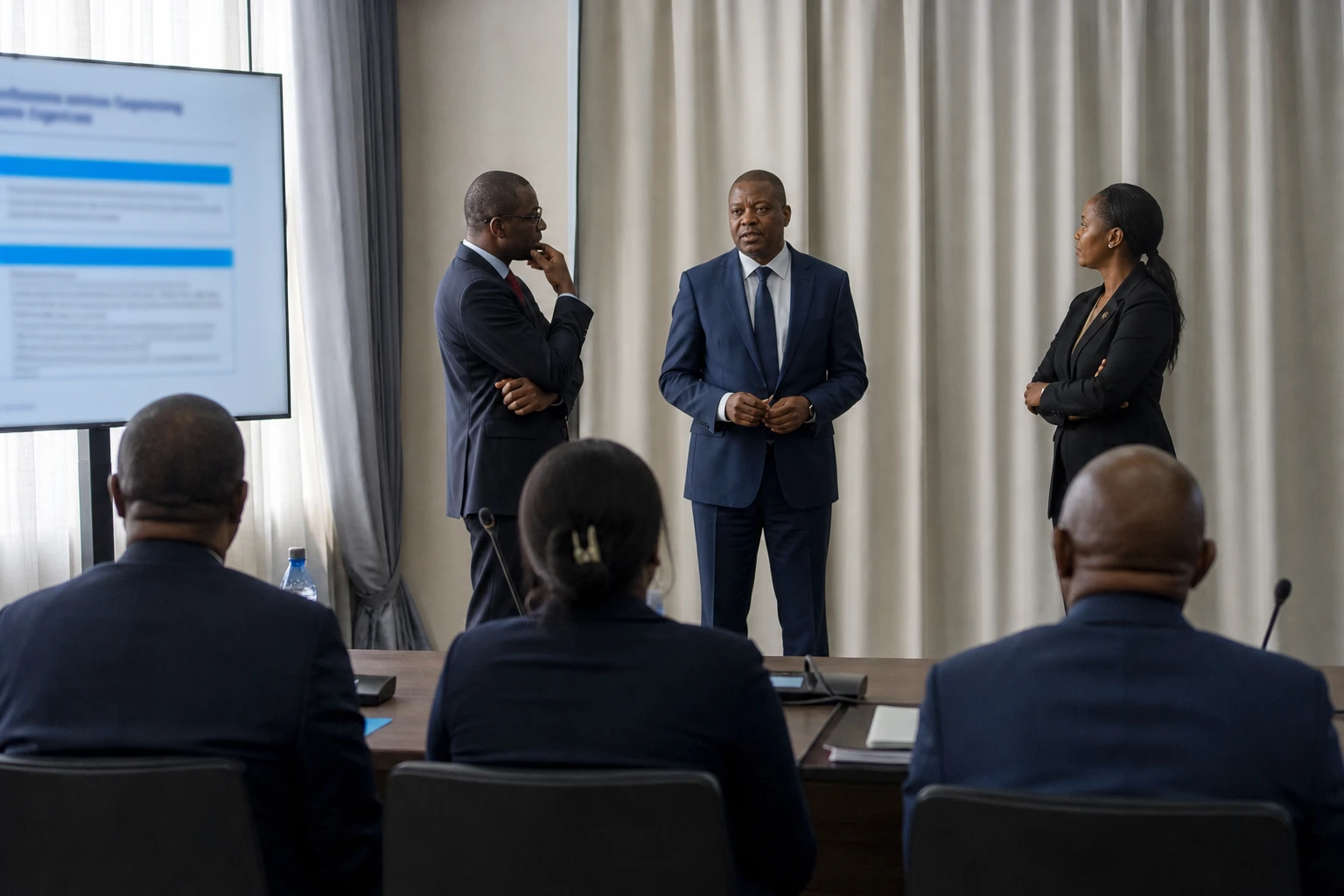
West of the Kamoa-Kakula complex, another Congolese deposit is gaining momentum. In Lualaba province, the Western Forelands project is moving towards a more concrete stage: one where exploration is no longer just about confirming potential, but about preparing a future mining operation. For the Democratic Republic of the Congo, already at the heart of the global copper market, the stakes go beyond a simple resource announcement. It is a test of the country’s ability to turn discoveries into lasting value, with clear local benefits and increasingly demanding rules.
What the new data show
On 8 September 2026, Ivanhoe Mines announced a 30% increase in Western Forelands’ mineral resources. The group now says the Makoko district contains 42 million tonnes of indicated resources grading 2.66% copper, or 1.1 million tonnes of contained copper, together with 612 million tonnes of inferred resources grading 1.80% copper, or 11.02 million tonnes of contained copper. The company says these figures are based on a 94,500-metre drilling programme in 2026, described as the largest at the project to date.
The area concerned remains vast: about 2,427 km² of permits, adjacent to the Kamoa-Kakula complex, which is already producing in the same mining area of Lualaba. Ivanhoe also says the project had its first mineral resource estimate in 2023, followed by an update in May 2025, before this latest progress in 2026. In other words, the site’s geology is being confirmed, while confidence in part of the resources is improving. This is essential, because the “indicated” category gives investors greater reassurance than the “inferred” category, which is still too preliminary to underpin an operating decision on its own.
Why Kinshasa and Lualaba are watching closely
In the DRC, copper is more than just a raw material. It is a strategic resource, linked to public revenues, direct and indirect jobs, infrastructure and the country’s place in the global energy chain. The regional framework also matters. The DRC belongs to SADC, the Southern African Development Community, which has 16 member states and is now pushing Kinshasa towards greater trade integration. In this context, every new copper project strengthens the country’s influence in a region that remains one of the continent’s major mineral hubs.
The Congolese government has also toughened its rhetoric on the local value of minerals. In a country where projects are now expected to create more than a simple flow of exports, the question is no longer just how much copper lies underground. It is how much will be processed locally, how much infrastructure will be built, and what share of the value chain will remain in the DRC. Western Forelands is therefore part of a political equation as much as an industrial one.
A tight but still conditional timetable
Ivanhoe is now targeting a pre-feasibility study in early 2027. This stage is used to put figures on the future mine: capital costs, production rate, extraction method, energy requirements and the phasing of work. The company says it has already begun initial field work, including earthworks and road construction, while updating the environmental and social impact assessment. This is a standard but decisive sequence. Until the study is complete, Western Forelands remains an advanced exploration project, not a mine under construction.
The company is explicit about the comparison with Kamoa-Kakula. The complex, also in the DRC, has given Ivanhoe a model for rapid development in the country. But repeating that trajectory is by no means automatic. Financing, logistics, permits and operational stability will still have to be secured. The sector’s recent history shows that geological resources alone are not enough. The quality of the electricity grid, the reliability of transport and the regulatory climate often determine a project’s actual pace.
Significance beyond the DRC
The outlook is favourable for well-positioned copper projects. The International Energy Agency estimates that demand linked to electrification, power grids and data centres continues to weigh on the outlook for the red metal, while the global mining project pipeline still points to a shortfall of around 25% in 2035. In this landscape, the DRC, alongside neighbouring Zambia, remains a key player in future supply. Western Forelands’ message is clear: Central and Southern Africa are not merely extraction zones, but regions that can influence the global balance of copper.
The next steps remain to be seen. If further drilling confirms the continuity of the deposit, the project could reach a milestone in 2027 with the pre-feasibility study. If, on the other hand, geological data slow progress or technical constraints build up, the ramp-up will take longer. Either way, Western Forelands illustrates a reality that is now central to the DRC: the country is no longer content with announcing mining potential. It is seeking to turn discoveries into industrial assets capable of operating in a strained global market and in a region where mining ambitions have become an issue of economic sovereignty.