
 Algeria
 Egypt
 Libya
 Morocco
 Sudan
 Tunisia
 Benin
 Burkina Faso
 Cabo Verde
 Côte d'Ivoire
 Ghana
 Guinea
 Guinea-Bissau
 Liberia
 Mali
 Mauritania
 Niger
 Nigeria
 Senegal
 Sierra Leone
 The Gambia
 Togo
 Cameroon
 Central African Republic
 Chad
 Equatorial Guinea
 Gabon
 Republic of the Congo
 São Tomé and Príncipe
 Burundi
 Comoros
 Djibouti
 Eritrea
 Ethiopia
 Kenya
 Madagascar
 Malawi
 Mauritius
 Mozambique
 Rwanda
 Seychelles
 Somalia
 South Sudan
 Tanzania
 Uganda
 Angola
 Botswana
 Eswatini
 Lesotho
 Namibia
 South Africa
 Zambia
 Zimbabwe
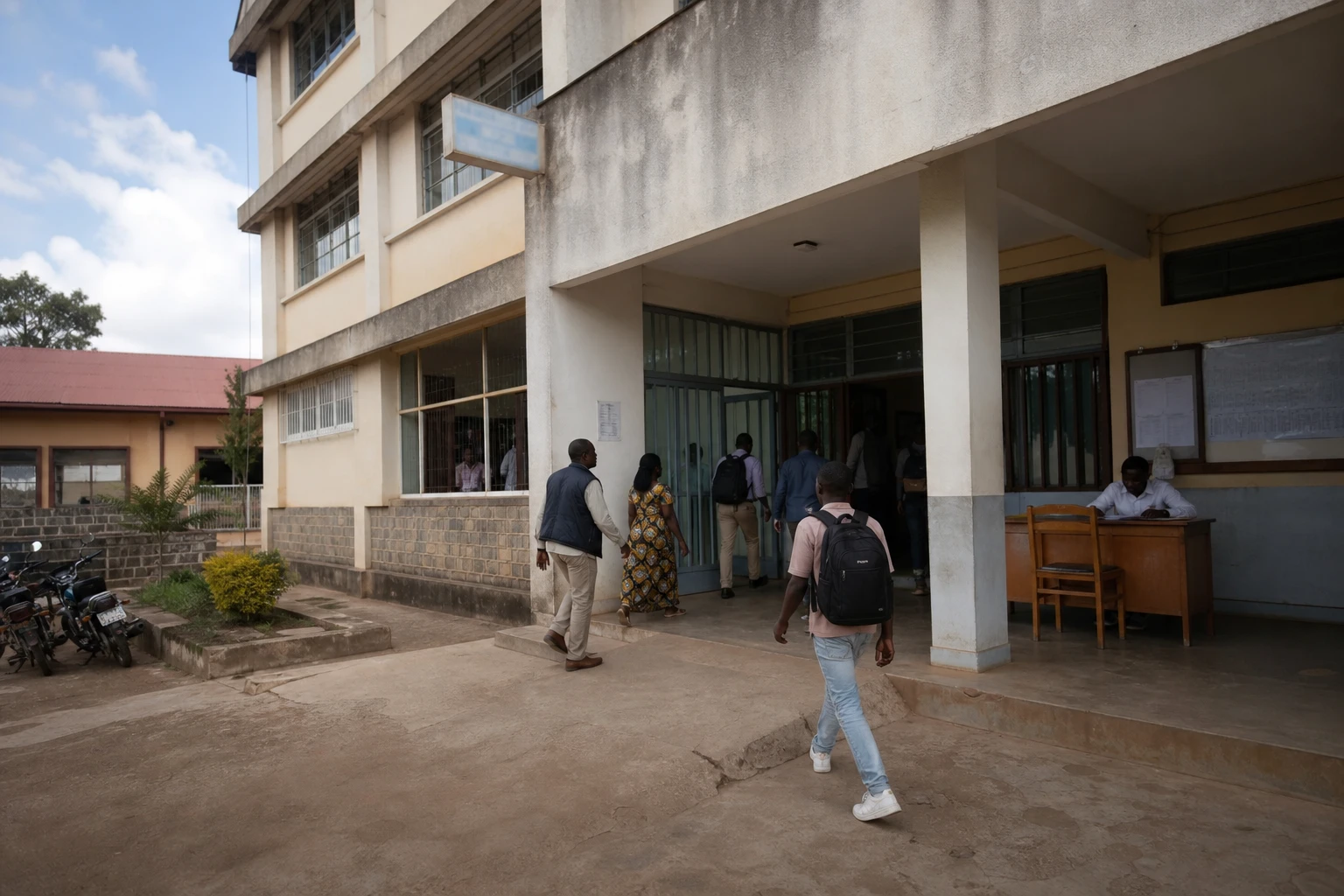
When universities become a battleground for sovereignty
In Goma and Bukavu, the stakes are no longer confined to the front lines. They now extend to a space many families regard as a route to social advancement: the public university. In the east of the Democratic Republic of the Congo, the battle between Kinshasa and AFC/M23 is spilling into lecture halls, academic registries and the very value of degrees.
This tension points to something broader. When a territory slips partly beyond the state’s control, the institutions that structure daily life become symbols of power. Higher education is one of them. It trains officials, awards qualifications and determines who speaks on behalf of the public service. In the DRC, where Kinshasa remains the seat of the national authorities and the provinces of North Kivu and South Kivu face intense security pressure, this institutional struggle has immediate consequences for students, teachers and families.
What Kinshasa has decided, and why
The Congolese ministry responsible for higher education has issued an order suspending, until further notice, academic and para-academic activities for the 2026-2027 academic year at several public institutions in Goma and Bukavu. The list includes the University of Goma, ISP-Goma, ISTM-Goma, ISC-Goma and ISTA-Goma in Goma, as well as the Official University of Bukavu, ISP-Bukavu, ISTM-Bukavu, ISDR-Bukavu and ISAM-Bukavu in Bukavu. The ministry says the measure also covers enrolments, re-enrolments, classes, assessments and deliberations leading to an academic qualification.
The decision follows another series of events. On 7 August 2026, AFC/M23 announced appointments to head several public institutions in the two cities. Kinshasa rejected the appointments, saying they had no legal basis, and then suspended the remuneration of 48 staff members concerned. The list comprises 28 lecturers, 12 senior teaching assistants, three teaching assistants and five other members of staff. The central authorities accuse them of accepting positions under the authority of the armed movement.
At its heart, the question is simple and weighty: who runs a public university when the state no longer fully controls the territory where it is located? In an ordinary administration, the answer lies in the law. In the context of armed conflict, it becomes a contest of power. Kinshasa is defending its legal authority. AFC/M23, meanwhile, is seeking to install its own administrative representatives in the areas it controls.
Students, degrees and continuity of classes
For students, the problem is tangible. It is not just a matter of the academic calendar. It is about whether the courses they take today will qualify them for a degree tomorrow that is recognised across the country and beyond. The Congolese ministry says it is planning a fallback: affected students will be able to transfer to other public or private institutions recognised by the Congolese state to continue their studies.
AFC/M23, for its part, says it wants to maintain educational provision in the areas it administers. But another question remains: which authority would guarantee the equivalence of years of study, validate academic deliberations and ensure national recognition of the qualifications awarded? In higher education, administrative legitimacy is no minor detail. It determines access to the labour market, public-service recruitment exams and postgraduate study. The conflict therefore extends well beyond the campus. It weighs on the social mobility of an entire generation.
In eastern Congo, this uncertainty is all the more acute because universities have already suffered the effects of war: displaced students, interrupted classes, more dangerous journeys and strained family budgets. In Goma and Bukavu alike, families are already having to cope with the cost of daily life, insecurity and disruptions to public services. The university thus becomes another point of rupture, at the very moment when it should remain a source of stability.
A local stand-off within a broader diplomatic framework
The university dispute comes as the Doha peace process seeks to regain momentum. A joint statement published on 22 August 2026, following meetings held in Switzerland from 17 to 21 August, says representatives of Kinshasa and AFC/M23, together with Qatar, the United States, Togo in its role as African Union mediator, the African Union Commission and Switzerland, assessed progress made and set out a roadmap for the next phase of negotiations. The statement also refers to a monitoring mechanism and successive steps for the remaining protocols.
The contrast is telling. On one side, multilateral negotiations are seeking to structure a way out of the crisis. On the other, each side is consolidating its positions on the ground. In the east of the DRC, the war is therefore being fought not only with weapons. It is also fought through the power to appoint, pay, suspend, recognise or invalidate. The university, like local government and public services, has become a marker of sovereignty.
For the DRC, the stakes extend beyond Goma and Bukavu. They concern the country’s institutional unity, the credibility of public qualifications and the continuity of the state in vulnerable areas. For the Great Lakes region, the dispute is a reminder that a political agreement is not enough if everyday institutions remain contested. And for the African Union, it confirms that mediation is measured not only by final declarations, but by its ability to protect the public services that sustain civilian life. In this dispute, the university is at once a target, a tool and a test.



