Algeria
 Egypt
 Libya
 Morocco
 Sudan
 Tunisia
 Benin
 Burkina Faso
 Cabo Verde
 Côte d'Ivoire
 Ghana
 Guinea
 Guinea-Bissau
 Liberia
 Mali
 Mauritania
 Niger
 Nigeria
 Senegal
 Sierra Leone
 The Gambia
 Togo
 Cameroon
 Central African Republic
 Chad
 DR Congo
 Equatorial Guinea
 Gabon
 Republic of the Congo
 São Tomé and Príncipe
 Burundi
 Comoros
 Djibouti
 Eritrea
 Ethiopia
 Kenya
 Madagascar
 Malawi
 Mauritius
 Mozambique
 Rwanda
 Seychelles
 Somalia
 South Sudan
 Tanzania
 Uganda
 Angola
 Botswana
 Eswatini
 Lesotho
 Namibia
 South Africa
 Zambia
 Zimbabwe
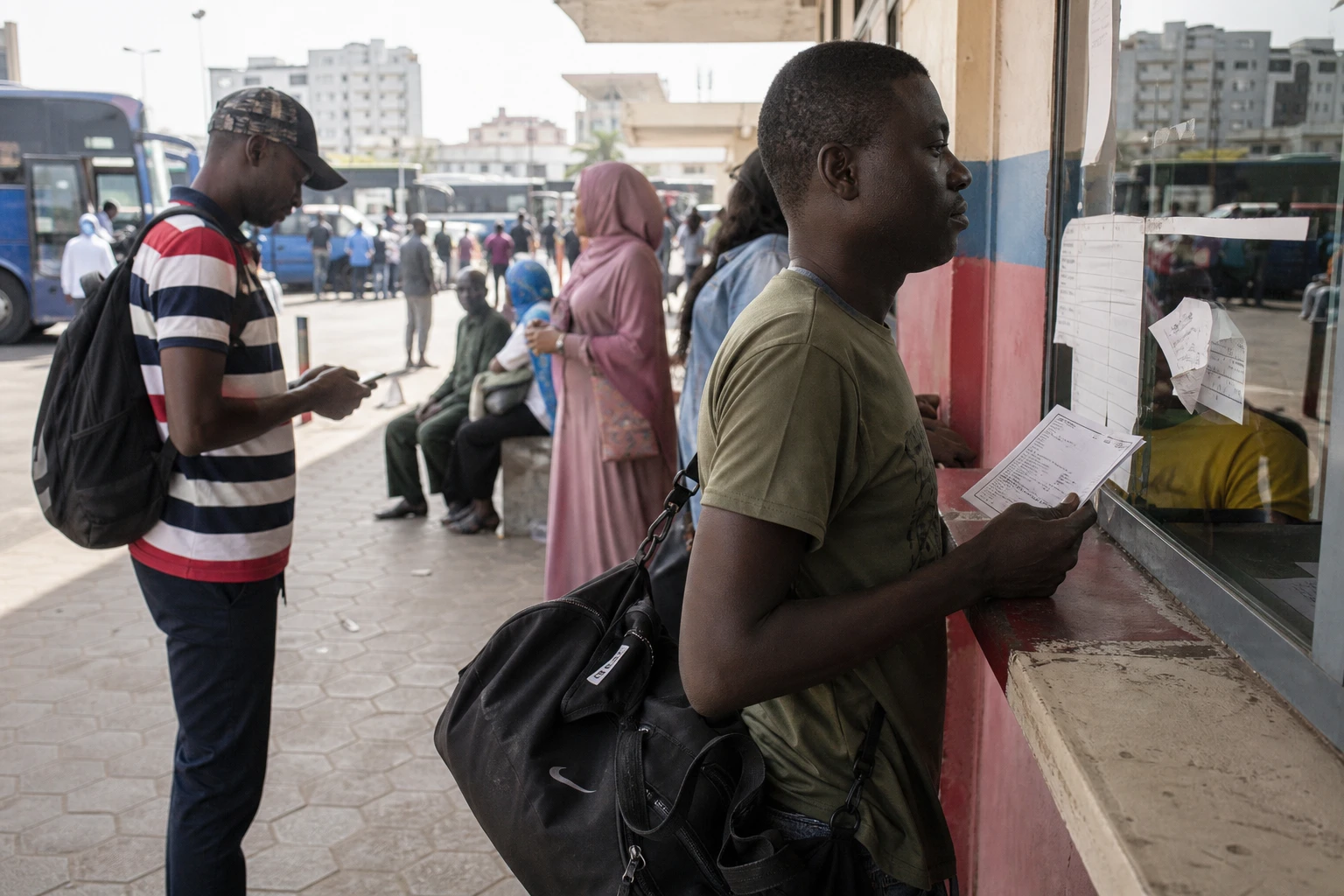
Deportations ordered in Washington no longer stop at US borders. African governments are now being asked to receive people sent back by the United States, sometimes with no ties to the country of arrival. Behind the diplomatic announcements, one question remains: what safeguards protect these migrants once they land on the continent?
Migration agreements shift responsibility
Donald Trump’s administration is expanding a policy of deportation to “third countries”. The principle is simple: when someone cannot be sent directly back to their country of origin, Washington seeks another state willing to receive them.
In Africa, Rwanda, Eswatini and Uganda have already been mentioned as part of this arrangement. Other discussions involve several countries across the continent. A collaborative investigation by international media outlets estimates that 13 African states have concluded or considered agreements of this kind. That figure should nevertheless be treated with caution, as some arrangements remain opaque.
In July 2025, US officials approached the leaders of Gabon, Guinea-Bissau, Liberia, Mauritania and Senegal, among others. The discussions concerned receiving deportees who would not be nationals of those countries. The US government presents these transfers as a tool to combat irregular migration. Human rights organisations, meanwhile, warn of the risk of arbitrary detention, ill-treatment and onward refoulement.
Rwanda has announced an agreement to temporarily receive people deported from the United States. Kigali says it intends to regulate how they are accommodated. Uganda, for its part, has specified that people convicted of crimes and unaccompanied minors would not be covered by its arrangement. These clarifications show that African governments are seeking to set their own limits, even when negotiations take place amid an unequal balance of power.
For the countries concerned, these agreements may bring access to funding or strengthen ties with Washington. For those transferred, the uncertainty is more immediate. They may arrive in a country whose language they do not speak, without a family network and with limited knowledge of their rights. The principle of non-refoulement, which prohibits sending someone to a place where they risk persecution or torture, is the key concern.
Controversy extends beyond US policy
This practice is part of a broader trend. For several years, European countries have negotiated with African states on managing departures, border controls and the return of migrants. The arrangements often involve financial aid, security support or economic cooperation.
What is new here is the geographical shift in responsibility. Someone who has applied for asylum in the United States may be sent to an African country they do not know. That country’s authorities must then decide whether they can stay, are transferred elsewhere or are sent back to their country of origin.
This system may put pressure on national reception services. Countries such as Uganda, Tanzania and Rwanda already host large refugee populations from neighbouring states. The arrival of people deported from North America adds an administrative and political burden. It may also fuel tensions in capital cities, even though the concrete effects are often concentrated in transit centres and reception areas.
In Belgium, debate over the end of life returns to the fore
The week was also marked by the death of Arnaud Denis, a French actor and theatre director. Severely debilitated after having a prosthesis fitted to treat a hernia, he chose to undergo euthanasia in Belgium.
According to information released by his lawyer, Arnaud Denis had suffered since an implant was fitted in July 2023. His case has drawn attention to possible complications involving certain medical devices and to the difficulties patients face when seeking an expert assessment, redress or recognition of harm.
Belgium allows euthanasia under specific conditions. The request must be voluntary, considered and repeated. The suffering must be constant, unbearable and impossible to relieve, and stem from a serious and incurable medical condition. Arnaud Denis’s case therefore revives two distinct debates: support for people affected by medical complications and the conditions for accessing a chosen end of life.
Those close to him want to continue his fight. They are calling, in particular, for patients to receive more complete information about the risks of prostheses and better access to medical and legal remedies. The case is a reminder that the end of life cannot be separated from the conditions that precede it.
In Switzerland, big banks remain at the centre of a power struggle
In Bern, debate is focused on regulating banks deemed “too big to fail”. The phrase refers to institutions whose collapse could cause a major shock to the national economy and financial system.
The issue directly concerns UBS, which became Switzerland’s largest bank after taking over Credit Suisse in 2023. Parliament is considering rules designed to strengthen capital reserves and reduce the risk of a new crisis forcing the state to intervene.
The issue has triggered intense lobbying. Financial circles warn that regulation could undermine the competitiveness of Switzerland’s banking sector. Supporters of tighter rules argue that the cost of a public bailout would be far higher. The debate is therefore not just about banks. It is also about a state’s ability to control a private actor whose balance sheet is many times larger than the national economy.
Belgian schools and the Arctic’s scientific record
In Belgium, teachers in the French Community have brought a case against education spending cuts before the Constitutional Court. They are challenging, among other measures, an increase in working hours in upper secondary education.
The legal action has been accompanied by rallies and strikes at several schools. Unions say the reform could increase teachers’ workloads without addressing recruitment difficulties. The government, for its part, argues that public spending must be kept under control.
The dispute directly affects how lessons are organised. It also concerns the appeal of a profession facing rising educational needs, absences and staff shortages. The Constitutional Court’s decision could clarify the legal limits on cuts imposed on the sector.
In Canada, meanwhile, the disappearance of an invisible Arctic lake is a reminder of how rapidly the Far North is changing. The underground body of water, formed around 4,000 years ago, lay beneath a layer of ice and sediment. Its disappearance is the result of changes in permafrost and hydrological shifts observed in polar regions.
The phenomenon is of more than scientific interest. Permafrost stores significant amounts of carbon and affects waterways, infrastructure and the ways of life of northern communities. The disappearance of an ancient lake is thus a subtle but tangible sign of ongoing climate change.