Algeria
 Egypt
 Libya
 Morocco
 Sudan
 Tunisia
 Benin
 Burkina Faso
 Cabo Verde
 Côte d'Ivoire
 Ghana
 Guinea
 Guinea-Bissau
 Liberia
 Mali
 Mauritania
 Niger
 Nigeria
 Senegal
 Sierra Leone
 The Gambia
 Togo
 Cameroon
 Central African Republic
 Chad
 DR Congo
 Equatorial Guinea
 Gabon
 Republic of the Congo
 São Tomé and Príncipe
 Burundi
 Comoros
 Djibouti
 Eritrea
 Ethiopia
 Kenya
 Madagascar
 Malawi
 Mauritius
 Mozambique
 Rwanda
 Seychelles
 Somalia
 South Sudan
 Tanzania
 Angola
 Botswana
 Eswatini
 Lesotho
 Namibia
 South Africa
 Zambia
 Zimbabwe
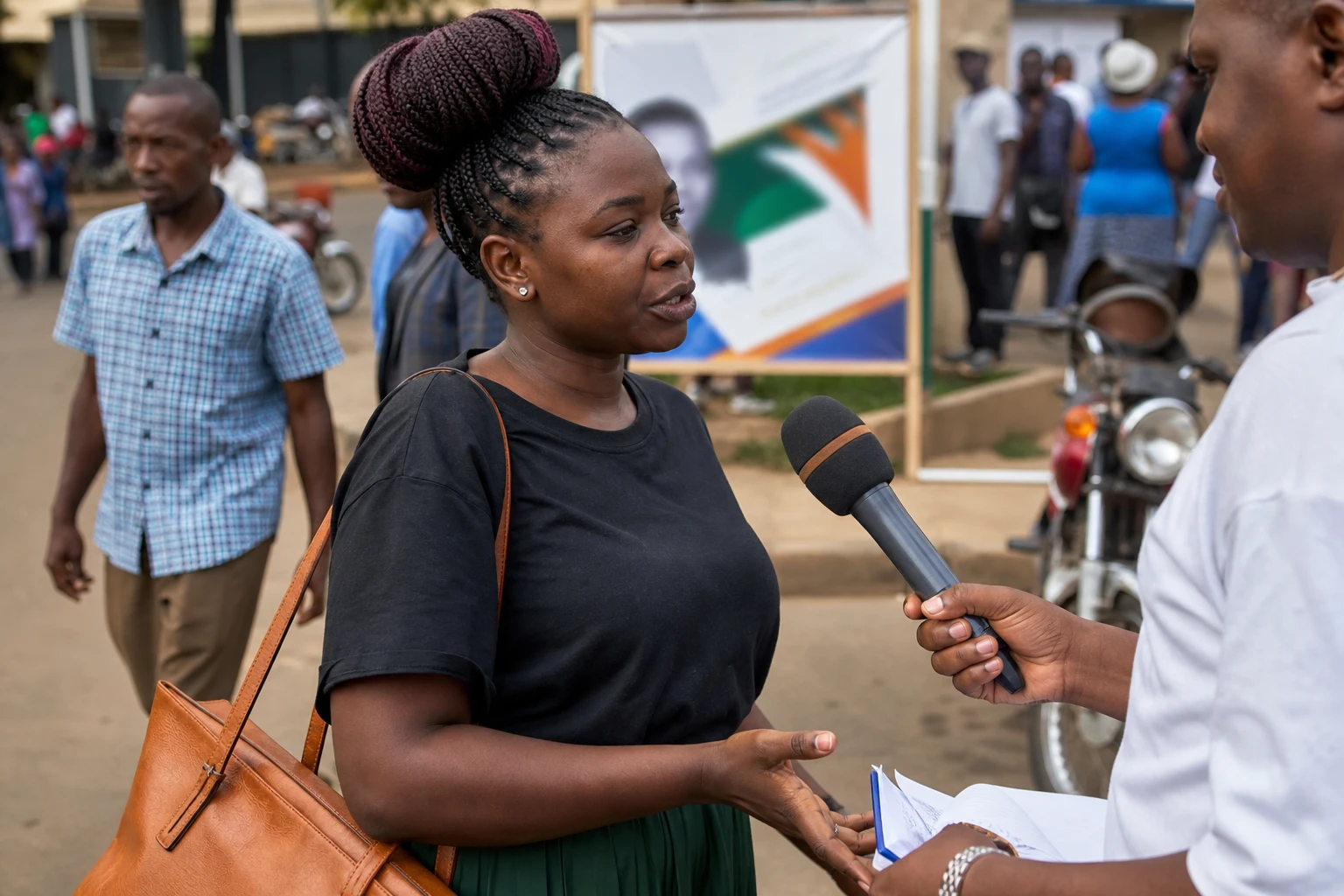
In Kampala, a grassroots poll matters more than it seems
In Uganda, local elections do more than choose neighbourhood or village officials. They also establish the first level of trust between the state and residents, where land disputes, neighbourhood conflicts and some aspects of everyday security are dealt with.
When this fragile link falters, the entire chain of local governance comes under strain. In Kampala and elsewhere in the country, the question is therefore not just who wins. It is also whether the vote will be accepted as legitimate by those who live closest to these grassroots councils.
This electoral period comes as the country has already revived its local election calendar for 2026. Uganda’s electoral commission has confirmed that elections for basic administrative units will go ahead, with village chairperson elections scheduled for 28 July across the country’s 71,214 villages, each village serving as a polling station.
In this context, parish councils, the local level between the village and the sub-county, remain a sensitive stage. They are an essential forum for mediation in a decentralisation system intended to bring public decision-making closer to residents.
Irregularities in the first round and a fresh vote in 1,135 villages
The first warning came from the village poll, held last week. Several areas were marked by violence, disputes over voter lists and suspected irregularities. Following these incidents, a fresh vote is to be held in 1,135 villages. This figure has been widely reported in local coverage of the issue as the electoral commission continued rolling out its programme.
Ugandan NGO the Center for Constitutional Governance warned that if the grassroots poll is disputed, the entire local electoral structure is weakened. Its director, Sarah Bireete, noted that parish councils depend on results from the villages. In other words, a problem at the first level can affect those that follow.
The voting method has heightened these concerns. The vote is held by a show of hands, or more precisely by voters lining up behind candidates, their representatives, portraits or symbols, according to the Local Governments Act. This longstanding practice in Uganda remains highly vulnerable to group pressure and attempts to influence voters at community level.
The timetable itself reflects the pressure of the moment. The village elections were followed by parish council elections, with another stage announced for 10 August. In an already tense environment, every delay, rerun and dispute fuels doubts about the process’s ability to deliver on its promise of transparency.
Growing party involvement is changing the nature of local elections
The Ugandan issue is not limited to procedural errors. It also reveals a deeper political shift. Until now, local officials were often chosen for their personal roots in the village. This time, parties are becoming more openly involved. Candidates are identified with the NRM, the ruling party, the NUP, the main opposition party, or other groups.
This shift changes everything. It brings heavier campaign dynamics into villages, with more resources, rivalries and party discipline. In several localities, the contest is no longer just about proximity or reputation. It is also about resources, networks and the organisational reach of major parties.
Ugandan observers see a clear risk. Independent analyst Frederick Golooba-Mutebi believes money and party competition have taken on a greater role, particularly thanks to logistical support from the NRM. His warning matters because local elections are specifically meant to reduce the distance between voters and elected representatives, not bring the most costly practices of national politics down to the lowest level.
For residents, the stakes are tangible. A credible local council can speed up the resolution of a family dispute, arbitrate a land conflict or act as an interface with the administration. A council whose legitimacy is disputed, by contrast, loses its ability to mediate. It then becomes a source of suspicion, sometimes even a point of deadlock, in a country where land, public services and local representation remain sensitive issues.
The effects are not the same for everyone. Parties see it as a dress rehearsal. Incumbent officials are defending their influence. Voters, meanwhile, are mainly looking for reliable people they can reach easily. At this level, politics is not abstract. It affects access to information, neighbourhood security and the management of everyday tensions.
A test of electoral credibility in East Africa
Uganda’s case goes beyond the national context. In the East African Community, where decentralisation and local participation remain recurring issues, the credibility of grassroots polls matters as much as that of presidential elections. When a village vote is disputed, the entire promise of citizen participation loses force.
Across the continent, the pattern is familiar. Electoral institutions often find it less difficult to hold a poll than to get its results accepted. Uganda is no exception to this tension. Its 2025-2026 calendar, already extended several times, shows how much the holding of local elections requires planning, administrative discipline and clear communication with communities.
What happens next will be closely watched, first in the villages holding a fresh vote, then in the parishes due to follow. If the reruns take place without incident, the electoral commission will be able to limit the damage. If new incidents occur, distrust risks taking hold for the long term at the level closest to citizens.
For Kampala, the challenge is simple to state and difficult to resolve: to organise a local election that does not resemble a battle between political machines, but rather an exercise in useful governance. In an East African country where institutional stability is also measured at village level, this test extends well beyond the date of a single vote.