Algeria
 Egypt
 Libya
 Morocco
 Sudan
 Benin
 Burkina Faso
 Cabo Verde
 Côte d'Ivoire
 Ghana
 Guinea
 Guinea-Bissau
 Liberia
 Mali
 Mauritania
 Niger
 Nigeria
 Senegal
 Sierra Leone
 The Gambia
 Togo
 Cameroon
 Central African Republic
 Chad
 DR Congo
 Equatorial Guinea
 Gabon
 Republic of the Congo
 São Tomé and Príncipe
 Burundi
 Comoros
 Djibouti
 Eritrea
 Ethiopia
 Kenya
 Madagascar
 Malawi
 Mauritius
 Mozambique
 Rwanda
 Seychelles
 Somalia
 South Sudan
 Tanzania
 Uganda
 Angola
 Botswana
 Eswatini
 Lesotho
 Namibia
 South Africa
 Zambia
 Zimbabwe
When water runs short, anger takes on a new face
In Tunis, protests are no longer solely about freedoms. They are also moving to the tap, the light switch and the cost of everyday life. In the middle of summer, water and electricity cuts have fuelled broader anger at a situation some Tunisians consider untenable, amid extreme heat, rising prices for basic goods and weakened public services.
This shift is significant. It shows that in Tunisia, political discontent is now expressed as much through demands for freedoms as through calls for the state to provide continuity. When a family does not know whether there will be water when they return from work, institutional debate becomes a question of everyday life.
A country under water and electricity strain
Tunisia has faced sustained pressure on its water resources for several years. In June 2026, a restricted ministerial council adopted measures to secure drinking-water supplies over the summer, strengthen water infrastructure projects and reorganise networks, particularly in rural areas. The government also asked SONEDE, the public drinking-water company, to speed up repairs and network monitoring.
July confirmed the scale of the problem. The Tunisian Water Observatory recorded 608 reports relating to water supplies, the highest level since the start of the year. Nabeul accounted for 65 reports, ahead of Monastir, Mahdia, Sousse, Sfax and Médenine. This geography says a great deal about the country beyond the capital: tensions are also affecting coastal areas, medium-sized cities and regions already exposed to climate-related vulnerabilities.
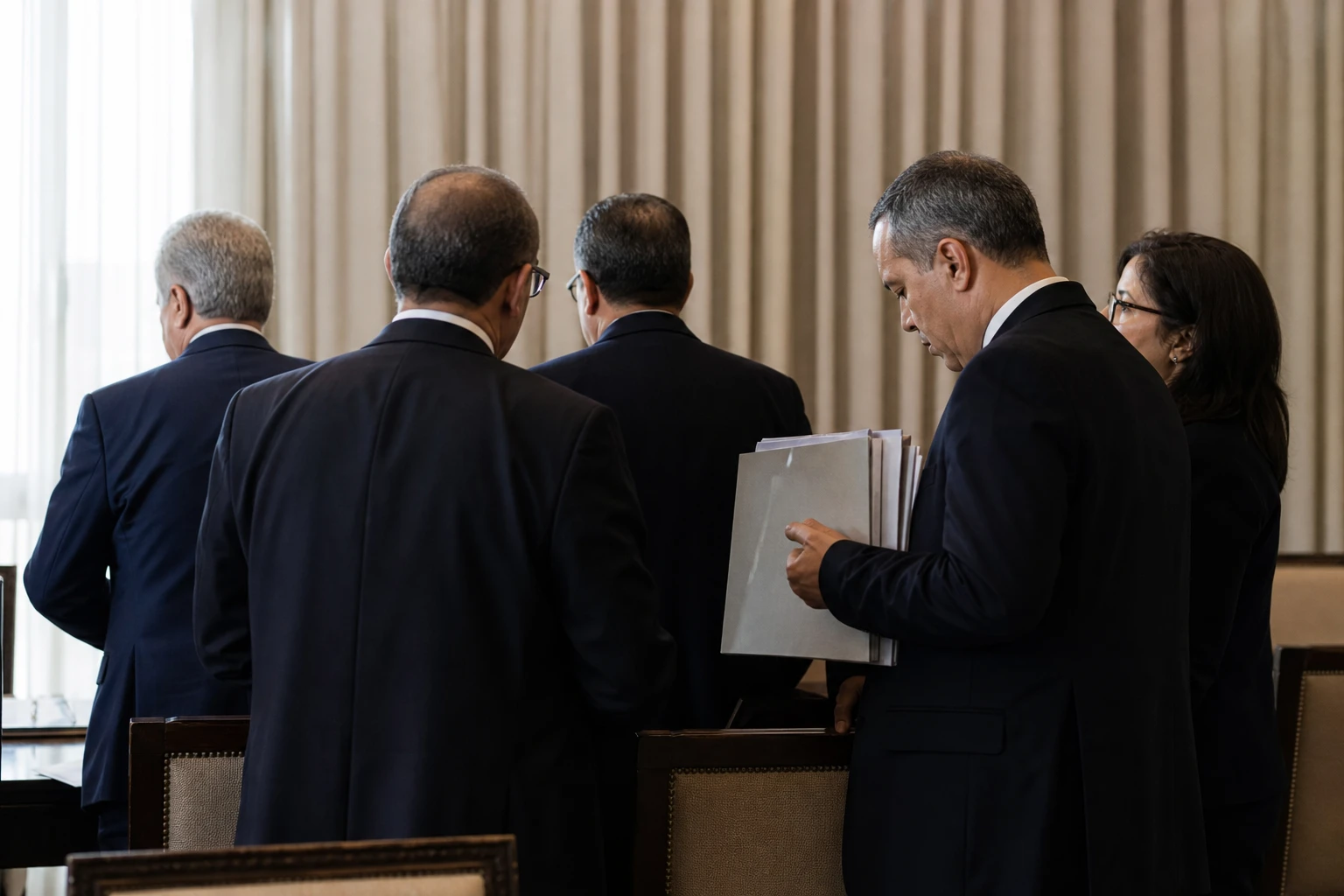
On electricity, STEG, the state energy company, itself warned in mid-July of possible rolling power cuts in several governorates to preserve grid stability. Shortly afterwards, President Kaïs Saïed brought the relevant officials together in Carthage and described prolonged water and electricity cuts as “abnormal phenomena”.
What the streets of Tunis were saying
On Thursday 20 August 2026, protesters gathered in the capital at the call of the Nafas movement, a recently formed group seeking to bring together parties, independent figures and opponents of President Kaïs Saïed. Their message was clear: demand better public services, an end to medicine shortages, a lower cost of living and an end to restrictions on freedoms.
The slogans crossed a political threshold. Several participants openly called for the head of state to step down, as protests in recent weeks had already grown more forceful. This shift is notable in a country where protests had long combined social demands with the defence of the democratic gains of 2011. Today, the two are increasingly converging.
Some of the voices heard in the streets stressed the lack of an economic direction and the deterioration of daily life. Others recalled that the country continued to function with queues, repeated cuts and stock shortages, including of essential goods. These voices from the ground are valuable because they reflect social fatigue that transcends political affiliations.
The political standoff over responsibility
Since his institutional power grab in 2021, Kaïs Saïed has consolidated his power and adopted a harsher tone towards his opponents. He regularly accuses his critics of receiving foreign funding to foment unrest and harm national interests. This interpretation allows him to politicise social protests, but it does not answer the fundamental question: why do essential services remain so vulnerable?
The contrast is all the more striking given that the Tunisian state has already announced technical responses. The problem, then, is not simply whether a plan exists, but how it is implemented, how quickly and how credibly. Between official announcements, failures on the ground and a perception of injustice, public trust erodes quickly.
This period must also be viewed through a social lens. Low-income households are the first to bear the brunt of water cuts, followed by the rising costs of alternatives, from transport to last-minute purchases. Shops, bakeries, small production units and informal services, meanwhile, pay the price of unreliable electricity and the temporary suspension of some activities. In this context, an outage is never merely technical: it becomes economic and political.
A Tunisian issue, but with regional implications
Tunisia is not managing this situation alone. Since July 2023, it has been linked to the European Union by a memorandum of understanding on a strategic and global partnership, covering macroeconomic stability, green energy, migration and mobility, among other areas. The European Commission subsequently announced nearly €127 million in support for implementing this framework, part of it for migration cooperation.
In this context, calls to review the text or rebalance its priorities take on particular political significance. For protesters, the issue is not just migration or diplomacy. It is whether partnerships concluded with external actors also translate into tangible improvements in public services, particularly water and electricity.
Across North Africa and the African Union, the Tunisian case is a reminder of a wider reality: water security is becoming an issue of institutional stability. Climate pressures, urban demand and ageing networks are no longer isolated technical matters. They now weigh on governments’ legitimacy, budgetary choices and the ability of states to deliver on promises of social justice.
What happens next will depend on the Tunisian authorities’ ability to reduce outages, explain their choices and restore a minimum level of trust. Otherwise, every heatwave, every breakdown and every price increase will continue to fuel protests that are no longer about politics alone. They are about administrative dignity, continuity of public services and the place of citizens in the Tunisian state.