Algeria
 Egypt
 Libya
 Morocco
 Sudan
 Benin
 Burkina Faso
 Cabo Verde
 Côte d'Ivoire
 Ghana
 Guinea
 Guinea-Bissau
 Liberia
 Mali
 Mauritania
 Niger
 Nigeria
 Senegal
 Sierra Leone
 The Gambia
 Togo
 Cameroon
 Central African Republic
 Chad
 DR Congo
 Equatorial Guinea
 Gabon
 Republic of the Congo
 São Tomé and Príncipe
 Burundi
 Comoros
 Djibouti
 Eritrea
 Ethiopia
 Kenya
 Madagascar
 Malawi
 Mauritius
 Mozambique
 Rwanda
 Seychelles
 Somalia
 South Sudan
 Tanzania
 Uganda
 Angola
 Botswana
 Eswatini
 Lesotho
 Namibia
 South Africa
 Zambia
 Zimbabwe
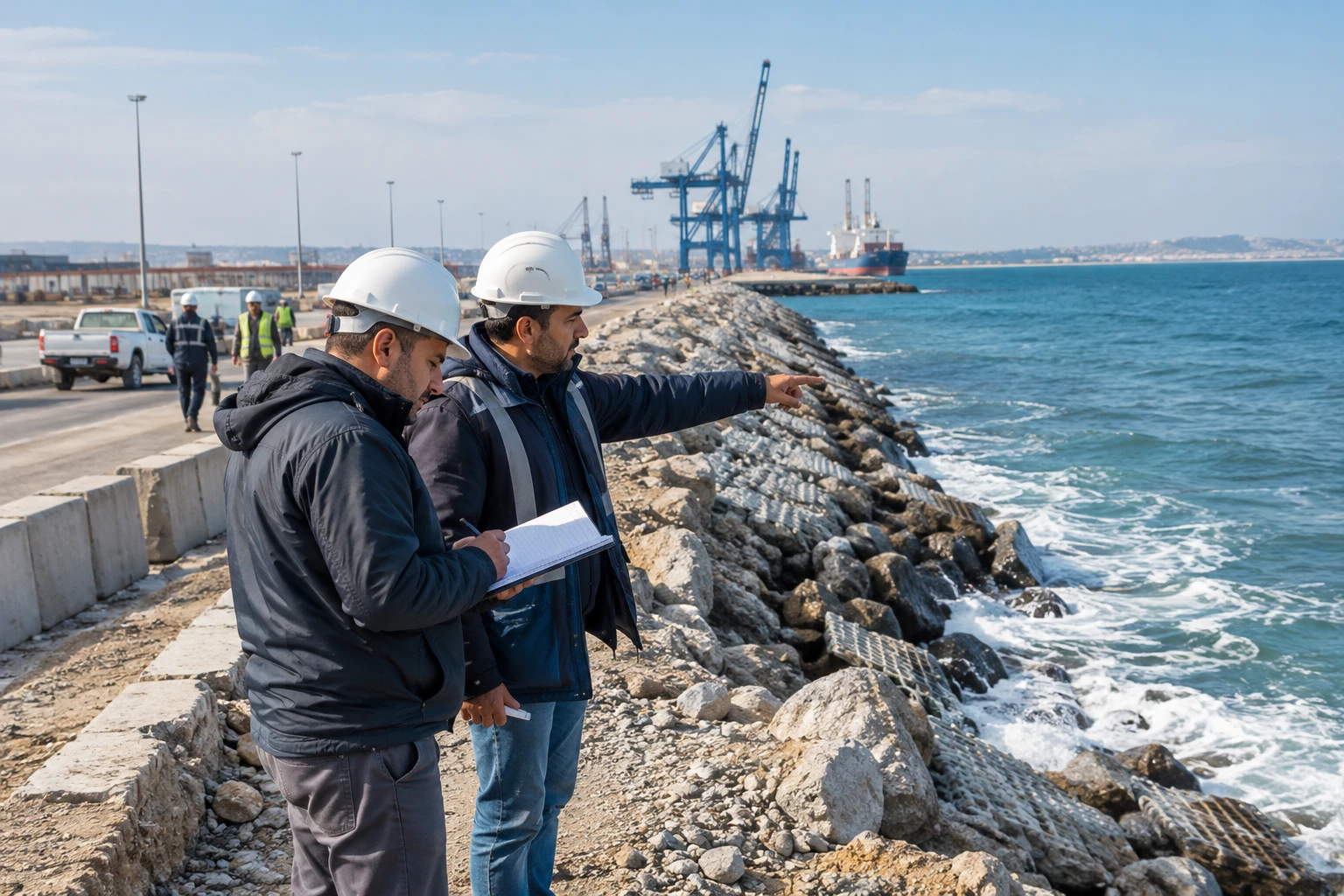
Protecting a beach means more than holding back the sand. In Tunisia, the retreating coastline also threatens roads, neighbourhoods, fishing activities and tourism infrastructure. New funding is set to extend works to several areas, but their effectiveness will also depend on how the country manages its coasts.
A programme stretching from Bizerte to Djerba
On 10 November 2026, Tunisia and the Netherlands signed a €60.92 million grant agreement, equivalent to about 204.9 million dinars. The announcement was reported by Tunisia’s TAP news agency and confirmed by several Tunisian media outlets. The funding is part of the Dutch DRIVE programme, implemented by Invest International. TAP details the areas covered and the purpose of the grant, while La Presse de Tunisie confirms the signing and its value.
The announced works will cover Bizerte, the area from southern Sousse to Skanès, the Qaraiya area in Monastir and the north-east of Djerba. A study will also examine coastal protection between Béni Khiar and Yasmine Hammamet. The programme therefore combines interventions at targeted sites with preparatory work for another stretch of coast.
Tunisia’s coastal protection programme was launched in 2013 as part of Tunisian-German cooperation, with financial support from Germany’s development bank KfW. The Dutch grant is intended to fund its fourth and fifth phases, as well as an additional phase. The programme, led nationally over several years, now brings together different European partners.
A coastline home to people and economic activity
The pressure on the coast goes beyond the loss of beaches. Erosion, coastal flooding and rising sea levels can weaken infrastructure and homes close to the shore. The effects vary from place to place: a tourist resort, a port, a residential neighbourhood and a fishing community do not have the same facilities or the same means of adapting.
The World Bank identifies coastal erosion, flooding and drought among the major climate risks facing Tunisia. It also estimates that rising sea levels could affect nearly a quarter of the country’s coastal area by 2050. These projections highlight the scale of the challenge, but do not by themselves describe how each beach will change: that also depends on currents, storms, sediment flows and human development. The World Bank outlines its assessments of coastal risks in Tunisia.
Coastal defence works can reduce exposure at some sites. However, they need to be designed with the coastline as a whole in mind: an intervention can alter the movement of sand and shift erosion to neighbouring areas. Physical protection therefore cannot replace urban planning, ecosystem conservation or the scientific monitoring of coasts.
The issue is also tied to development choices. Tourism, fishing and local activities depend on a living coastline, but urbanisation and infrastructure can increase its vulnerability if poorly planned. The planned study between Béni Khiar and Yasmine Hammamet could help clarify the risks along this stretch; its findings and subsequent decisions will be crucial in assessing the project’s impact.
Funding does not resolve questions of governance
A grant reduces the direct financing burden on the Tunisian state, but does not by itself guarantee that the structures will be sustainable. Their maintenance, coordination between institutions, transparency in procurement and consideration of the municipalities concerned will all affect the results. The expected benefits — protecting beaches, infrastructure and livelihoods — will need to be monitored over time, with accessible data on the sites treated.
Tunisia’s Ministry of the Environment has itself highlighted challenges relating to governance, economic and spatial planning, and the allocation of resources. This lends particular weight to the national ecological transition strategy, which sets long-term goals. Coastal protection will be more coherent if it is underpinned by planning rules that prevent the same factors of vulnerability from being recreated near protected areas.
At the regional level, Tunisia shares risks linked to rising sea levels, storms and changing coastlines with other Maghreb countries and the Mediterranean basin. Cooperation on knowledge, data and adaptation methods can complement national funding. But priorities and responses must remain tailored to the realities of each area, rather than applying a uniform solution to every coast.
For Tunisians, the practical questions will be which sites actually benefit from the works, how their effects will be assessed and who will maintain them. The grant signed in Tunis marks a new phase in the programme launched in 2013. Its impact will be measured less by the announced sum than by the ability of the interventions to protect people and economic activity without worsening the vulnerability of neighbouring areas.