Algeria
 Egypt
 Libya
 Morocco
 Sudan
 Benin
 Burkina Faso
 Cabo Verde
 Côte d'Ivoire
 Ghana
 Guinea
 Guinea-Bissau
 Liberia
 Mali
 Mauritania
 Niger
 Nigeria
 Senegal
 Sierra Leone
 The Gambia
 Togo
 Cameroon
 Central African Republic
 Chad
 DR Congo
 Equatorial Guinea
 Gabon
 Republic of the Congo
 São Tomé and Príncipe
 Burundi
 Comoros
 Djibouti
 Eritrea
 Ethiopia
 Kenya
 Madagascar
 Malawi
 Mauritius
 Mozambique
 Rwanda
 Seychelles
 Somalia
 South Sudan
 Tanzania
 Uganda
 Angola
 Botswana
 Eswatini
 Lesotho
 Namibia
 South Africa
 Zambia
 Zimbabwe
When water and electricity become scarce
In Tunisia, the summer of 2026 did more than drive up bills. It also showed how two everyday services can become scarce when temperatures rise, networks come under strain and demand surges at the same time. In several cities, residents contended with power cuts, irregular deliveries and queues for bottled water. Meanwhile, the authorities faced calls to explain why pressure on the networks had mounted in the most sensitive season of the year.
This was not an isolated episode. In July 2026, Tunisia recorded a national average temperature of 31.7 °C, 3.4 °C above normal, according to the National Institute of Meteorology. In late August, another heatwave pushed the country towards extreme levels, with temperatures approaching 50 °C in some regions. In these conditions, electricity powers not only homes but also the pumps that distribute drinking water. When the power supply falters, pressure on the entire system quickly mounts.
A network under pressure from heat, demand and long-standing weaknesses
Tunisia’s government eventually publicly acknowledged the scale of the problem. On 27 August 2026, President Kaïs Saïed convened several ministers and the heads of STEG, the state electricity and gas company, and SONEDE, which manages drinking water. He referred to “acts of sabotage” and “enemies of the homeland”, a view disputed by trade unions and officials at public companies, who instead point to an ageing network, postponed investment and heavier seasonal demand.
At the end of August, STEG published several notices of power cuts and disruptions in different regions, including Greater Tunis, the centre, the south and the south-west. Meanwhile, on 2 September, SONEDE reported supply disruptions in some areas of Greater Tunis, Nabeul and Zaghouan. These announcements confirm that this was not simply localised inconvenience, but pressure affecting several parts of the country.
The official response also sought to reassure the public. On 22 August, STEG’s chief executive said that power cuts did not last more than an hour and were caused by exceptional pressure on the network, worsened by the heat and limited import capacity from Algeria, which was facing the same weather conditions. But this account was contradicted in practice by residents describing repeated outages, sometimes lasting longer, as well as by notices issued by the public services themselves.
The government has since sought to regain control of the situation. In early September, the presidency of the government announced a package of measures to secure drinking-water supplies, improve networks, speed up leak detection and boost investment. The plan also provides for rainwater collection tanks in new property developments and greater use of renewable energy in water production and transport. This confirms a simple point: the summer crisis has shifted the debate from the short term to infrastructure and governance.
The cost of the crisis for households, businesses and livestock farmers
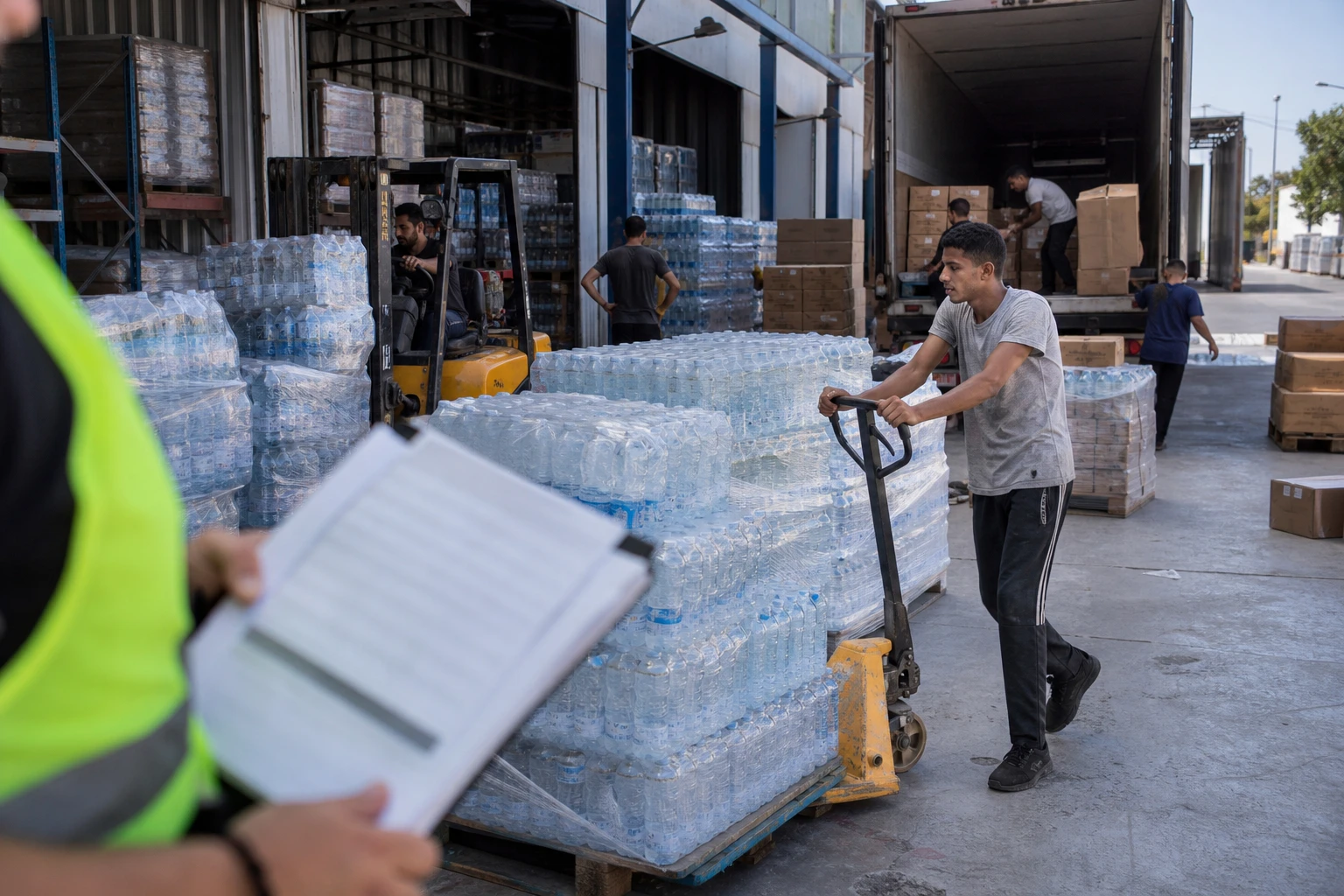
On the ground, the shortages did not affect everyone equally. In Greater Tunis, along the northern coast and as far as Sfax, shops saw their stocks of bottled water disappear within hours. The heat sent demand soaring, with distributors themselves estimating a 30% increase in mid-August. Shops sometimes limited the number of bottles each customer could buy, while some prices rose above those displayed. Such imbalances almost always fuel a parallel market, especially when supply becomes uncertain.
The households most exposed are those least able to absorb the crisis. In neighbourhoods where running water is unavailable for several hours, people have to fetch packs of water, wait for deliveries or turn to alternative sources. For low-income families, the extra cost is immediate. For family businesses, the shock can be even greater. Small shops lose revenue. Restaurants and hotels find it harder to operate. And residents of poorly insulated homes bear the brunt of the heat, without a backup air conditioner or generator.
Poultry farming has also felt the impact. In Sfax, where a significant share of national poultry production is concentrated, heat and power cuts disrupted feeding, ventilation and the cooling of buildings. A trade union warned in late August of a fall in national poultry-meat production and losses in the slaughtering chain. In such an integrated sector, a power failure does not affect just one farmer: it can drive up the cost of eggs, meat and inputs across the entire industry.
The social cost, meanwhile, remains difficult to measure from day to day. But signs of tension are clear: anger towards the authorities, a sense of abandonment and distrust of a state that regularly promises reforms but fails to prevent the same scenes from recurring every summer. In Tunisia, this distrust matters as much as megawatts or cubic metres of water. It can also weigh on political stability in a country that remembers the protests of 2011 and where essential services remain a direct measure of public confidence.
A warning from Tunisia for the whole Maghreb
The significance of this episode extends beyond Tunisia. Across the Maghreb, extreme heat is becoming more frequent, and pressure on water is a regional, not merely national, issue. Tunisia makes this particularly clear because its urban networks, agriculture, tourism and light industry all rely on the same fragile chain of resources. When air conditioning, drinking water and food production all depend on the same power line, vulnerability spreads rapidly.
The response will therefore be judged not only by crisis statements. It will be measured by the ability to modernise STEG and SONEDE, reduce losses, secure pumping stations and better prepare for summers to come. For Tunis, the challenge is both political and technical. For the region, it is a full-scale test of how to protect essential public services in a harsher climate. And for North Africa, it is a reminder that resilience cannot be decreed: it is built, network by network, season by season.