Algeria
 Egypt
 Libya
 Morocco
 Sudan
 Benin
 Burkina Faso
 Cabo Verde
 Côte d'Ivoire
 Ghana
 Guinea
 Guinea-Bissau
 Liberia
 Mali
 Mauritania
 Niger
 Nigeria
 Senegal
 Sierra Leone
 The Gambia
 Togo
 Cameroon
 Central African Republic
 Chad
 DR Congo
 Equatorial Guinea
 Gabon
 Republic of the Congo
 São Tomé and Príncipe
 Burundi
 Comoros
 Djibouti
 Eritrea
 Ethiopia
 Kenya
 Madagascar
 Malawi
 Mauritius
 Mozambique
 Rwanda
 Seychelles
 Somalia
 South Sudan
 Tanzania
 Uganda
 Angola
 Botswana
 Eswatini
 Lesotho
 Namibia
 South Africa
 Zambia
 Zimbabwe
A rail promise that goes beyond the project itself
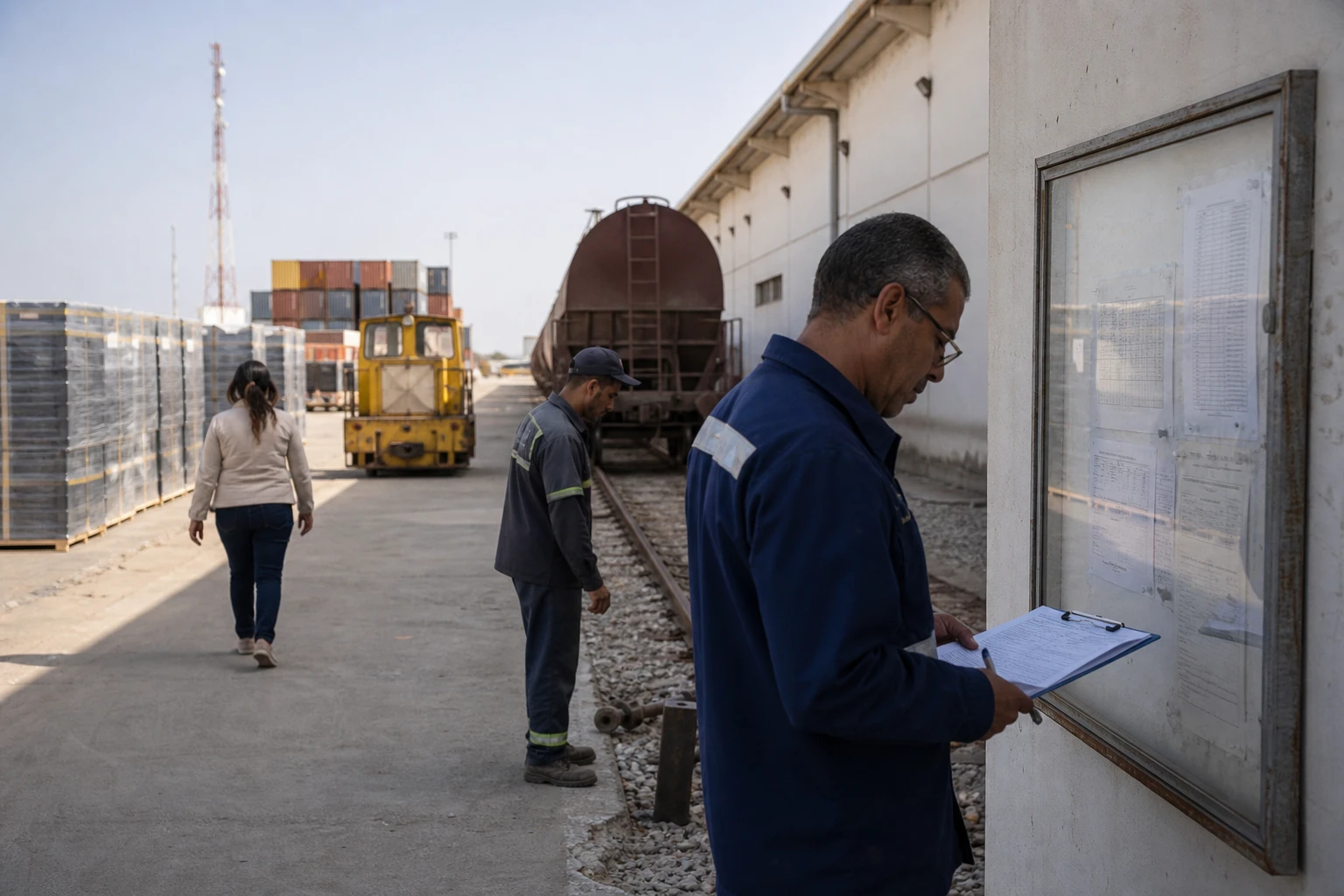
In Tunisia, major transport projects are about more than lines drawn on a map. They also reflect how the country wants to connect its regions, ease the flow of goods through its ports and narrow the gap between the industrial north, the interior centre and the border regions in the south. The proposed high-speed North–South rail corridor fits into this approach, as Tunis seeks to break a cycle of accumulated delays in urban and intercity rail.
This ambition comes against a broader regional backdrop. North Africa remains marked by poorly connected networks, while the African Development Bank has for several years been pushing to modernise the Trans-Maghreb Corridor linking Casablanca, Algiers and Tunis, with a view to extending it to other neighbouring countries. In short, this is not just a Tunisian project: it is also one piece of an unfinished Maghreb puzzle.
What Tunisia is planning
On 17 August, the Tunisian National Railway Company launched a call for applications to select consulting firms to carry out feasibility and engineering studies for the first phase of the North–South corridor. According to technical information published in the local press and recent government decisions, the planned route is to link Bizerte to Ben Guerdane, passing through the country’s major urban centres, logistics zones, ports and freight areas. The government presents the project as a strategic axis intended to strengthen territorial cohesion and prepare connections to Algeria and Libya.
The plan did not come out of nowhere. Since 2024, the Tunisian authorities have put rail back at the centre of transport planning, with a sector strategy emphasising links between public projects, the expansion of rail and the integration of logistics zones. This approach builds on an existing 2,268-kilometre network operated by SNCFT, which carries passengers and freight but has several sections in need of major upgrades.
The financial picture, however, remains much less clear. Tunisia has already announced a 36 billion dinar programme through to 2040 to modernise its rail network and strengthen its role in territorial planning. The funding package, announced several times by the authorities, is also intended to improve service quality, increase transport capacity and better connect production zones to ports and domestic markets. The calls for tenders alone therefore guarantee nothing yet: they merely restart the study phase, where the real trade-offs begin.
Expected benefits, but very real obstacles
On paper, the North–South corridor could change daily life in several areas at once. For passengers, it promises more predictable journey times and better continuity between major cities. For businesses, it could reduce the cost of transporting goods, particularly agricultural produce, and improve connections between ports, logistics platforms and production centres. For inland regions, which are often less well served, high-performance rail is also a tool for territorial balance, provided stations, connections and local services keep pace.
But the main obstacle is not merely technical. Funding remains the biggest unknown, and Tunisia’s experience is a reminder that an announced project is not necessarily a project under way. The Greater Tunis rapid rail network has faced lengthy delays before some services were partially commissioned, showing how studies, construction and expropriations can quickly become bogged down. The question of Libya also remains: without an operational network on the Libyan side, cross-border continuity will remain theoretical. On the Algerian side, a connection would also require close coordination on track gauge, operations and investment priorities.
The project also says something about Tunisia’s current approach. The authorities are relying on major structural corridors, with a more territorial vision of development. This aligns with announcements surrounding the 2026–2030 Development Plan, which lists high-speed rail and the North–South corridor among the strategic projects to be accelerated. In this approach, rail is not just a means of transport: it becomes an instrument of public policy, designed to link markets, open up governorates and support private investment along the routes it serves.
A Maghreb-wide and continental dimension
At Maghreb level, the issue is clear: without credible rail links, each country remains trapped within its own network. The African Development Bank points out that the Trans-Maghreb Corridor should ultimately improve connectivity, facilitate trade and strengthen regional interoperability. For Tunisia, an efficient North–South corridor would therefore be less a luxury than a way to establish its position in future trade across the Mediterranean and North Africa.
The significance extends further still. On a continent where infrastructure corridors often carry the ambitions of the African Continental Free Trade Area, projects of this kind show that physical connectivity remains a precondition for the movement of goods, services and people. Tunisia, with its North African roots and Mediterranean coastline, is seeking to turn a long-standing rail plan into a tool for regional outreach. It remains to be seen whether the study phase will this time lead to a credible implementation timetable and funding able to go the distance.