Algeria
 Egypt
 Libya
 Morocco
 Sudan
 Tunisia
 Benin
 Burkina Faso
 Cabo Verde
 Côte d'Ivoire
 Ghana
 Guinea
 Guinea-Bissau
 Liberia
 Mali
 Mauritania
 Niger
 Nigeria
 Sierra Leone
 The Gambia
 Togo
 Cameroon
 Central African Republic
 Chad
 DR Congo
 Equatorial Guinea
 Gabon
 Republic of the Congo
 São Tomé and Príncipe
 Burundi
 Comoros
 Djibouti
 Eritrea
 Ethiopia
 Kenya
 Madagascar
 Malawi
 Mauritius
 Mozambique
 Rwanda
 Seychelles
 Somalia
 South Sudan
 Tanzania
 Uganda
 Angola
 Botswana
 Eswatini
 Lesotho
 Namibia
 South Africa
 Zambia
 Zimbabwe
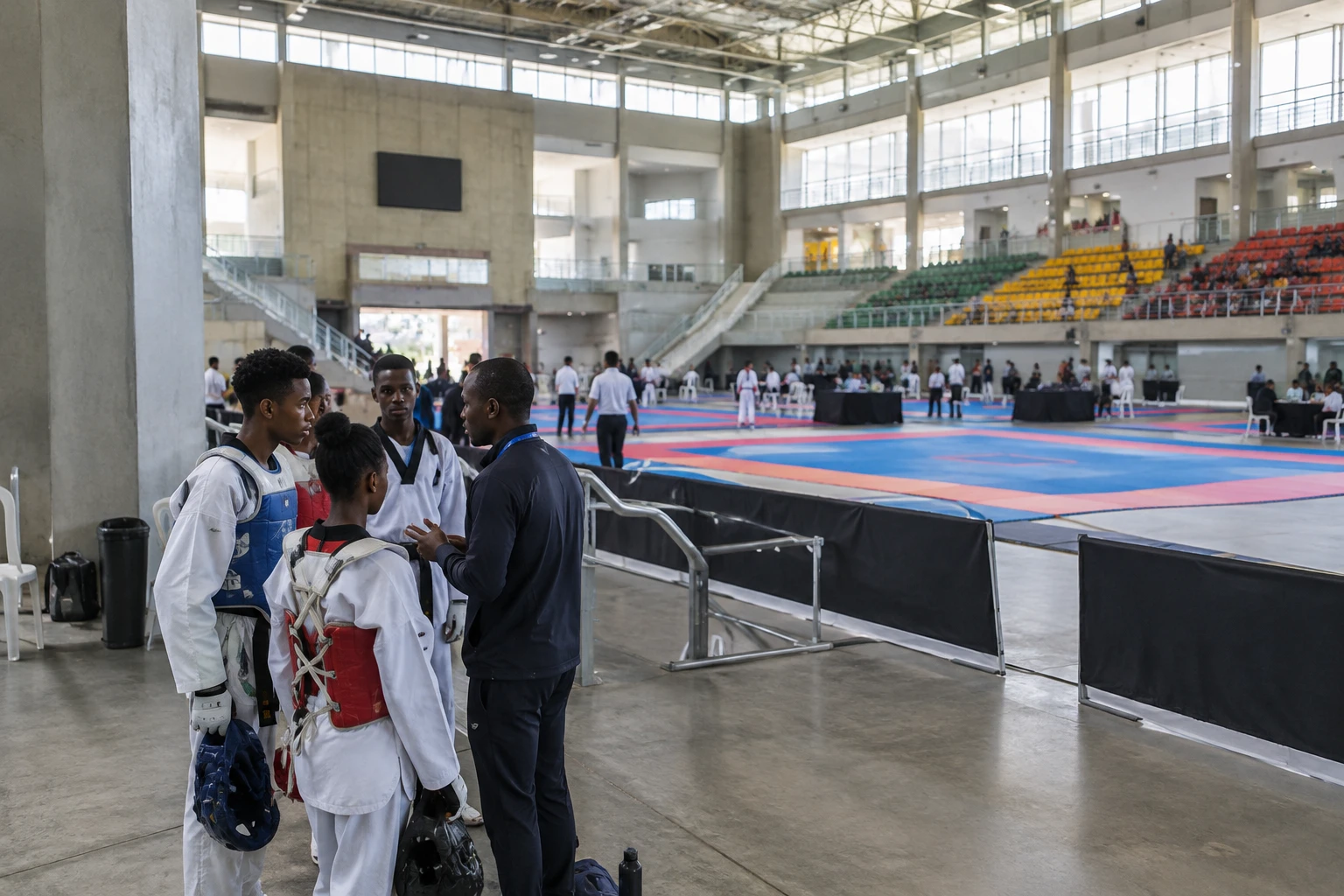
At the Iba Mar Diop complex, Senegalese spectators watched a teenager turn a final into a moment of collective pride. On 10 November, Marie Sarr won gold in taekwondo. Her result also highlights what is at stake for Senegal at these Games: sustaining the sporting momentum beyond the days of competition.
A final won in front of Dakar’s spectators
The 16-year-old Senegalese athlete won the under-55kg category against Tunisia’s Yasmine Haouani. Official results reported by Senegalese sports bodies confirm her victory. The International Olympic Committee describes a final marked by kicks to the body protector and strong support from the crowd.
Marie Sarr also explained that her preparation had included competitions and training camps. Her coach, Assane Dione, referred to her international experience, including a German Open and a medal at the most recent African Games. These details shed light on the work that comes before a medal, without reducing the performance to a single bout.
Aïda Touré also had a successful day. She won bronze in the under-63kg category. The two Senegalese taekwondo medals, in two women’s categories, gave the sport particular visibility at this stage of the Youth Olympic Games (YOG).
A sporting event on a continental scale
Dakar 2026 runs from 31 October to 13 November. Events are being held in Dakar, Diamniadio and Saly. By hosting the YOG, Senegal has become the first African country to stage this international competition for young athletes. The programme brings together about 2,700 competitors aged 14 to 17 across 25 sports.
The event is part of Africa’s growing presence in hosting major sporting events. But staging a competition alone is not enough to deliver lasting benefits. Infrastructure, its maintenance, and young people’s access to clubs and equipment after the Games will also weigh on the overall assessment.
For Senegal, the stakes operate at several levels. Dakar accounts for some of the venues and much of the media attention. Diamniadio and Saly are also hosting events and delegations. The movement of spectators, the activity of local businesses and young people’s access to competitions therefore depend on practical organisational decisions, not just podium results.
From the podium to the conditions for participation
Sarr’s victory offers a point of reference for young Senegalese women athletes. It shows that a sport less prominent than football or wrestling can produce top-level results. Aïda Touré’s medal adds to that significance: Senegalese women’s taekwondo was represented across several categories, not just by a single finalist.
An individual performance does not, however, on its own reveal what resources clubs have. Elite preparation requires time, regular coaching, competitions and travel. The coach’s comments about the training camps and events contested before the YOG illustrate this aspect. To assess the sporting legacy, it will be necessary to establish whether these pathways can be replicated and whether facilities will remain accessible to clubs.
The benefits may also vary by location and by group. Residents near the venues may gain from increased activity and direct access to events. Young people in areas far from Dakar will depend more on club programmes, local facilities and follow-up after the competition. The legacy must therefore also be measured over time and beyond the Olympic venues.
An impact beyond Senegal
Marie Sarr’s victory comes during an edition closely followed by African delegations and their neighbours in the Economic Community of West African States (ECOWAS), the regional organisation bringing together West African countries. The final against a Tunisian competitor also shows that sporting rivalries and exchanges extend beyond the borders of this community.
The results from one day do not determine the final Games standings. As of 10 November, available medal tallies placed Senegal among the most prominent delegations, but competition continued until 13 November. The medal count was therefore still provisional at that point.
For Senegal, Sarr’s gold is a confirmed sporting result and a moment of visibility for taekwondo. What follows will also matter after the closing ceremony: maintaining venues, sustaining coaching and providing competition opportunities for young people. That is where hosting the YOG may—or may not—translate into lasting sporting participation in Senegal and Africa.
Results and background information were cross-checked with the Senegalese Press Agency, the Senegalese Radio and Television Broadcasting and the International Olympic Committee. The schedule and background to the hosting of the Games are also documented by the Associated Press.