Algeria
 Egypt
 Libya
 Morocco
 Sudan
 Benin
 Burkina Faso
 Cabo Verde
 Côte d'Ivoire
 Ghana
 Guinea
 Guinea-Bissau
 Liberia
 Mali
 Mauritania
 Niger
 Nigeria
 Senegal
 Sierra Leone
 The Gambia
 Togo
 Cameroon
 Central African Republic
 Chad
 DR Congo
 Equatorial Guinea
 Gabon
 Republic of the Congo
 São Tomé and Príncipe
 Burundi
 Comoros
 Djibouti
 Eritrea
 Ethiopia
 Kenya
 Madagascar
 Malawi
 Mauritius
 Mozambique
 Rwanda
 Seychelles
 Somalia
 South Sudan
 Tanzania
 Uganda
 Angola
 Botswana
 Eswatini
 Lesotho
 Namibia
 South Africa
 Zambia
 Zimbabwe
When water becomes a daily trade-off
In Tunisia, summer 2026 brought more than heat. It put a very practical question under strain: how do you get through an ordinary day when water is scarce at the tap, the electricity goes off and supply chains seize up? In several urban neighbourhoods and rural areas, households had to contend with outages, queues and a scramble for bottled water. Producers, meanwhile, saw their costs rise and losses mount.
This shift is no small matter. In a North African country where summer exacerbates every vulnerability, access to water and energy is no longer a technical issue reserved for government departments. It directly affects work, health, food and the cost of everyday life. It also points to a broader challenge: the Tunisian state’s ability to protect essential services as the climate becomes harsher.
A summer of extreme heat, with the network under pressure
Tunisia’s meteorological services had already warned that summer would be hotter than seasonal norms, with temperatures above climate benchmarks across the country. August 2026 proved exceptionally hot, the hottest month recorded since 1950, according to the National Institute of Meteorology’s monthly climate bulletin. In this context, electricity demand surged as air conditioning was used extensively, putting further pressure on infrastructure.
The electricity system then experienced repeated outages in several regions. These disrupted water supplies, since production and pumping also depend on electricity. The National Water Exploitation and Distribution Company, SONEDE, is responsible for distributing drinking water throughout Tunisia. But its room for manoeuvre is limited when demand soars and equipment ages. The authorities did announce a plan to secure water supplies for the summer, including projects to rehabilitate infrastructure, drill wells, build pumping stations and strengthen networks. The problem runs deeper: it lies in the gap between the country’s needs and the pace of investment.
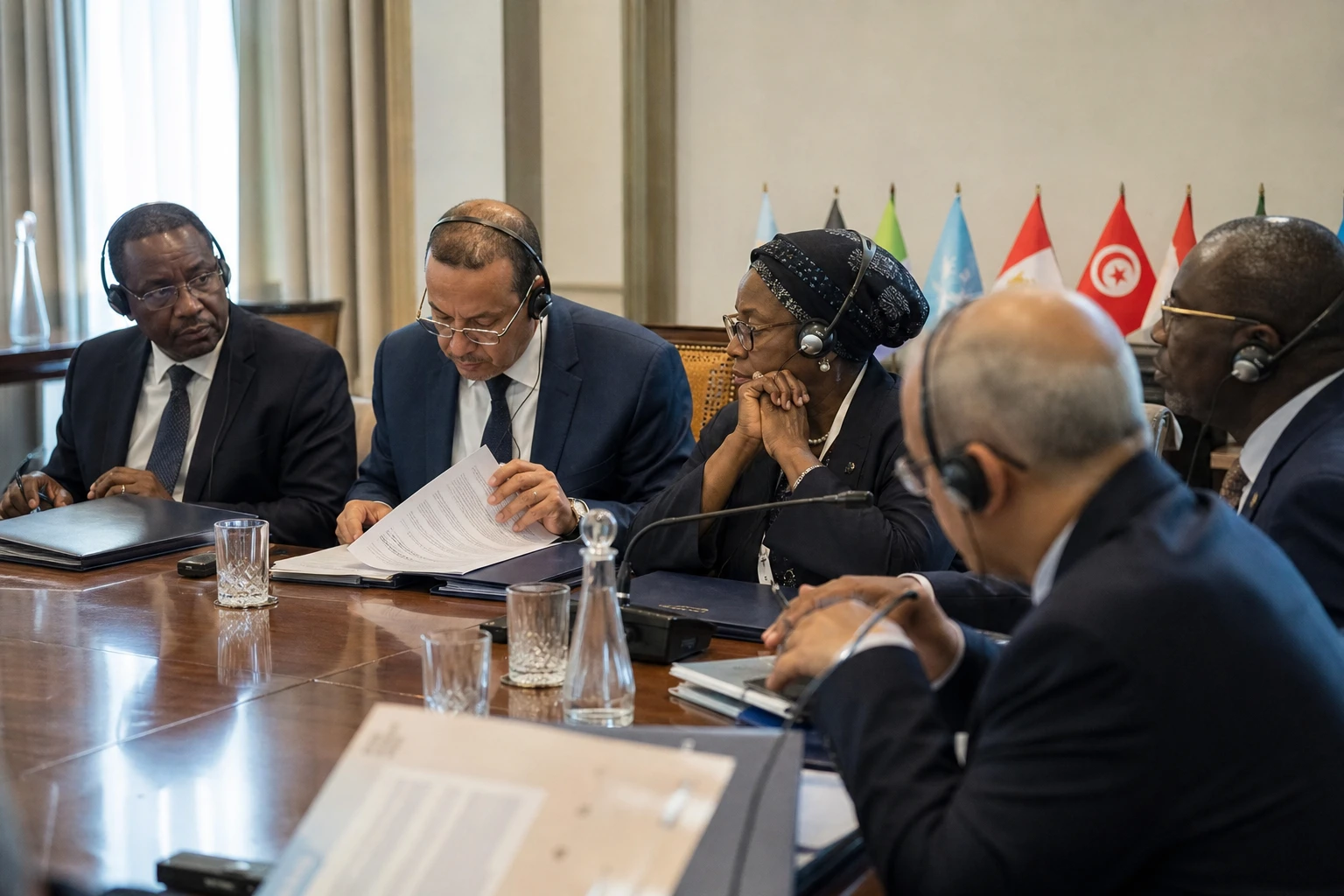
On 27 August 2026, a meeting at Carthage Palace brought together the head of government, several ministers and officials from STEG, the state-owned electricity and gas company, and SONEDE. President Kaïs Saïed referred to acts of sabotage. The authorities therefore chose to emphasise human and security-related responsibility. On the ground, however, the immediate causes were broader: heatwaves, peak demand, network constraints and vulnerabilities that had built up over many years.
Poultry farming hit first
The crisis was not confined to urban households. In the north and centre of the country, poultry farming was hit hard by the combination of high temperatures and electricity cuts. Several farmers reported substantial losses. Estimates cited by industry representatives suggest that as many as 150,000 to 200,000 poultry died in some areas in July, notably in Mahdia. These figures should be treated with caution, as they vary according to sources and time periods. The overall picture, however, is consistent: the heat caused severe thermal stress on farms, compounded by the shutdown of fans, cooling systems and water supplies.
For producers’ families, the cost is immediate. The loss of animals means less income, as well as additional costs to get farms back up and running. The impact quickly spreads to urban markets: supply contracts, prices come under pressure and households feel the strain. In a country where a large share of food consumption depends on supply chains sensitive to fluctuations in production, a power failure never remains an isolated outage.
Tourism also felt the shock. Hotels, restaurants and seaside businesses had to contend with interruptions that made it harder to welcome visitors. Here too, the problem goes beyond temporary inconvenience. It affects the reliability of an industry that is vital for foreign-currency earnings and employment. When water is scarce in a country where services matter greatly, the slowdown is immediately felt in both the formal and informal economies.
An old malaise made more visible by the heatwave
Tunisia is no stranger to water scarcity. The country is structurally exposed to water stress, with uneven rainfall, heavy pressure on aquifers and recurring droughts. Public reports and technical partners have for years warned that demand is gradually outstripping available resources, particularly as temperatures rise. The country has already launched long-term programmes, including a water strategy to 2050 and plans to modernise networks. But every summer on the ground shows that administrative timetables move more slowly than the climate.
The debate in Tunisia therefore centres on a simple question: should the country continue to manage emergencies case by case, or accelerate fundamental change? The authorities have announced investment in dams, water transfers, deep wells, pumping stations and solar energy. On paper, the direction is clear. In practice, implementation remains uneven, with disparities between the better-served coast and some more vulnerable inland regions.
For households, inequality is measured in hours spent waiting, kilometres travelled to find water, unexpected expenses and exhaustion. For small producers, it means lost stock, weakened livestock and investments that must be made again. For the state, it becomes a test of credibility. The more often outages recur, the more trust erodes.
What Tunisia’s experience says about Africa
Tunisia’s case extends beyond the national context. Across Africa, it illustrates a reality shared by many countries: climate change does not manifest itself only in average temperatures, but also in very tangible disruptions to public services. Water, electricity and food form a single system. When one falters, the others follow.
The situation in Tunisia also resonates with the African Union’s priorities on climate adaptation, food sovereignty and infrastructure resilience. Across North Africa, as in other parts of the continent, the question is no longer whether networks need to be strengthened. It is how quickly, with what financing and according to what hierarchy of priorities. Tunisia, which has already put major investments in water and energy on the table, is becoming a testing ground for the trade-offs ahead.
The next point to watch is clear: whether the commitments made for 2026-2030 are translated into action. If projects move forward, they could reduce the country’s vulnerability to extreme summers. If they are delayed, the summer 2026 scenario risks repeating itself, with the same chain of events: heat, pressure on networks, lost production and social anger. In Tunisia, water is no longer a seasonal issue. It has become a marker of national stability.